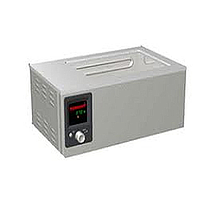
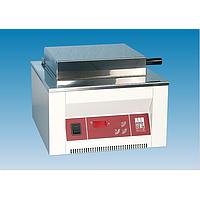
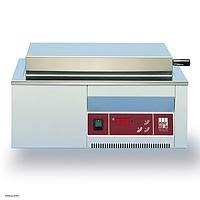
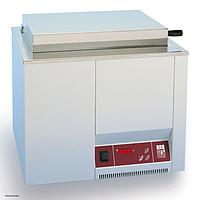
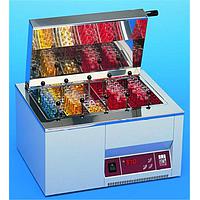
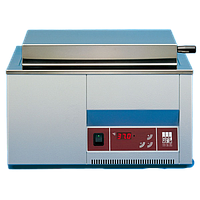
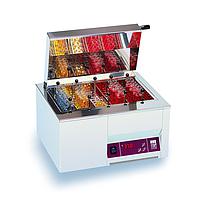
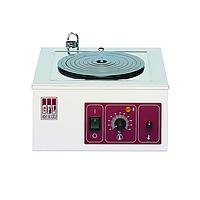
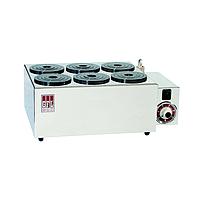
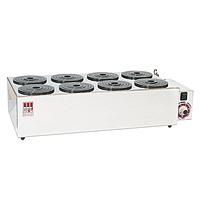
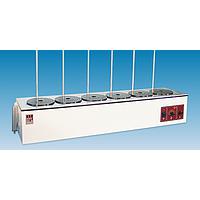
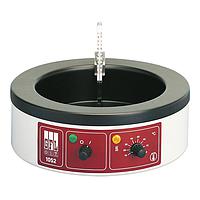
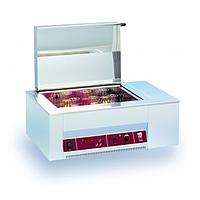
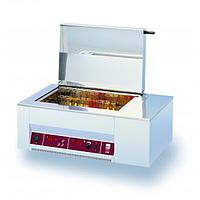
Furnace waterbath
Stable and uniform heating is essential in many laboratory workflows, especially when samples need gentle temperature control rather than direct contact with a hot plate. A Furnace waterbath is widely used for incubation, warming media, supporting chemical reactions, dissolving solidified materials, and maintaining samples at a controlled temperature over time.
For laboratories in pharmaceuticals, healthcare, food testing, microbiology, and general research, this category focuses on equipment designed for dependable water-based heating up to around 100 °C. The range also includes practical accessories that help adapt a bath to different vessel sizes and routine applications.
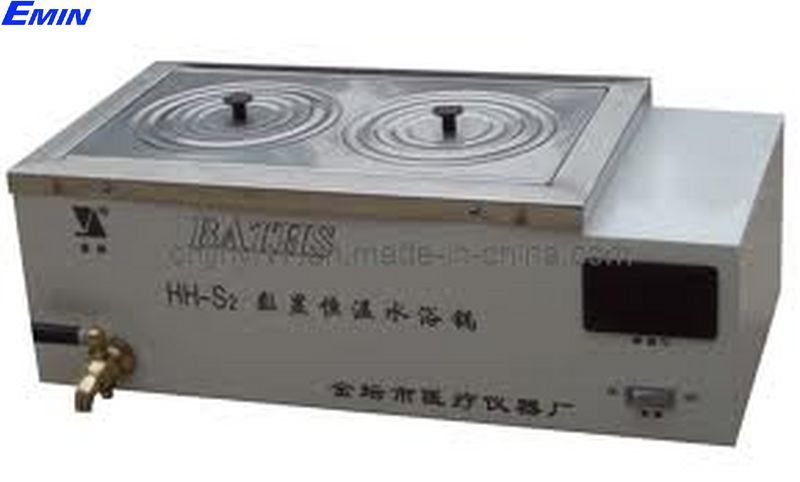
Where water baths fit in laboratory work
Water baths are chosen when a process requires indirect and even heat transfer. Because the sample is surrounded by heated water rather than exposed to a local hot surface, the temperature is typically more stable and suitable for procedures that are sensitive to overheating.
Typical use cases include warming reagents, holding samples at a set temperature, preparing culture media, and carrying out routine heating tasks in QA/QC and analytical labs. In many environments, a water bath is a practical bench-top tool that supports repeatable daily work without unnecessary complexity.
Common performance points to consider
When selecting a unit, users usually start with the required temperature range, bath volume, and stability. Several featured models in this category work from 25 to 100 °C and indicate temperature stability around 0.1 K, which is relevant for laboratories that need consistent thermal conditions for repeatable results.
Volume also matters because it affects how many vessels can be processed at once and how large the containers can be. For example, compact formats may suit routine sample warming, while larger baths are more appropriate when multiple containers or bigger vessels must be handled in one cycle.
Power supply, heater output, and physical dimensions should also be checked against the installation site. In shared laboratories, these practical details often influence whether the equipment fits safely on an existing bench and integrates well with other laboratory equipment already in use.
Representative products in this category
Lauda is one of the key manufacturers represented here, with Hydro water bath models covering several bath capacities for different working needs. Models such as the Lauda H 16 Hydro Water Bath and Lauda H 22 Hydro Water Bath are suitable examples for laboratories that need controlled heating up to 100 °C in a moderate working volume.
For larger sample throughput, the Lauda H 41 Hydro Water bath offers a significantly higher bath capacity, which can be useful for batch handling or larger vessels. The Lauda H 24 Hydro Water bath, with its elongated bath format, may be a better fit when the container shape or workflow benefits from a wider internal layout rather than simply more depth.
These examples show that selection is not only about maximum temperature. Bath geometry, usable volume, and workflow compatibility are often just as important as the headline specification.
Accessories and workflow flexibility
Not every requirement is solved by the bath itself. In practical laboratory use, accessories help organize flasks, bottles, or sample holders more securely and make routine work more repeatable. That is why this category also includes dedicated platforms from JEIOtech.
Items such as the JEIOTECH BSE-561, BSE-562, BSE-551, BSE-552, BSE-531, and BSE-532 are dedicated platforms matched to specific BS-series configurations and clamp capacities. Rather than being stand-alone heating devices, these accessories support the bath ecosystem by improving vessel placement and helping adapt the setup for 250 mL or 500 mL clamp-based applications.
For buyers comparing systems, this is an important detail: the right platform or holder can make a standard bath more suitable for a defined process without changing the entire instrument.
How to choose the right water bath
A practical selection process starts with the application. If the task is simple warming or routine incubation, a compact bath with moderate capacity may be enough. If the lab handles multiple vessels in parallel, larger bath volume and an internal layout that matches container size become more important.
Temperature uniformity and control should be prioritized when process repeatability matters. In validation, sample preparation, or microbiology-related tasks, even small differences in thermal stability can affect consistency from one batch to another.
It is also worth considering serviceability, available accessories, and manufacturer preference across the site. Some buyers standardize by brand to simplify maintenance and purchasing, especially when they already use products from suppliers such as Lauda, JEIOtech, MEMMERT, or DaiHan in the lab environment.
Safe and effective day-to-day use
Good operating practice starts with the basics: confirm the power source, fill the bath to the appropriate water level, and set temperature conditions according to the procedure. Users should avoid running the bath outside the intended fill range and should follow the equipment guide for lid handling, warm-up, and shutdown.
Routine cleaning is also important because deposits and contamination can affect usability over time. Stainless steel construction is commonly valued in this type of equipment because it supports cleaning and durability in busy laboratory settings.
Where laboratories run repeated heating tasks every day, consistent setup and operator discipline are just as important as the instrument itself. A well-matched bath combined with the right accessories can improve both safety and repeatability.
Choosing by application rather than by specification alone
Although many units may share a similar maximum temperature, they are not identical in daily use. A compact water bath is often preferred for general bench work, while a larger-capacity model is more suitable when throughput, container size, or process standardization drives the purchase decision.
It can also be useful to compare adjacent tools in the lab depending on the process. For example, if the application involves direct flame heating or open combustion methods, users may also review burner and torch equipment for related workflows, though the heating method and safety profile are very different from a water bath.
This category is therefore best approached as part of a broader thermal processing setup, where the correct instrument is selected based on sample sensitivity, target temperature, vessel format, and routine operating needs.
Final notes
This Furnace waterbath category is intended for laboratories that need controlled, gentle, and repeatable heating in everyday operations. With bath models from Lauda and accessory options from JEIOtech, the range supports both core heating requirements and practical workflow adaptation.
If you are comparing options, focus on temperature range, stability, bath volume, internal dimensions, and accessory compatibility. That approach usually leads to a more suitable long-term choice than selecting only by price or by maximum temperature on the datasheet.
Get exclusive volume discounts, bulk pricing updates, and new product alerts delivered directly to your inbox.
By subscribing, you agree to our Terms of Service and Privacy Policy.
Direct access to our certified experts