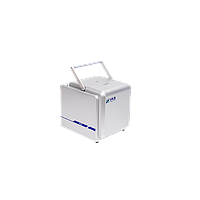
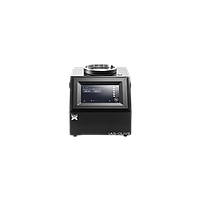
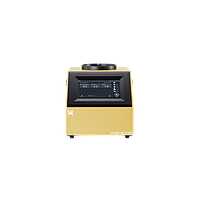
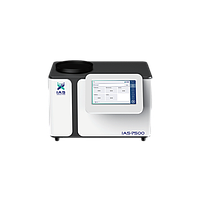
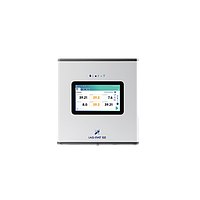
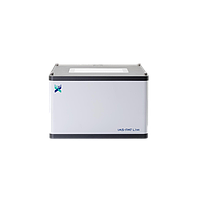
NIR spectrometers
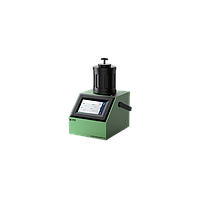
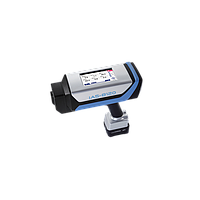
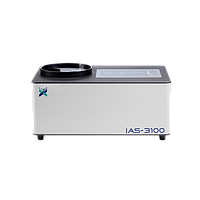
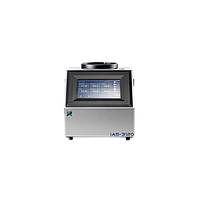
Fast, non-destructive analysis is often critical when laboratories and production teams need reliable composition data without lengthy sample preparation. In that context, NIR spectrometers are widely used to evaluate liquids, solids, and process streams with high efficiency, making them relevant for quality control, incoming inspection, method development, and at-line or online monitoring.
On this category page, you can explore NIR spectroscopy systems suited to both laboratory and process environments. The available portfolio here is centered on Metrohm solutions, including compact OMNIS platforms for routine lab work and 2060 series analyzers designed for industrial process integration.
Where NIR spectroscopy fits in modern testing workflows
Near-infrared spectroscopy is valued for its ability to support rapid measurements while preserving the sample. Instead of relying only on slower wet-chemistry methods, many users adopt NIR as part of a broader analytical workflow to screen materials, track variation, and shorten response time in production or laboratory environments.
This is especially useful when teams need repeatable analysis across multiple sample types. Depending on the instrument configuration, NIR can support solid or liquid measurements in the lab, and it can also be integrated into process setups where continuous or multi-stream monitoring becomes important for process control.
Typical instrument types in this category
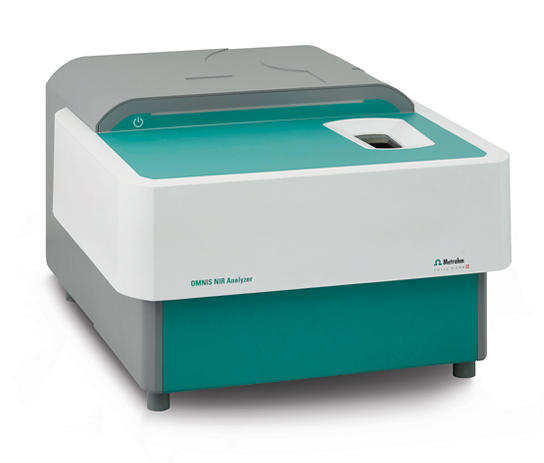
This category includes both laboratory-oriented and process-oriented systems. For bench or routine analytical work, the Metrohm OMNIS NIR Analyzer range offers dedicated versions for liquid samples, solid samples, or combined liquid/solid use. These configurations are a practical fit when users need a more compact instrument footprint and straightforward operation in controlled environments.
For industrial applications, the Metrohm 2060 series extends NIR capability into process analysis. Systems such as the 2060 The NIR Analyzer, 2060 The NIR-R Analyzer, 2060 The NIR-Ex Analyzer, and 2060 The NIR-REx Analyzer are built for operation in demanding settings, with IP65 protection and support for 1 to 5 sample streams according to the listed models. That makes them relevant where process robustness and system integration matter as much as analytical performance.
Examples from the available product range
The Metrohm OMNIS NIR Analyzer Liquid is intended for liquid sample analysis, while the Metrohm OMNIS NIR Analyzer Solid is tailored to solid materials. For users who need flexibility across sample formats, the Metrohm OMNIS NIR Analyzer Liquid/Solid combines both approaches in one platform. Across these OMNIS models, the listed wavelength range of 1,000–2,250 nm supports a broad set of routine NIR applications.
On the process side, the Metrohm 2060 The NIR Analyzer represents a process-ready system for industrial use, while the 2060 The NIR-R, 2060 The NIR-Ex, and 2060 The NIR-REx variants provide additional options depending on installation requirements. The listed operating temperature range of 0–40 °C and IP65 protection indicate suitability for controlled industrial environments where durable enclosure design is important.
How to choose the right NIR spectrometer
The best starting point is the sample type. If your workflow is centered on routine laboratory analysis of liquids, a dedicated liquid configuration may be the most direct option. If you primarily measure powders, granules, or other solid materials, a solid-focused setup can simplify handling. For mixed workloads, a liquid/solid system may reduce the need for separate instruments.
The second key factor is the measurement environment. Laboratory users often prioritize compact dimensions, easy operation, and method consistency. Process users usually look more closely at enclosure rating, ambient operating conditions, and the number of sample streams supported. In this category, the difference between OMNIS and 2060 systems reflects that distinction clearly.
It is also worth considering workflow expansion. A lab that uses NIR alongside conventional sample preparation tools may also benefit from related equipment such as laboratory blenders for homogenization before reference analysis. In production or plant environments, handling and instrument movement may be easier with suitable carts and trolleys where the setup allows.
Important technical points to compare
When evaluating models, focus on a few practical specifications rather than comparing long data sheets line by line. For laboratory instruments, users commonly review wavelength range, detector design, data acquisition speed, calibration approach, and sample presentation options. In the OMNIS range shown here, the listed 1,000–2,250 nm range, cooled diode array detector, and typical single-measurement speed under 10 seconds provide a strong baseline for routine analytical use.
For process analyzers, physical installation details are equally important. The 2060 series models listed here include dimensions, weight, IP65 ingress protection, and support for 1 to 5 sample streams. These details help engineering and operations teams assess panel space, mounting conditions, and how the analyzer may fit into a broader process control architecture.
Applications and user benefits
NIR spectrometers are commonly selected when users need rapid decision support without consuming or altering the sample. In practical terms, this can help reduce waiting time between sampling and result interpretation, support faster release decisions, and improve consistency across repeated checks during production or laboratory routines.
Another advantage is the ability to align analytical tools with different stages of the workflow. A laboratory may use a compact NIR platform for method development, screening, or routine verification, while a production site may implement a process analyzer for ongoing stream monitoring. This combination can improve data continuity from lab to plant and support more informed process adjustments.
Choosing with long-term use in mind
Beyond the initial specification match, it is useful to think about maintenance, installation constraints, and future expansion. For example, a compact OMNIS analyzer may be easier to place in an existing lab, while a 2060 process system may be more appropriate where enclosure protection and multi-stream capability are priorities. The right choice depends on whether the main goal is flexible laboratory analysis or continuous industrial monitoring.
If your workflow also involves sample handling, safety, or supporting lab infrastructure, related categories such as laboratory apparels can help complete the working environment. The main objective is to build an analytical setup that supports both measurement quality and day-to-day usability.
Conclusion
This selection of NIR systems is suited to users who need faster analytical feedback across laboratory and industrial settings. With OMNIS analyzers for liquid, solid, or combined sample analysis, and 2060 series solutions for process applications, the category covers a practical range of needs without losing focus on real deployment conditions.
When comparing models, start with sample type, installation environment, and workflow goals. That approach makes it easier to narrow the options and identify an NIR spectrometer that fits your analytical process today while remaining useful as requirements evolve.
Get exclusive volume discounts, bulk pricing updates, and new product alerts delivered directly to your inbox.
By subscribing, you agree to our Terms of Service and Privacy Policy.
Direct access to our certified experts