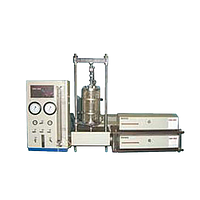
Permeability Test
When material durability, drainage behavior, or fluid flow through porous media matters, permeability testing becomes a key part of engineering evaluation. In civil engineering, geotechnical work, and concrete assessment, the right test method helps teams understand how water or air moves through soil, granular media, and hardened construction materials under controlled conditions.
Permeability Test equipment in this category supports a wide range of laboratory and field-oriented needs, from classic soil permeameters to concrete permeability instruments and specialized educational or research apparatus. This makes the category relevant for universities, testing laboratories, quality control teams, and contractors who need dependable tools for comparing material behavior and supporting technical decisions.
Where permeability testing is used
Permeability is commonly evaluated when engineers need to estimate seepage, filtration behavior, drainage performance, or long-term durability. In soil mechanics, test results can support analysis of sand, gravel, clay, embankments, and subgrade materials. In concrete testing, permeability data is often used as part of a broader assessment of cover quality and resistance to moisture or aggressive agents entering the structure.
This category therefore spans more than one application area. Some instruments are designed for geotechnical laboratory workflows, while others focus on concrete performance and imperviousness. For users building a more complete inspection workflow, related methods such as ultrasonic pulse velocity testing can also help evaluate material condition from a different perspective.
Typical equipment found in this category
The product range includes compact permeameters for soil specimens, multifunction triaxial systems with permeability test capability, concrete impervious apparatus, and dedicated concrete cover permeability instruments. Each type serves a different level of testing complexity, from routine checks to advanced laboratory analysis.
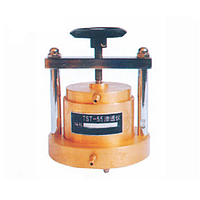
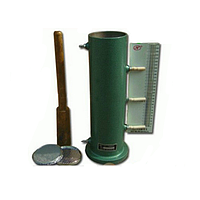
For example, the Samyon TST-70 Permeameter is intended for non-cohesive soils such as sand and gravel under constant water pressure conditions, while the Samyon TST-55 Permeameter is aimed at clay soil testing under variable water pressure conditions. At a more advanced level, the Samyon SLB-1 and SLB-1A triaxial systems combine stress-strain control with permeability-related testing functions, which is useful when flow behavior must be studied alongside mechanical response.
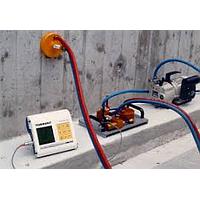
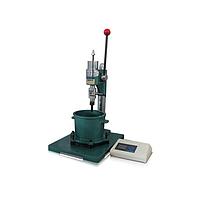
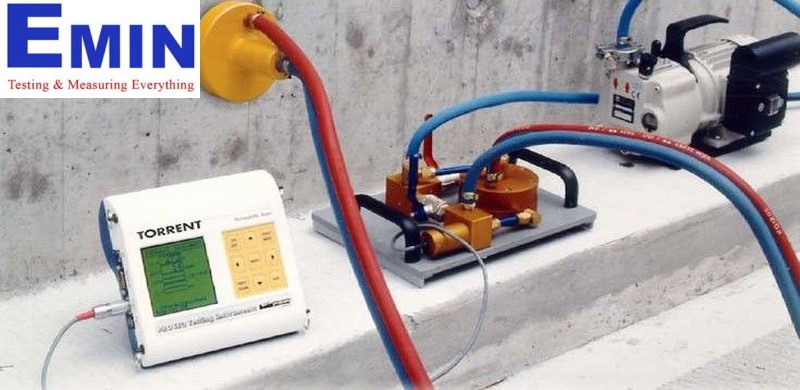
In concrete applications, the Ludatest HS-4 Dial Display Concrete Impervious Apparatus is intended for anti-permeability evaluation, while the PROCEQ Torrent Permeability Tester is used to assess the quality of concrete cover and concrete durability. For educational and process-visualization purposes, the Armfield W3 Permeability/Fluidisation studies apparatus and Armfield S1 Drainage and seepage tank are also relevant within teaching and experimental environments.
How to choose the right permeability test system
A practical selection process starts with the material type. Soil, granular media, clay specimens, and hardened concrete do not require the same apparatus or test setup. A permeameter suitable for non-cohesive soil is not automatically appropriate for clay samples, and a concrete durability assessment instrument may focus on surface cover behavior rather than bulk soil flow.
The second consideration is the test objective. Some buyers need a straightforward coefficient measurement under defined pressure conditions. Others need multifunction equipment that can perform permeability work together with consolidation or triaxial testing. If your lab is handling geotechnical research or more advanced soil mechanics programs, integrated systems such as the Samyon SLB series may be more suitable than standalone benchtop permeameters.
It is also worth checking specimen size, control method, pressure range, and data handling needs. Laboratories that require digital monitoring, microprocessor control, or computer-based data exchange should pay attention to workflow compatibility, especially when tests need to be documented consistently across multiple projects.
Soil and geotechnical permeability testing considerations
In geotechnical practice, permeability testing is closely tied to seepage analysis, foundation behavior, drainage design, and earth structure performance. The main challenge is that different soils behave very differently under water flow. Granular soils generally require a different test approach from cohesive soils, so equipment selection should match the expected sample characteristics and the test standard your lab follows.
For routine soil work, dedicated permeameters such as the Samyon TST-70 and TST-55 can be a practical starting point. For more advanced research, the Samyon SLB-1 Multifunction Flexible Triaxial Test Apparatus and Samyon SLB-1A Stress-Strain Controlled Shear Permeated Triaxial Test Apparatus provide broader capability where permeability data needs to be interpreted together with stress path or deformation behavior.
Training environments may also benefit from apparatus that make hydraulic principles easier to observe. The Armfield W3 Permeability/Fluidisation studies apparatus and Armfield S1 Drainage and seepage tank are good examples of systems that support demonstration, instruction, and controlled experimentation in fluid flow through porous or packed media.
Concrete permeability and durability assessment
For concrete structures, permeability testing is often linked to service life and resistance to environmental exposure. A lower-permeability cover zone can help reduce the movement of moisture and harmful substances into the structure, which is why permeability-related methods are relevant in quality control, maintenance planning, and durability studies.
The PROCEQ Torrent Permeability Tester is used to assess concrete cover quality and durability, making it suitable when surface-related concrete performance is the main concern. The Ludatest HS-4 Dial Display Concrete Impervious Apparatus, by contrast, addresses anti-permeability testing in a more conventional apparatus format for concrete and related building materials.
Permeability results are often more useful when combined with other non-destructive or semi-destructive methods. Depending on the inspection objective, users may also review tools such as cover meters and rebar detectors or concrete test hammers to build a more complete picture of structural condition.
What matters in a B2B purchasing decision
For laboratories, consultants, universities, and industrial buyers, the best choice usually depends on more than the measurement principle alone. It is important to consider sample preparation requirements, operator skill level, reporting workflow, maintenance needs, and how often the equipment will be used. A simple permeameter may be efficient for repetitive routine testing, while a multifunction system may be easier to justify in a lab with varied project demands.
Data consistency, ease of operation, and suitability for your internal procedure are often as important as the basic measuring range. In educational settings, visibility of the testing process may be a priority. In quality control labs, repeatability and throughput may matter more. In durability assessment, portability and practical site use can also influence the decision.
Manufacturer preference may also play a role when standardizing equipment across a facility. This category includes established options from Samyon, Armfield, PROCEQ, and Ludatest, covering different levels of complexity and different material testing priorities.
Finding the right fit for your application
Because permeability testing can refer to several distinct methods, it helps to begin with a clear definition of the specimen type, test purpose, and reporting requirement. A soil laboratory checking hydraulic behavior in sands or clays will not need the same setup as a concrete inspection team focused on cover durability, and a teaching lab may prioritize apparatus that demonstrates flow behavior clearly rather than maximizing automation.
This category brings together permeability-related instruments for soil, concrete, and instructional use in one place, making it easier to compare options by application. If you are selecting equipment for routine testing, advanced triaxial work, or concrete durability evaluation, a focused review of specimen conditions, control requirements, and intended use will help narrow the most appropriate solution.
Get exclusive volume discounts, bulk pricing updates, and new product alerts delivered directly to your inbox.
By subscribing, you agree to our Terms of Service and Privacy Policy.
Direct access to our certified experts