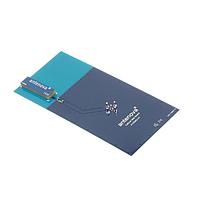
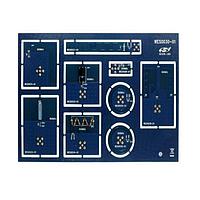
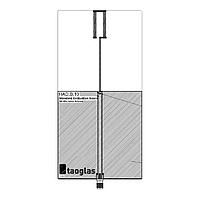
Antenna Development Tools
Designing and validating an RF product often depends on more than the antenna itself. During prototyping, tuning, and integration, engineers need practical tools that help them evaluate matching, placement, radiation behavior, and overall wireless performance before moving into volume production. That is where Antenna Development Tools become especially useful in the RF workflow.
This category is relevant for teams working on connected devices, embedded wireless products, gateways, industrial electronics, and IoT hardware. Whether the goal is to optimize a compact PCB antenna, compare external antenna options, or improve signal quality in a crowded enclosure, the right development tools can shorten iteration cycles and reduce uncertainty during testing.
Why antenna development tools matter in RF design
Antenna performance is strongly affected by real-world factors such as PCB layout, ground plane size, housing materials, cable routing, and nearby components. Even when a wireless design uses a proven radio platform, overall communication quality can still change significantly once the antenna is integrated into the final device.
Using dedicated tools during development helps engineers observe these effects earlier. Instead of relying only on theoretical calculations, teams can verify impedance behavior, identify mismatch issues, and compare design options under realistic conditions. This is particularly important when the antenna is part of a broader RF chain that may also include RF integrated circuits, front-end components, and application-specific wireless modules.
What is typically included in this category
Antenna development tools can support several stages of the engineering process, from concept validation to optimization before certification. Depending on the project, these tools may be used to evaluate antenna matching, support test setups, or simplify integration with development boards and wireless prototypes.
In practice, this category may be useful for engineers working with embedded antennas, external antennas, evaluation setups, and RF boards that need repeatable tuning and measurement support. It also fits projects where antenna behavior must be reviewed alongside related components such as antenna products, passive RF parts, or tag and reader systems in NFC/RFID applications.
Common use cases during development and validation
One common use case is early-stage antenna selection. When a device must fit strict mechanical constraints, developers often need to compare different form factors and mounting approaches before committing to a final design. Development tools help create a structured test process instead of making decisions based only on nominal datasheet expectations.
Another important use case is matching and tuning. Small changes in board layout or enclosure geometry can alter return loss and effective radiated performance. By using antenna development aids during lab testing, teams can fine-tune the design and reduce the risk of weak links, unstable communication ranges, or last-minute redesigns.
These tools are also valuable during troubleshooting. If a wireless product shows inconsistent range, poor coexistence, or sensitivity to installation conditions, development platforms and test accessories can help isolate whether the issue comes from the antenna, the feed network, surrounding passives, or the radio section itself.
How to choose the right tools for your project
Selection should start with the actual development goal. Some teams need support for evaluating compact board-level antennas in embedded devices, while others focus on external antenna integration, cable-fed configurations, or proof-of-concept work around wireless modules. The best choice depends on the test environment, target frequency range, and how close the setup is to the final product architecture.
It is also useful to consider the surrounding RF ecosystem. Projects that involve matching networks may need close coordination with related passive components such as inductors used in RF circuits. In other cases, signal conditioning parts such as attenuators may be relevant in the test bench to improve measurement consistency or protect sensitive instruments.
For engineering teams, a practical selection process usually includes connector compatibility, evaluation convenience, repeatability of the test setup, and how easily the tool fits into existing lab methods. This is especially important in B2B environments where multiple prototypes, revisions, and validation steps need to be managed efficiently.
Leading manufacturers in this category
This category may include solutions from well-known suppliers across wireless connectivity and RF design. Brands such as Analog Devices, KYOCERA AVX, Silicon Labs, STMicroelectronics, Texas Instruments, and u-blox are often associated with broader wireless development ecosystems, where antenna evaluation is part of system-level design rather than an isolated task.
Depending on the application, engineers may also look at offerings from Wurth Elektronik, Abracon, CEL, or DIGI when building and validating wireless devices. The value of these manufacturers is not just in individual hardware items, but in how their tools and reference platforms help teams move from concept to measurable RF performance with fewer blind spots during integration.
Where antenna development tools fit in the design flow
In many projects, antenna work begins after the radio path is already defined, but waiting too long can create avoidable risk. Bringing antenna development tools into the process early allows engineers to validate placement, feeding structure, and tuning strategy before enclosure and layout decisions become difficult to change.
They also support better collaboration between RF engineers, hardware designers, and product teams. Instead of discussing antenna performance in abstract terms, the team can review measurable behavior and make design decisions based on observed results. That approach is particularly helpful in industrial and embedded applications where wireless reliability must be maintained across different installation conditions.
Choosing with long-term integration in mind
For B2B buyers and engineering teams, the most useful tools are the ones that make development more predictable. A good fit should help shorten test cycles, support realistic validation, and reduce the gap between lab performance and field performance. This is especially relevant for products that will move into compliance testing, customer pilots, or scaled manufacturing.
If your project involves wireless hardware that needs careful antenna tuning, integration review, or RF troubleshooting, this category provides a practical starting point. The right antenna development tools can improve design confidence, support cleaner validation work, and make it easier to move from prototype to a more stable, production-ready wireless system.
Get exclusive volume discounts, bulk pricing updates, and new product alerts delivered directly to your inbox.
By subscribing, you agree to our Terms of Service and Privacy Policy.
Direct access to our certified experts