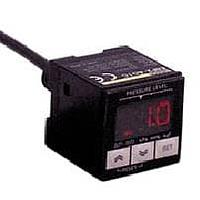
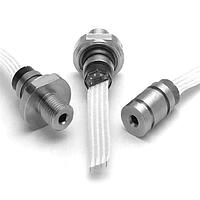
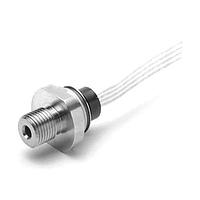
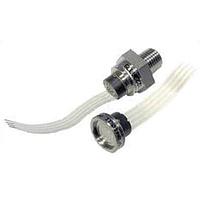
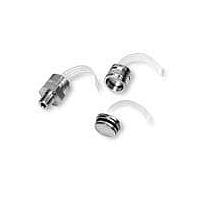
Industrial Pressure Sensors
Pressure measurement is a basic requirement in many machines, utility systems, and process lines. From monitoring compressed air and hydraulics to protecting pumps, tanks, and piping, selecting the right sensor helps improve control stability, equipment safety, and maintenance planning. On this page, you can explore Industrial Pressure Sensors used in demanding environments where reliable signal output and durable construction matter.
These sensors are typically chosen for applications that need continuous pressure feedback rather than simple on/off switching. In industrial settings, they may be integrated into PLC-based automation, data logging systems, local displays, or broader condition monitoring architectures. The category is relevant for OEM design, machine building, panel integration, utilities, and process instrumentation projects.
Where industrial pressure sensors are commonly used
Industrial pressure sensing appears across a wide range of systems, including pneumatic circuits, hydraulic units, water treatment skids, compressors, HVAC equipment, boilers, pumps, and fluid distribution networks. In each of these cases, pressure data supports operational decisions such as regulating flow, confirming system status, detecting blockage, or identifying leaks before they become larger failures.
Compared with more compact electronics-focused sensing components, industrial versions are generally selected for harsher operating conditions, mechanical robustness, and easier field integration. They are often part of a wider sensing strategy that may also include environmental sensors for ambient monitoring or flow sensors & pitot tubes when pressure and flow need to be evaluated together.
What distinguishes this category from board-level pressure sensing
The main difference lies in the intended operating environment and installation method. Industrial pressure sensors are typically selected for machinery, plant equipment, and field-mounted systems where mechanical connection, enclosure durability, and long-term stability are important. They are designed to support real-world installation in piping, manifolds, tanks, and pneumatic or hydraulic circuits.
For more compact embedded applications, engineers may instead look at board mount pressure sensors. Those devices are better aligned with PCB-level design constraints, while industrial sensor categories usually serve applications that need stronger packaging, more practical field wiring, and easier integration into machine or process equipment.
Key selection factors for engineers and buyers
Choosing the right device starts with understanding the pressure range of the system, including both normal operating conditions and possible spikes. An undersized sensor may be exposed to overload, while an oversized range can reduce useful resolution in control or monitoring tasks. The pressure media also matters, especially when the sensor will contact air, water, oil, or process fluids with different compatibility requirements.
Output type is another important factor. Depending on the control architecture, a project may require an analog signal, a standardized industrial output, or a digital interface suitable for the target system. Mechanical connection style, electrical connector format, mounting space, and installation orientation should also be reviewed early so that the selected sensor fits the application without unnecessary adapters or rework.
In addition, buyers often compare response behavior, repeatability, environmental exposure, and service expectations. Systems that operate outdoors, in washdown areas, or near vibration sources may need more careful sensor matching than controlled indoor installations. For broader machine sensing strategies, it can also be useful to review related technologies such as board mount temperature sensors when pressure data needs to be interpreted alongside thermal conditions.
Common application goals in automation and process systems
In automation, pressure sensors are often used to maintain process consistency and help controllers respond to changing load conditions. For example, a machine may use pressure feedback to verify actuator performance, regulate air supply, or trigger alarms when readings move outside an expected operating band. In fluid systems, pressure trends can reveal clogged filters, pump wear, or unstable supply conditions before a shutdown occurs.
In process environments, the same measurement can support both control and diagnostics. A pressure sensor may be used to maintain a target line condition, confirm vessel status, or provide data to supervisory software for long-term monitoring. This makes the sensor more than a measurement point; it becomes part of the information layer that helps operators improve uptime and maintenance efficiency.
Manufacturers commonly considered in this category
Product selection in this space often depends on the project type, required integration standard, and preferred supply chain. Buyers exploring industrial sensing solutions may look at brands such as Autonics, Banner Engineering, BOSCH, Bosch Sensortec, Delta, Eaton, and Endress+Hauser, among others represented in this category context. Each may be considered depending on whether the priority is industrial automation, machine sensing, or broader instrumentation needs.
It is also common for engineering teams to compare suppliers based on documentation quality, ecosystem fit, and compatibility with existing control hardware. In B2B purchasing, that practical context matters as much as the sensor itself, especially when the component must align with plant standards, spare parts policies, or approved vendor lists.
How to narrow down the right option
A practical approach is to begin with the application rather than the part number. Define the pressure media, operating range, installation point, and control objective first. Then confirm whether the sensor is intended for monitoring, closed-loop control, alarm handling, or condition-based maintenance, since those roles can influence the preferred output, response profile, and integration method.
It also helps to consider the broader sensing environment. If the project involves air quality, humidity, temperature, or other ambient variables that affect performance, reviewing nearby categories such as bio sensors or environmental sensing technologies may help frame the full measurement strategy, even when pressure remains the primary parameter.
Why this category matters in industrial procurement
Pressure sensors are often small components within a larger system, but they can have an outsized effect on reliability, control quality, and service visibility. A well-matched sensor helps reduce troubleshooting time, supports more stable machine operation, and provides meaningful data for operators and maintenance teams. That is why industrial buyers typically evaluate not only the sensing function, but also installation practicality and long-term maintainability.
Whether the application involves factory automation, utilities, fluid handling, or process equipment, this category helps streamline the search for sensing components suited to industrial conditions. Reviewing the available options with a clear focus on range, media compatibility, output requirements, and system integration will make it easier to identify the right pressure sensing solution for your project.
Get exclusive volume discounts, bulk pricing updates, and new product alerts delivered directly to your inbox.
By subscribing, you agree to our Terms of Service and Privacy Policy.
Direct access to our certified experts