Biometric Sensors
Modern embedded devices increasingly need a reliable way to detect, verify, or interpret human physiological and identity-related signals. In product development, that usually means choosing components that can capture optical, pressure, image, or user-authentication data with the right balance of size, power consumption, signal quality, and system integration. This is where Biometric Sensors become especially relevant for medical electronics, wearables, access systems, and smart human-machine interfaces.
Within this category, engineers can explore solutions for heart rate and SpO2 sensing, vital-sign monitoring, sleep tracking, medical pressure measurement, facial image detection, and biometric switching. The available portfolio supports both compact board-level designs and broader system architectures where sensing, signal conditioning, and algorithm-ready data all matter.
Where biometric sensing fits in real-world designs
Biometric sensing is not limited to one industry. In practice, it appears in wearable health devices, bedside and portable medical equipment, user presence detection, industrial access terminals, and smart endpoints that need to respond to human activity in a more contextual way.
Depending on the design goal, the sensing method can vary significantly. Some applications rely on optical measurement for pulse and blood oxygen trends, while others use pressure-based detection, sleep-related monitoring, face image sensing, or a biometric switch as part of a controlled access workflow. If you are comparing adjacent technologies for broader human-state monitoring, it can also be useful to review related bio sensor options for system-level planning.
Common device types in this category
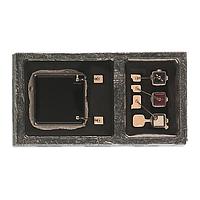
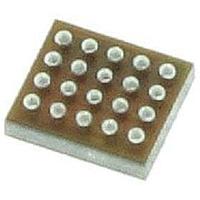
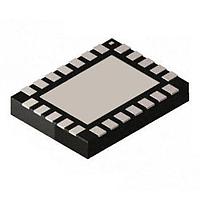
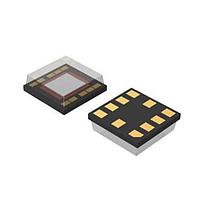
This category brings together several distinct product roles rather than one single component format. At the optical end, devices such as the Analog Devices MAX30112EWG+T and ams OSRAM SFH 7060A are relevant for designs focused on pulse-related and vital-sign data acquisition. These parts are typically considered where compact integration and low-power operation are important.
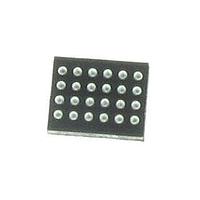
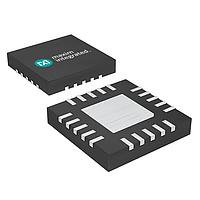
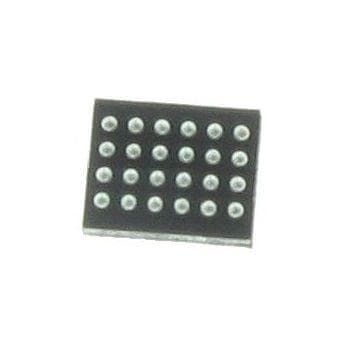
There are also supporting devices that help process or condition biometric signals. For example, the Texas Instruments AFE4410YZT represents an analog front end approach, while parts such as the Analog Devices MAX32664GWED+T or MAX32664GTGD+T fit the role of a sensor hub that can support data handling and higher-level biometric functions within an embedded architecture.
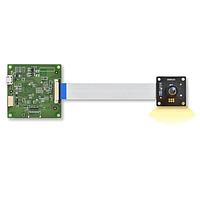
Beyond wearable-style sensing, the category also includes application-specific devices such as the Omron Electronics B5T-007001-010 for face image detection, the SCHNEIDER XB5S8B2M12 biometric switch for operator interaction and access-related use cases, and the TE CONNECTIVITY SENSORS 10184000-01 sleep tracking sensor for monitoring-oriented solutions.
Leading manufacturers and ecosystem considerations
Several established suppliers are represented here, each with a different strength in the biometric design chain. Analog Devices stands out in this category with optical sensing ICs, sensor hubs, and integrated biometric-related devices that can be useful when building compact health-monitoring platforms. ams OSRAM is also relevant when optical emitter and detector integration is central to the design.
Other manufacturers broaden the application range. Texas Instruments contributes analog front-end capability, Omron Electronics supports image-based detection scenarios, SCHNEIDER addresses biometric switching in control environments, and TE CONNECTIVITY SENSORS appears in both emitter-level and sleep-tracking examples. For pressure-oriented medical implementations, Amphenol Advanced Sensors adds another useful angle with disposable pressure sensing options.
How to choose the right biometric sensor
The right selection usually starts with the sensing principle, not the package alone. If the project is a wearable or patient-monitoring device, optical heart rate or SpO2 components may be the starting point. If the system needs raw analog signal acquisition with downstream processing, an analog front end may be more appropriate. If firmware simplicity and higher integration are priorities, a sensor hub architecture can reduce development effort at the system level.
Engineers should also consider operating voltage, thermal range, mounting style, and how close the component sits to the end-user interface. Small SMD parts are typically preferred for compact consumer or portable equipment, while through-hole or larger modules may suit prototyping, fixture-based systems, or specialized assemblies. In medical-adjacent applications, replacement model strategy, disposability, and mechanical fit can be just as important as the electrical characteristics.
Another practical factor is what other environmental variables need to be measured alongside biometric data. Some designs combine human-state sensing with ambient compensation, so reviewing related environmental sensors can help when building a more robust multi-sensor platform.
Optical, pressure, image, and switching approaches
Optical biometric devices are commonly used when the goal is to detect blood volume changes or related vital-sign indicators using light emission and photodetection. In this area, product examples such as the MAX86180ENB+T, MAX30112EWG+T, and SFH 7060A illustrate how compact electronics can support wearable and portable measurement concepts.
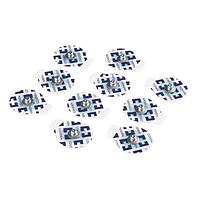
Pressure-based biometric measurement serves a different purpose. The Amphenol Advanced Sensors NPC-100T, for instance, fits a medical pressure sensing context rather than optical pulse monitoring. For engineers evaluating this route, adjacent board mount pressure sensors may also be useful during architecture comparison or when separating disposable and reusable sensing stages.
Image and switching technologies bring biometric sensing into identity and interaction use cases. Omron’s face image sensor addresses detection-oriented applications, while SCHNEIDER’s biometric switch is more aligned with authenticated human access or machine control interaction. These are very different from wearable biosignal components, which is why defining the use case early is critical.
Integration challenges in biometric system design
Biometric signal capture is only one part of the design problem. Noise, motion artifacts, skin or surface contact conditions, optical path design, mechanical placement, and power management all influence real-world performance. A component that looks suitable on paper still needs to be evaluated in the context of enclosure design, firmware filtering, and end-use environment.
Another challenge is deciding where processing should happen. Some projects favor a discrete architecture with separate optical components and front ends, while others benefit from more integrated hubs that simplify communication with the host MCU. When the application also tracks body-adjacent thermal conditions, related board mount temperature sensors can become part of the overall sensing strategy for calibration or compensation.
Typical applications across industries
In medical and wellness electronics, biometric sensors support pulse monitoring, oxygen saturation estimation, sleep-related observation, and patient-interface measurement points. In consumer electronics, they appear in wearables, health accessories, and smart devices that react to user condition or presence. In industrial or commercial equipment, they can support operator identification, controlled access, and interface safety.
The category is also relevant for R&D teams building proof-of-concept systems. With options ranging from emitters and AFEs to integrated hubs and image-based modules, developers can choose a starting point that matches their available firmware resources, mechanical constraints, and validation timeline.
Choosing with a system view in mind
A good biometric sensing design rarely depends on one parameter alone. Signal type, integration method, power budget, user contact conditions, and downstream processing all shape the best component choice. Looking at the category through that system-level lens makes it easier to narrow down whether you need an optical IC, a pressure sensor, a sensor hub, an image sensor, or a biometric switch.
For teams comparing architectures or refining a new product design, this category provides a practical starting point across multiple biometric measurement approaches. Reviewing the available devices by function and application fit will usually lead to a faster, more reliable selection process than choosing by part format alone.
Get exclusive volume discounts, bulk pricing updates, and new product alerts delivered directly to your inbox.
By subscribing, you agree to our Terms of Service and Privacy Policy.
Direct access to our certified experts