Power Management ICs
Stable power rails are fundamental to almost every electronic system, from embedded boards and industrial controls to communication equipment and motor-driven assemblies. When designers need to convert, regulate, monitor, and protect power efficiently within limited board space, Power Management ICs become a central part of the solution.
This category brings together a broad range of devices used to control how energy is delivered across a circuit. Depending on the application, that may mean stepping voltage down for digital loads, improving conversion efficiency, protecting sensitive electronics, or supporting subsystems such as charging, supervision, and motion control.
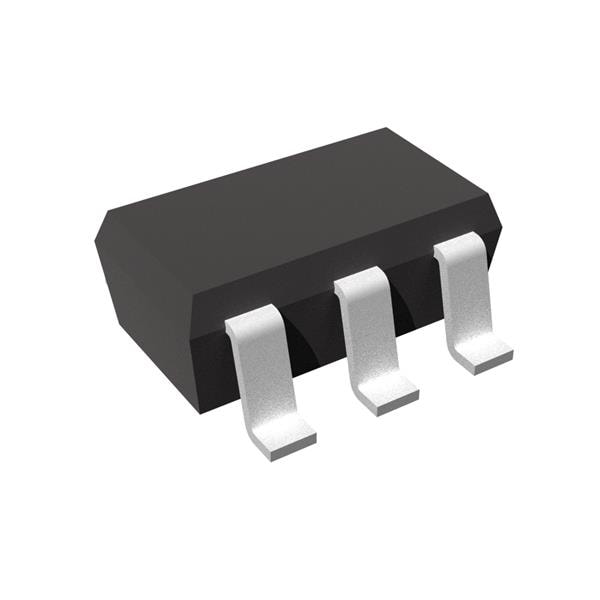
Where power management ICs fit in a design
Power architectures rarely rely on a single component. A typical design may include switching regulation for efficiency, linear regulation for low-noise rails, monitoring for current or voltage behavior, and protection circuitry to improve system reliability. That is why power management is often treated as an ecosystem rather than a single product type.
Within this category, engineers can evaluate solutions for DC/DC conversion, regulation, supervision, and control according to input voltage range, output current, thermal conditions, switching frequency, and board-level constraints. In projects that also involve complete energy sources or external conversion hardware, related options such as power supplies may be useful at the system level.
Common functions covered in this category
Power conversion is one of the most common requirements. Switching regulators and controllers are widely used when higher efficiency is needed, especially in designs that must step down an input rail to lower voltages for processors, memory, sensors, or communication modules. They are particularly relevant where battery life, thermal performance, or compact layouts matter.
Other functions in the broader category support battery management, current and power monitoring, supervisory behavior, gate driving, hot swap control, and wireless charging. This makes the category relevant not only for standard embedded electronics, but also for industrial automation, distributed control, portable devices, and mobility-oriented systems. For charging-related designs, users may also want to review battery charger solutions when the project scope extends beyond regulation alone.
Typical product examples in the range
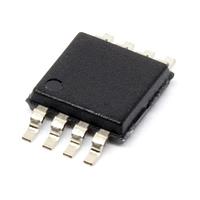
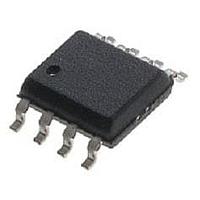
Several representative devices in this category illustrate the kinds of power tasks engineers commonly solve. From Alpha and Omega Semiconductor, parts such as the AOZ2153EQI-30, AOZ1094AIL, AOZ1092DI, AOZ3017PI, and AOZ2233CQI-12 reflect the demand for compact step-down regulation with variable output and surface-mount implementation. These types of devices are often selected for converting higher DC input rails into lower voltages required by digital or mixed-signal loads.
The available examples also show that this category is not limited to one regulation style. The Allegro MicroSystems A8300SESTR-1-T appears as a linear regulator option, while the Allegro MicroSystems UDN2916EBTR-T represents a different but related control role in motor drive applications. Altera devices such as EN5366QI and EV1340QI highlight how DC/DC switching regulation can support dense electronic assemblies where efficient onboard power conversion is essential.
How to choose the right PMIC for your application
Selection usually starts with the input and output requirements. Engineers need to confirm the input voltage window, target output voltage, required current, and whether the output must be fixed or adjustable. For example, some of the featured step-down devices support low-voltage rails around the sub-1 V range, which is often relevant for digital core supplies.
Next, consider efficiency, thermal limits, and switching behavior. Higher current capability and higher input voltage tolerance can broaden application range, but thermal design, layout quality, and switching frequency still affect overall performance. Surface-mount packaging is common for space-conscious designs, while operating temperature range remains important in industrial environments.
It is also useful to think beyond the IC itself. Start-up sequencing, transient response, noise sensitivity, protection strategy, and interaction with downstream loads all influence final device choice. If a system includes motors or motion functions as part of the power path, exploring products from Allegro MicroSystems may help align control and power requirements within the same design flow.
Switching vs. linear regulation in practical use
Switching regulators are generally preferred when efficiency is a priority, especially when stepping down from a higher rail and delivering meaningful load current. This is why many visible products in the category are DC/DC switching devices. They are often chosen for embedded processors, communications modules, FPGA-related rails, and distributed power architectures where wasted heat must be minimized.
Linear regulators still remain relevant where low noise, design simplicity, or post-regulation is needed. In some systems, both approaches are used together: a switching stage handles the main voltage conversion, and a linear stage refines a sensitive rail. This mixed strategy is common in instrumentation, control electronics, and communication hardware.
Applications across industrial and embedded systems
Power management ICs are widely used in industrial controllers, sensor nodes, I/O modules, communication boards, motor-control assemblies, and compact computing platforms. They support reliable voltage delivery to processors, memory, interfaces, and peripheral circuits while helping designers manage efficiency and heat. In higher-power system planning, PMICs often work alongside external infrastructure rather than replacing it.
This category is also relevant in designs connected to transport electrification and distributed energy architectures. Where broader energy storage or fast charge-discharge support is part of the system, related technologies such as supercapacitors may complement the PMIC stage at the application level.
Why category-level evaluation matters
A category page like this is useful because power design decisions are rarely made by comparing only one part number. Engineers often begin by narrowing down function, topology, current range, and integration level before moving to exact models. Looking at the category as a whole helps identify whether the application is better served by a switching regulator, linear regulator, controller, monitor, driver, or another power-management building block.
It also gives buyers and design teams a clearer path when sourcing for prototypes, revisions, or volume production. Instead of focusing only on part availability, they can compare device roles within the wider architecture and make more informed decisions about performance, thermal behavior, and integration effort.
Final considerations
Choosing the right power management IC is ultimately about matching the electrical function to the system-level objective. Input range, output requirements, efficiency targets, temperature conditions, and integration needs all shape the shortlist. A well-structured PMIC selection can improve reliability, simplify the power tree, and reduce downstream design compromises.
Whether the requirement is step-down conversion, linear regulation, monitoring, control, or support for a broader power subsystem, this category provides a practical starting point for evaluating components that keep modern electronic designs stable and efficient.
Get exclusive volume discounts, bulk pricing updates, and new product alerts delivered directly to your inbox.
By subscribing, you agree to our Terms of Service and Privacy Policy.
Direct access to our certified experts