
Multi-pin Connectors, Pins & Sockets
When a temperature measurement setup grows beyond a single sensing point, connector selection starts to matter just as much as the sensor itself. In test benches, process skids, laboratories, and OEM equipment, organized signal routing helps reduce wiring errors, simplify maintenance, and keep thermocouple channels clearly identified. That is where Multi-pin Connectors, Pins & Sockets become especially useful.
Within thermocouple and temperature sensor systems, this category supports reliable connection and disconnection of multiple channels in a compact format. It is a practical choice for engineers who need cleaner cable management, repeatable installation, and a structured way to interface several temperature points with instruments, panels, or harness assemblies.
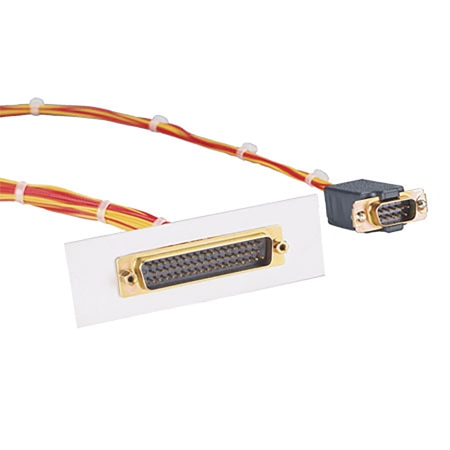
Where multi-pin thermocouple connectors fit in a temperature measurement system
Single-channel miniature plugs are often enough for basic measurements, but larger systems typically require many sensor signals to be grouped in a controlled way. Multi-pin connectors help bring several thermocouple lines into one interface, making it easier to connect assemblies to data acquisition hardware, portable instrumentation, or custom panels.
This becomes particularly relevant in applications with frequent setup changes, modular fixtures, or dense wiring layouts. Compared with loose point-to-point wiring, a multi-contact interface can improve traceability and help technicians reconnect systems faster after maintenance or calibration work.
Common product formats in this category
This category covers more than one connector style. Some products are designed as D-subminiature connectors for handling multiple thermocouple channels in a compact footprint, while others focus on the individual contact components needed to build or service these assemblies.
Examples from OMEGA include contact components such as the SMTC-OP-S, SMTC-OP-P, and SMTC-ON-S, as well as assembled connector formats like the SMT-15, SMT-25S, SMT-25L, SMT-50, SM9-15, SM9-25, and SM4-50. These products illustrate how the category supports both replacement parts and more complete multi-channel connection solutions.
There are also accessories and supporting components used in broader thermocouple wiring ecosystems. For instance, the FLUKE 700TC1 Thermocouple Plug Kit is useful when teams work across multiple thermocouple types and need standardized plug identification, while Thermal Detection offers components such as the TCEG thermocouple entry gland for organizing larger multi-sensor cable entries.
Why engineers choose multi-pin connectors, pins, and sockets
The main advantage is channel density. Instead of routing many separate connectors, users can terminate multiple thermocouple circuits into one compact interface. This saves panel space, reduces cable clutter, and helps create neater test or control assemblies.
Another benefit is serviceability. In production and maintenance environments, being able to disconnect a full group of sensor channels as one assembly can shorten downtime. Pins and sockets also make sense when repairs are needed, since individual contacts may be replaced without redesigning the entire system.
For OEM and machine-building work, these components support better repeatability during assembly. A consistent connector layout can help avoid wiring mistakes and support clearer documentation for harnesses, field service, and future expansion.
Selection points that matter before you buy
The right choice depends on how many measurement channels need to pass through the connector and how the assembly will be mounted or routed. In this category, available examples include 15-, 25-, and 50-contact formats, along with options for straight or angled connector bodies and different backshell styles.
It is also important to consider the cable exit and physical packaging. Some OMEGA models are built with wire tie backshells, while others use standard backshell designs. In compact enclosures, the connector angle and strain relief arrangement can make a significant difference during installation.
Temperature limits and cable diameter compatibility should also be reviewed where specified. Even when the connector is electrically suitable, the mechanical fit must match the harness design. For systems with different connector strategies across the machine, it may also be useful to compare alternatives such as panel mount connectors or field wireable connectors.
Typical use cases across industrial and laboratory environments
Multi-pin thermocouple connectors are commonly used in environmental test setups, thermal mapping, pilot plants, and research systems where multiple sensing points are monitored at once. They are also a practical fit for skid-mounted equipment and modular machinery, where subassemblies may need to be disconnected and reinstalled during commissioning or service.
In laboratory and validation work, these connectors help keep sensor bundles organized between the device under test and the readout equipment. In manufacturing, they can support repeatable hookups between fixtures and instruments, especially where several thermocouples are installed on the same product or process zone.
Where centralized connection points are needed, some users may also evaluate jack panels as part of the same wiring architecture. The best option depends on whether the goal is compact cable interconnection, panel distribution, or flexible field termination.
Brand examples in this category
FLUKE, OMEGA, and Thermal Detection are the key manufacturers represented in this selection. OMEGA is particularly visible in multi-pin and D-sub style thermocouple connector formats, including both complete connector assemblies and contact-level components for custom builds or repairs.
FLUKE adds value through practical thermocouple connection accessories such as the 700TC1 kit, which supports identification and interfacing across common thermocouple types. Thermal Detection contributes system-level cable entry hardware that can be relevant in installations where many thermocouple lines must be routed into hygienic or process-oriented assemblies.
Choosing the right configuration for your application
If your priority is compact multi-channel routing, D-subminiature thermocouple connectors are often a strong starting point. If you are maintaining an existing harness or building a custom assembly, separate pins and sockets may be the more flexible approach. And if your project includes multiple connection stages, it can make sense to align this category with related connector types used elsewhere in the system.
For buyers comparing options, the most effective approach is to review channel count, connector form factor, cable management needs, and service access requirements together rather than focusing on one parameter alone. That helps ensure the connector supports both the electrical measurement path and the practical realities of installation.
Final considerations
Well-chosen multi-pin thermocouple connection hardware can make a measurable difference in system organization, maintenance efficiency, and wiring consistency. Whether you need replacement pins and sockets, compact D-sub style assemblies, or supporting thermocouple connection accessories, this category helps bridge the gap between sensors and the rest of the measurement system.
If you are refining a new build or upgrading an existing setup, start with the number of temperature channels, the connector footprint available, and how often the assembly will need to be disconnected. From there, it becomes much easier to narrow the right multi-pin solution for reliable day-to-day use.
Get exclusive volume discounts, bulk pricing updates, and new product alerts delivered directly to your inbox.
By subscribing, you agree to our Terms of Service and Privacy Policy.
Direct access to our certified experts