Terminal Strips and Lugs
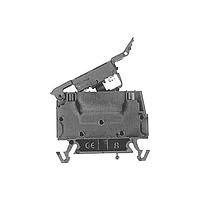
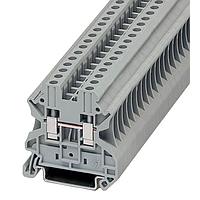
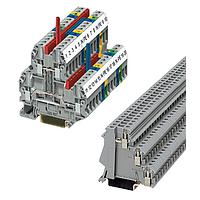
Reliable terminations matter wherever sensor signals, control wiring, or power distribution need to stay organized inside a panel. In temperature measurement and industrial wiring environments, small connection components often have an outsized impact on serviceability, signal integrity, and installation speed. That is why Terminal Strips and Lugs remain a practical choice for technicians, panel builders, and maintenance teams working with structured field wiring.
Where terminal strips and lugs fit in industrial wiring
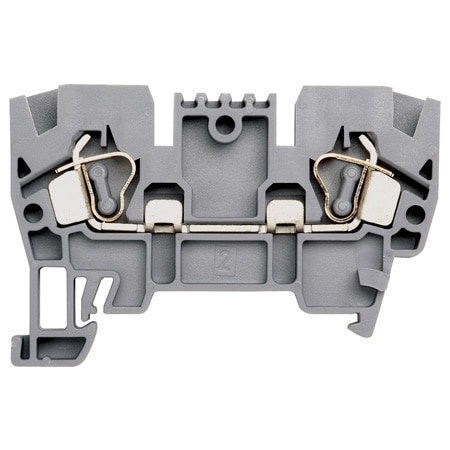
Terminal strips create a clear, repeatable way to land conductors and separate circuits within control cabinets, junction assemblies, and instrument panels. They are especially useful when multiple sensor leads, low-voltage signal lines, and grounded connections need to be routed in a compact but accessible layout. In many applications, they support faster troubleshooting because each connection point can be identified, isolated, and serviced without disturbing the rest of the wiring.
Lugs and related termination accessories support the same goal from a different angle: they help prepare conductors for secure attachment and long-term mechanical stability. In systems that include temperature sensors, transmitters, and auxiliary panel devices, choosing the right termination hardware can improve wiring discipline and reduce the risk of loose or inconsistent connections over time.
Typical use in temperature measurement and control panels
Within the broader connector ecosystem for temperature sensor installations, terminal strips and lugs are often used where field wiring transitions into the cabinet. They can act as an interface between incoming sensor cables and downstream control hardware, making it easier to label channels, separate grounded points, and organize signal paths. This is useful in process monitoring, machine temperature supervision, and test setups where orderly wiring is just as important as the instrument itself.
For installations that combine different connection methods, this category also works naturally alongside solutions such as DIN rail connectors or panel mount connectors. The right combination depends on whether the priority is modular panel assembly, external device access, or direct wire termination inside the enclosure.
Common accessory roles within this category
Not every item in this category is a primary connection block. Some products serve an equally important support function by improving isolation, segmentation, and grounding within a terminal assembly. End plates and partitions, for example, are used to separate adjacent terminal positions, provide a finished edge, and help maintain a cleaner, more readable layout.
Grounded end plate partitions go one step further by combining physical separation with grounding functionality where the design requires it. This makes them relevant in control cabinets where installers need both circuit organization and dependable grounding strategy. These supporting parts may look simple, but they contribute directly to safer, more maintainable wiring systems.
Examples from the OMEGA range
This category includes termination accessories from OMEGA, with several models designed around feed-through and ground terminal block assemblies. Examples include the YBK-EP-2.5, YBK-EP-4, YBK-EP-6, and YBK-EP-10 variants, as well as grounded versions such as YBK-254T-EP and YBK-10T-EP. These parts illustrate the range of conductor sizes and layout options used in practical terminal strip configurations.
Across the listed products, the intended wire ranges extend from finer conductors such as 22 to 12 AWG up to heavier wiring in the 20 to 6 AWG range. Depending on the model, these accessories support applications associated with different current levels and wiring densities. Color variations such as gray, red, and blue can also assist with circuit identification or visual organization in the panel.
How to choose the right terminal strip or lug accessory
A good starting point is the wire gauge range of the conductors being terminated. If the assembly needs to accommodate smaller sensor leads, one group of accessories may be more appropriate; if the design includes thicker conductors and higher current paths, a different size class will be needed. Matching the accessory to the corresponding terminal block family is also essential, especially for end plates and partitions that are built for specific series.
It is also worth checking the expected voltage rating, required current handling, and whether the installation needs a standard partition or a grounded version. In industrial enclosures, simple details such as strip length, color coding, and spacing can affect assembly efficiency and maintenance clarity. When these factors are considered early, the finished wiring layout is usually cleaner and easier to service.
Why organized termination improves maintenance
Well-structured termination points help technicians isolate faults more quickly, especially in systems with multiple sensors or mixed signal and power wiring. Instead of tracing loosely grouped conductors, maintenance staff can inspect labeled and separated terminations in a logical sequence. This is particularly helpful during commissioning, retrofit work, and shutdown maintenance when time is limited.
From a lifecycle perspective, accessories such as end plate partitions support mechanical separation and visual order, both of which can reduce wiring errors. A neat terminal layout also makes future expansion easier if new sensor channels or auxiliary devices need to be added. For related connection strategies in modular wiring systems, some users also review options such as field wireable connectors or multi-pin connectors, pins and sockets.
Selection priorities for B2B buyers
For OEMs, panel builders, and maintenance procurement teams, the most useful way to compare terminal strip and lug products is by application fit rather than by part number alone. Start with conductor size, panel architecture, grounding method, and the role of the accessory in the assembly. From there, it becomes easier to narrow down whether a standard end plate, a colored partition, or a grounded component is the better match.
It also helps to think in terms of the broader wiring ecosystem. Terminal hardware rarely operates in isolation; it supports the overall reliability of sensor connection points, cabinet organization, and future servicing. Reviewing compatible accessories from established lines can simplify standardization across multiple panels or projects.
Final thoughts
When panel wiring needs to be orderly, scalable, and easier to maintain, terminal strips and lugs provide a dependable foundation for connection management. Accessories such as end plate partitions and grounded partitions may be small components, but they play a meaningful role in circuit separation, grounding, and clean enclosure layout.
For buyers comparing options in this category, the key is to align the product with conductor size, electrical requirements, and the intended terminal block arrangement. A well-matched termination solution supports not only initial installation, but also the long-term serviceability of temperature measurement and industrial control systems.
Get exclusive volume discounts, bulk pricing updates, and new product alerts delivered directly to your inbox.
By subscribing, you agree to our Terms of Service and Privacy Policy.
Direct access to our certified experts