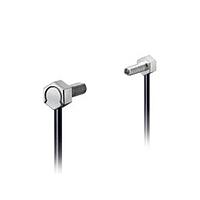
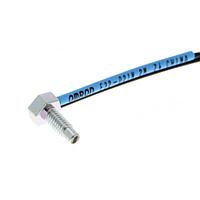
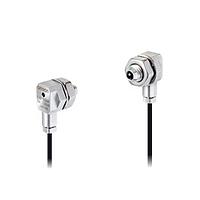
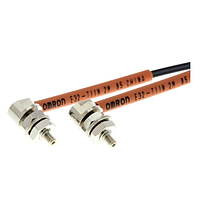
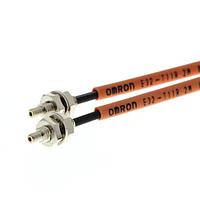
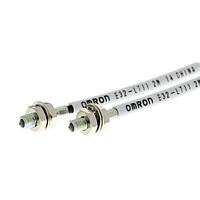
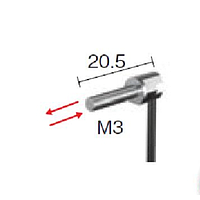
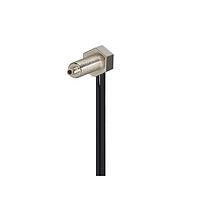
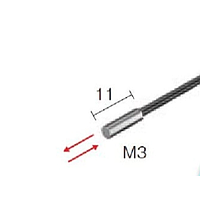
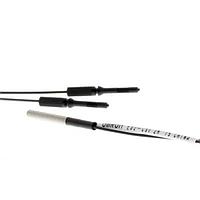
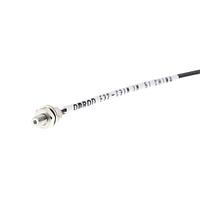
Fiber unit, Fiber sensor
Reliable object detection often becomes difficult when installation space is tight, targets are small, or the surrounding environment makes standard sensing methods less consistent. In these cases, Fiber unit, Fiber sensor solutions are commonly considered for automation systems that need precise switching, stable detection, and flexible mounting in compact equipment.
This category supports applications where engineers need to detect presence, position, or passage of parts with better adaptability around conveyors, assembly stations, packaging lines, and machine modules. It is also relevant when a sensing point must be separated from the main amplifier or when the machine layout demands a slim and configurable sensing head.
Where fiber sensing fits in industrial automation
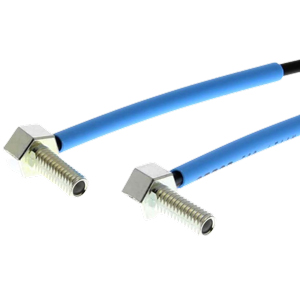
Fiber-based sensing is widely used when standard photoelectric formats are too large for the installation point or when the detection zone needs to be routed into a narrow or hard-to-reach area. A fiber unit typically works together with an amplifier, allowing the sensing point to stay compact while signal processing remains accessible for adjustment and diagnostics.
In practical machine design, this approach helps with detecting small components, board-level parts, labels, edges, or passing products in restricted spaces. It also gives designers more freedom when arranging sensors near tooling, guides, or moving mechanisms where direct installation of a larger body sensor may be inconvenient.
Why this category matters for compact and precise detection
The main value of this category is installation flexibility. Fiber sensing solutions are often selected when the mechanical design leaves very little room, when the sensing path needs to bend around a fixture, or when the detection head must remain lightweight near dynamic machine parts.
Another important factor is repeatable object detection. In many automated processes, reliable switching matters more than long sensing distance. When the application focuses on small targets, accurate alignment, and stable signal behavior, fiber-based sensing can become a practical choice within the broader sensor ecosystem.
How to evaluate a suitable sensor setup
Selection should start with the target itself: size, surface condition, position tolerance, and speed of movement. From there, engineers usually review available mounting space, required sensing distance, output type, switching logic, and whether the application needs manual adjustment or a simpler fixed arrangement.
It is also useful to compare the sensing principle with nearby alternatives. For example, some installations may be handled by compact reflective photoelectric sensors, while others benefit more from a remote-head format. If your project includes wider monitoring and control architecture, related automation elements such as SCADA components may also be relevant at the system level.
Representative OMRON products in this ecosystem
This category sits naturally within the broader sensing portfolio from OMRON, where compact detection, machine integration, and industrial durability are key considerations. Even when a project ultimately uses a fiber arrangement, reviewing related sensor families can help clarify the right sensing method for the job.
Examples from the current product context include the OMRON E3S-LS3NWT 2M and OMRON E3S-LS3NW 2M, both built around limited reflective detection with short-range response suited to structured object detection tasks. For harsher machine environments, models such as the OMRON E3ZR-CD61D and OMRON E3ZR-CD81L illustrate how diffuse reflective photoelectric sensing can be applied with oil-resistant construction, stainless steel housing, and IP67/IP67G protection in industrial settings.
Key application considerations
When comparing options, pay attention to sensing distance, response time, output configuration such as NPN or PNP, and Light-ON versus Dark-ON operation. These parameters affect not only the sensor itself, but also wiring compatibility, PLC input design, and how the machine reacts during product transitions.
Environmental conditions matter as well. Oil mist, limited clearance, vibration, and cable routing can all influence sensor choice. In some equipment, a fiber-based approach is preferred because the sensing point can be positioned close to the target while more sensitive electronics remain in a more accessible or protected location.
Relationship to other automation categories
Fiber sensing rarely works in isolation. It is part of a wider automation architecture that may include controllers, HMIs, data collection, and networked monitoring. For machine builders or plant engineers planning beyond a single sensing point, categories such as data loggers for automation systems can support traceability and process visibility.
Likewise, vendor comparison is often part of B2B sourcing. If your project requires evaluation across multiple automation platforms, browsing other manufacturer-oriented sections such as Panasonic automation products may help when standardizing components across machines or production lines.
When fiber sensors are a practical choice
This category is especially relevant when the target is small, the sensor head must fit into a narrow mechanical area, or the detection point needs to be routed more precisely than a conventional body-style sensor allows. It is also a useful option when the machine design benefits from separating the sensing location from the amplification and adjustment section.
For engineering teams, maintenance planners, and industrial buyers, the goal is not simply to choose a sensor with the highest nominal performance, but to match the sensing method to the actual machine constraints. Looking at detection principle, installation geometry, output behavior, and environmental exposure together usually leads to a more dependable result.
Final thoughts
Choosing the right fiber sensor setup depends on how the machine works in real operating conditions, not only on catalog data. A well-matched solution can improve detection stability, simplify integration in tight spaces, and support more consistent machine performance over time.
Use this category as a starting point to compare sensing approaches, review compatible industrial options, and narrow down products that suit your control architecture and installation requirements. For applications that demand compact sensing and dependable switching, this product group offers a focused path toward practical automation design.
Get exclusive volume discounts, bulk pricing updates, and new product alerts delivered directly to your inbox.
By subscribing, you agree to our Terms of Service and Privacy Policy.
Direct access to our certified experts