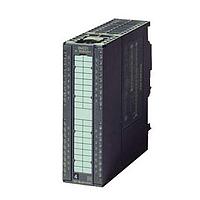
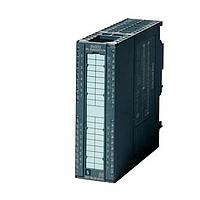
Module Siemens
In PLC-based automation, expansion modules are often the point where a controller becomes a practical machine-control system. They add the digital and analog channels needed to read field signals, switch actuators, handle temperature inputs, and extend communication inside a production line. This makes Module Siemens a relevant category for engineers who need to scale or adapt Siemens control platforms without replacing the core CPU.
The products in this category support different Siemens families, including compact logic systems and modular PLC ranges used in industrial panels, OEM machinery, utilities, and process support applications. Whether the task involves adding discrete I/O, thermocouple acquisition, analog output, or network connectivity, the right module helps match the controller to the real requirements of the application.
Where Siemens modules fit in an automation system
Modules are used to expand the capability of an existing controller in a structured way. Instead of moving to a larger PLC immediately, many systems can be upgraded by adding dedicated expansion units for inputs, outputs, analog channels, or communication. This approach is common in machine retrofits, panel upgrades, and phased automation projects.
Within the broader Siemens product range, modules are available for several well-known platforms such as S7-200, S7-1200, S7-300, and LOGO!. Each platform addresses different levels of control complexity, from compact standalone control to more advanced modular architectures. Choosing the correct module therefore depends not only on signal type, but also on controller family compatibility.
Typical module types in this category
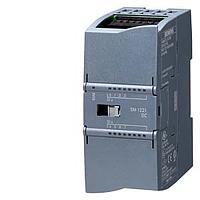
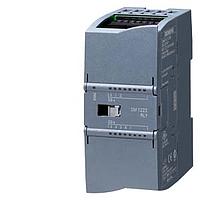
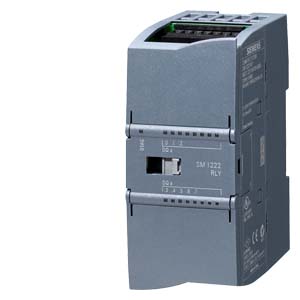
A large share of demand comes from digital input and output modules, which are used to interface pushbuttons, limit switches, sensors, relays, solenoids, lamps, and contactors. For example, the SIEMENS 6ES7221-1BF32-0XB0 Digital input SM 1221, 8DI, 24V DC, 6ES7221-1BF32-0XB0 is suited to collecting field status signals, while the SIEMENS SM1222, 8 DO, 24V DC , 6ES7222-1BF32-0XB0 DIGITAL OUTPUT SM1222, 8 DO, 24V DC is intended for output switching tasks in S7-1200 systems.
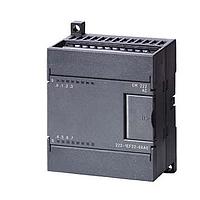
Combined I/O modules are also useful when panel space and wiring simplicity matter. A product such as the SIEMENS 6ES7223-1PL32-0XB0 Digital I/O Sm 1223, 16Di/16Do provides both input and output capacity in one module, which can simplify compact control cabinets. For older S7-200 installations, modules like SIMATIC S7-200, DIGITAL I/O, EM 223 or the SIEMENS 6ES7222-1BD22-0XA0 Module S7-200, EM222, 4DO, 24VDC illustrate how expansion is handled in legacy but still widely used systems.
Analog and temperature signal handling
Not every application is limited to on/off signals. Many industrial processes require analog measurement for temperature, level, pressure, or control output. In those cases, dedicated analog modules become essential because they provide the interface between the PLC and field instruments.
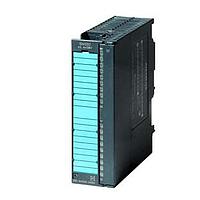
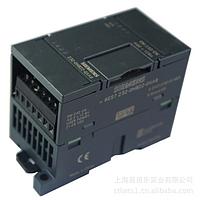
For temperature-related applications, thermocouple input modules are particularly important. The SIEMENS 6ES7231-7PD22-0XA8 Input Modem and the Siemens 6ES7231-7PD22-0XA0 Module S7-200, EM231, 4AI, 15bit are examples of S7-200 thermocouple input modules designed for low-level analog and thermocouple signals. In a different PLC family, the SIEMENS 6ES7332-5HD01-0AB0 Module represents an analog output option for S7-300 systems, useful where a controller needs to send proportional control signals rather than simple switching commands.
Modules for compact control and distributed machine functions
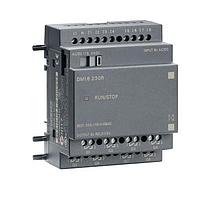
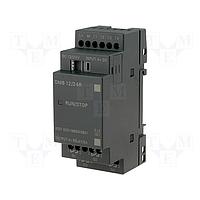
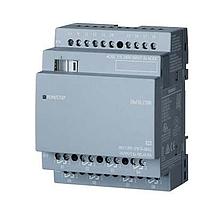
Siemens modules are not limited to classic PLC racks. Compact automation environments often use LOGO! expansion modules to add I/O in smaller applications such as utility control, simple machine logic, ventilation systems, pump sequencing, and building-related automation. Products such as the SIEMENS 6ED1055-1FB10-0BA0 LOGO! DM16 230R 8 DI/8 DO, SIEMENS 6ED1055-1FB10-0BA2 Logo DM8 Module, and SIEMENS 6ED1055-1MB00-0BA1 Logo! show how expansion can be handled in this more compact segment.
In practical terms, these modules help engineers adapt control systems to the number and type of real field signals present on site. Instead of oversizing the original controller, it is often more efficient to add the required expansion only where needed. This can improve cabinet organization, reduce redesign effort, and make future modifications easier to manage.
Communication and system integration considerations
Some modules in this category support system connectivity rather than pure I/O expansion. The SIEMENS 6GK7277-1AA10-0AA0 Compact Switch Module Csm 1277 is a good example, serving as a compact Ethernet switching option for S7-1200-oriented installations. In modern automation, communication infrastructure is part of the control architecture, especially when PLCs need to exchange data with HMIs, engineering stations, or adjacent equipment.
When planning a complete control solution, it is often useful to consider related accessories and operator interface products at the same time. For panel communication and commissioning, suitable Siemens programming and connection cables may be relevant. If the project also requires operator visualization, the HMI options for S7-1200 systems can help complete the control package.
How to choose the right Siemens module
The first step is always platform compatibility. A module designed for S7-200 is not automatically suitable for S7-1200, S7-300, or LOGO!, so the installed controller family should be confirmed before selection. After that, the key factors are the required number of channels, input or output type, electrical level, and whether the application needs digital, analog, relay, transistor, or temperature-specific signal handling.
It is also important to think about the broader system design. For example, a compact machine may benefit from mixed digital I/O modules to save space, while a process-related skid may need separate analog modules for better signal segregation. In applications that involve operator panels or older PLC families, related interface products such as HMI for S7-200/300/400 systems may also need to be considered during planning.
Suitable applications across industries
Siemens modules are commonly used in packaging equipment, conveyor systems, water and wastewater panels, utility automation, food processing support systems, and general manufacturing lines. Their role is straightforward but critical: they allow the controller to match the actual signal map of the machine or process. This is especially useful in projects where the base PLC does not have enough onboard I/O or where a specific signal type must be added later.
They are also relevant in maintenance and retrofit scenarios. Replacing only the failed or missing expansion module can be more practical than redesigning a whole cabinet, especially in systems built around established Siemens PLC families. For that reason, this category is useful not only for new projects, but also for spare-parts planning and lifecycle support.
Final considerations
Finding the right Siemens module is mainly a matter of matching controller family, signal type, and installation purpose. Digital I/O, analog channels, thermocouple inputs, compact LOGO! expansion, and communication-oriented modules each serve a different role in the automation stack. A clear understanding of the application helps narrow the selection quickly and avoids incompatibility at the panel stage.
If you are building, upgrading, or maintaining a Siemens-based control system, this category provides a focused starting point for identifying the expansion hardware that fits your architecture. Reviewing module function together with the target PLC platform and related accessories will usually lead to a more reliable and easier-to-integrate solution.
Get exclusive volume discounts, bulk pricing updates, and new product alerts delivered directly to your inbox.
By subscribing, you agree to our Terms of Service and Privacy Policy.
Direct access to our certified experts