Rail S7-300
In a modular PLC system, the mounting rail is more than a simple mechanical support. It defines how the station is assembled, how modules are aligned, and how easily the control cabinet can be expanded or serviced later. For engineers working with the Rail S7-300 category, choosing the correct rail length helps create a cleaner layout for SIMATIC S7-300 stations and supports reliable installation of CPU, I/O, and related modules.
This category focuses on Siemens rails designed for S7-300 assemblies, along with related front connectors commonly used in the same hardware ecosystem. It is especially relevant for panel builders, maintenance teams, retrofit projects, and anyone replacing damaged mounting hardware in an existing Siemens automation setup.

Where S7-300 rails fit in a PLC installation
An S7-300 station is built around a modular structure, and the rail provides the physical base for that structure. Modules are mounted in sequence, making the rail an important part of cabinet planning, especially when space, wiring access, and future expansion need to be considered from the start.
In practice, rail selection affects more than mounting. A rail that is too short can limit module count or create difficult wiring conditions, while an oversized rail may waste cabinet space. For this reason, rail length should be chosen in line with the number of modules, terminal access requirements, and the overall cabinet arrangement.
Available rail options in this category
This category includes several Siemens rail sizes for S7-300 systems, giving flexibility for both compact and extended assemblies. Examples include the Siemens S7-300 rail 6ES7390-1AB60-0AA0 with 160 mm length, 6ES7390-1AE80-0AA0 with 480 mm length, 6ES7390-1AF30-0AA0 with 530 mm length, 6ES7390-1AJ30-0AA0 with 830 mm length, and 6ES7390-1BC00-0AA0 with 2000 mm length.
These options are useful across different project scales. Shorter rails are often suitable for compact control tasks or replacement work in constrained enclosures, while longer rails are more practical for larger stations that require multiple modules and a more spacious layout for installation and maintenance.
Related accessories used with S7-300 rails
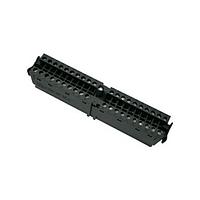
The rail is only one part of the station hardware. During assembly, installers also need the correct front connector for the signal modules being used. This category highlights accessories such as the Siemens S7-300 20-pin front connector 6ES7392-1AJ00-0AA0 and the Siemens S7-300 40-pin front connector 6ES7392-1AM00-0AA0, both commonly associated with S7-300 module wiring.
These components play a different role from the rail itself, but they belong to the same installation workflow. When planning a new build or replacing parts in an existing system, it is often useful to review both the mechanical mounting base and the connection accessories together so that panel assembly can proceed without compatibility issues.
How to choose the right rail length
The most practical starting point is the expected module count. If the station only requires a limited number of modules, a shorter rail may be sufficient and can help save cabinet space. If expansion is likely, selecting a longer rail from the beginning can reduce the need for rework later.
It is also important to think about wiring clearance, service access, and the overall panel layout. Even when the modules technically fit, a crowded arrangement can make maintenance more difficult. In retrofit applications, replacement dimensions may matter just as much as module capacity, especially when the rail must fit an existing enclosure or match an installed S7-300 configuration.
For projects involving communication hardware or networked stations, related items such as bus connectors for Siemens systems may also be part of the broader installation scope.
Typical applications in industry
S7-300 rails are commonly used in factory automation panels, machine control cabinets, utility systems, and process support equipment where SIMATIC S7-300 hardware remains in service. Many facilities continue to maintain and expand these systems because they are already integrated into established production lines and field wiring structures.
This makes the category relevant not only for new assembly work but also for spare parts and maintenance procurement. A damaged or undersized rail can interrupt an otherwise simple repair, so having access to the correct Siemens mounting hardware helps reduce delays during panel rebuilds or module replacement work.
Integration with the wider Siemens automation ecosystem
Many buyers searching for S7-300 rails are also working with adjacent Siemens components. Depending on the project, it can be useful to review PLC and HMI communication cables for commissioning or maintenance, particularly when programming access and system diagnostics are part of the same job.
Where operator interface equipment is involved, the broader setup may also include HMI products for S7-200/300/400 applications. Looking at the rail in this wider context helps buyers source not just a mounting part, but the supporting hardware needed for a complete and workable automation station.
Why Siemens S7-300 rail selection should be handled carefully
Because the rail is a foundational hardware element, mistakes at this level can affect the whole panel build. Incorrect length, poor allowance for module spacing, or missing connectors can create unnecessary installation work later. In B2B purchasing, that usually means added labor cost, delayed commissioning, or avoidable downtime during maintenance.
Working within the SIEMENS product range also helps keep component selection aligned with the intended S7-300 platform. For replacement and service teams, this is particularly important when maintaining consistency across installed systems and documentation.
Final considerations before ordering
Before selecting a rail, review the planned module arrangement, cabinet dimensions, and any accessories required for connection and expansion. In many cases, the right choice is less about buying the longest option and more about finding the most suitable balance between available space, module count, and maintainability.
This Rail S7-300 category is designed to support that process with relevant Siemens mounting rail options and associated front connectors. Whether you are building a new PLC panel, replacing a damaged base rail, or sourcing parts for an existing automation line, a well-matched rail helps create a more organized, serviceable, and reliable S7-300 installation.
Get exclusive volume discounts, bulk pricing updates, and new product alerts delivered directly to your inbox.
By subscribing, you agree to our Terms of Service and Privacy Policy.
Direct access to our certified experts