Supercapacitors
When a design needs short-term energy storage, peak power support, or reliable hold-up time, conventional capacitor technologies do not always provide the right balance. Supercapacitors are often selected for applications that demand rapid charge and discharge, high cycle life, and support for backup or pulse-power functions in compact electronic and industrial systems.
Within the broader capacitor ecosystem, this category helps engineers, buyers, and sourcing teams compare electric double-layer capacitors and related formats used in embedded power, memory backup, energy buffering, and bridge power architectures. Product options from manufacturers such as KYOCERA AVX, TAIYO YUDEN, and PANASONIC illustrate the range of package styles and electrical profiles commonly considered in B2B procurement.
Where supercapacitors fit in electronic power design
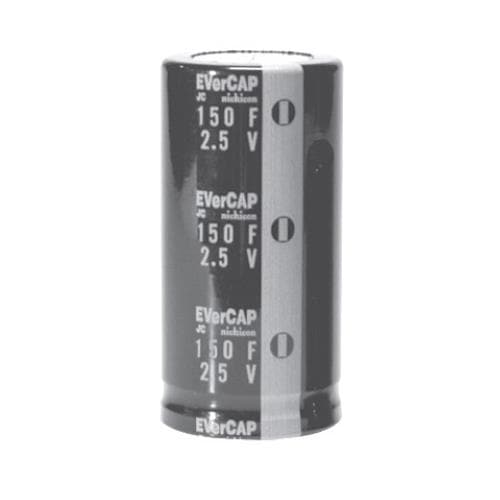
A supercapacitor is typically used where the system must store and release energy quickly over many charge-discharge cycles. Compared with batteries, these devices are generally suited to fast energy transfer and repetitive cycling rather than long-duration energy storage. Compared with many standard capacitors, they offer much higher capacitance, which makes them useful for temporary power support and energy smoothing.
In practical design work, they are often integrated to maintain RTC memory, support wireless transmission bursts, stabilize power rails during short interruptions, or provide pulse current assistance. This makes them relevant across industrial controls, metering, IoT nodes, consumer electronics subassemblies, and embedded systems that cannot tolerate brief supply drops.
Common application scenarios
Energy buffering is one of the most common reasons to choose this category. A supercapacitor can absorb and release short bursts of energy efficiently, helping systems manage load transients, startup peaks, or temporary power dips without forcing the main supply stage to handle every dynamic event alone.
Backup and hold-up power is another frequent use case. In many designs, the requirement is not to run the full system for hours, but simply to preserve data, keep a controller alive long enough for safe shutdown, or bridge a brief supply interruption. This is where electric double-layer capacitor solutions are often considered.
They may also be selected for long cycle-life applications where repeated charging would stress a conventional rechargeable battery. Selection still depends on voltage, capacitance, leakage, operating temperature, form factor, and the actual discharge profile of the load.
Representative product types in this category
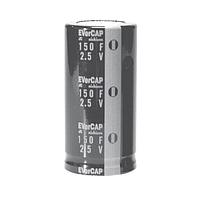
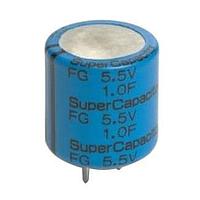
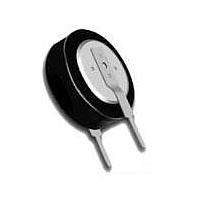
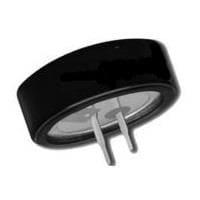
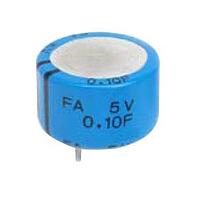
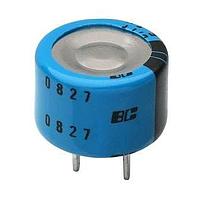
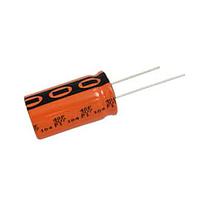
The product mix in this category includes multiple supercapacitor formats rather than a single universal part style. For example, the KYOCERA AVX SCCS30B116SRBA1 and KYOCERA AVX SCMR14H474MSBB0 represent electric double-layer capacitor options used where compact energy storage is needed in board-level designs. Other parts such as the KYOCERA AVX BZ029A124ZAB show that higher-voltage module-style configurations may also be relevant depending on the system architecture.
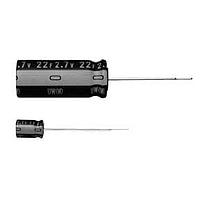
There are also solutions like the TAIYO YUDEN RSELT1562R7G25005 and the TAIYO YUDEN LIC1840R3R8107, the latter indicating how lithium ion capacitor technology can extend the design space for engineers looking at capacitance, voltage rating, and size constraints together. For lower-capacitance support functions, the PANASONIC EEH-ZT1V271V is an example of a part that may fit compact backup or assist-power roles.
These examples are useful as references, but component selection should always be based on the actual power budget, allowable voltage window, recharge behavior, and environmental conditions of the target equipment.
How to choose the right supercapacitor
The first step is to define the energy storage requirement in real operating terms. Instead of choosing only by nominal capacitance, it is more useful to estimate how long the device must support the load, what voltage drop is acceptable, and whether the application involves pulse current, brief ride-through, or periodic backup operation.
Next, review the electrical and mechanical limits of the design. Rated voltage, tolerance, leakage current, temperature range, package dimensions, mounting style, and lifetime expectations all affect suitability. A compact radial device may fit one board layout, while a larger module-style part may be more appropriate where more stored energy or higher working voltage is required.
It is also important to consider charging strategy and balancing requirements in multi-cell designs. If your project involves comparing neighboring technologies for broader circuit optimization, it may be useful to review aluminum electrolytic capacitors or aluminum polymer capacitors for applications where the main need is filtering, ripple handling, or decoupling rather than short-term energy storage.
Comparing supercapacitors with other capacitor technologies
Supercapacitors are not a direct replacement for every capacitor used in a circuit. In many systems, they complement other technologies rather than replacing them outright. Standard ceramic capacitors are often preferred for high-frequency decoupling close to ICs, while electrolytic and polymer capacitors are frequently chosen for bulk filtering and power rail stabilization.
By contrast, electric double-layer capacitors are typically selected when the design priority is stored energy over a short interval. That distinction matters during sourcing and BOM review, because capacitance alone does not tell the whole story. ESR, leakage behavior, charge time, discharge profile, and physical volume all influence whether a supercapacitor is the right fit.
Manufacturers and sourcing considerations
This category includes well-recognized names used in industrial and electronic component supply chains. KYOCERA AVX appears prominently in the available product examples, while TAIYO YUDEN and PANASONIC also provide relevant options for design teams evaluating package style and electrical performance. Depending on the project, buyers may also compare broader capacitor portfolios from established suppliers listed in this category context.
For procurement teams, a good sourcing process goes beyond matching capacitance and voltage on paper. It helps to confirm package compatibility, expected operating temperature, acceptable tolerance range, and whether the part is intended for backup, pulse support, or more specialized energy storage behavior. This reduces the risk of selecting a component that is electrically compatible but operationally mismatched.
Practical buying guidance for B2B projects
For OEM, maintenance, and contract manufacturing workflows, supercapacitor selection is usually tied to a specific system function rather than generic replacement. Engineers may define hold-up time for a controller, backup duration for memory retention, or peak current support for a communication burst. Buyers then need a shortlist that aligns those requirements with available inventory and package constraints.
If the application is still being narrowed down, it can be helpful to compare nearby component families and broader options under other capacitor categories. That approach is especially useful when a project starts with a general need for energy storage or power conditioning but the final architecture has not yet been fixed.
Conclusion
Choosing the right supercapacitor means looking beyond a single capacitance number and focusing on how the device behaves in the actual circuit. Voltage range, usable energy, leakage, temperature limits, package style, and cycle demands all matter when the goal is dependable backup or pulse-power support.
This Supercapacitors category is intended to make that evaluation easier by bringing together relevant products and recognized manufacturers in one place. Whether you are refining a new design or sourcing a replacement for an existing assembly, a careful review of application needs will lead to a more accurate and durable component choice.
Get exclusive volume discounts, bulk pricing updates, and new product alerts delivered directly to your inbox.
By subscribing, you agree to our Terms of Service and Privacy Policy.
Direct access to our certified experts