Inside Micrometers
When bore size, internal diameter, or gap width must be checked with tighter control than a standard caliper can usually provide, Inside Micrometers become the more appropriate choice. They are widely used in machining, maintenance, toolrooms, and inspection work where repeatability matters just as much as the reading itself. For applications involving holes, sleeves, bushings, or internal features that are difficult to verify from the outside, this category supports more stable and purpose-built measurement.
Compared with general-purpose measuring tools, inside micrometers are designed around internal contact geometry. That makes them especially useful when operators need better feel at the measuring point, more confidence across a defined range, and a more consistent method for routine checks in production or quality control.
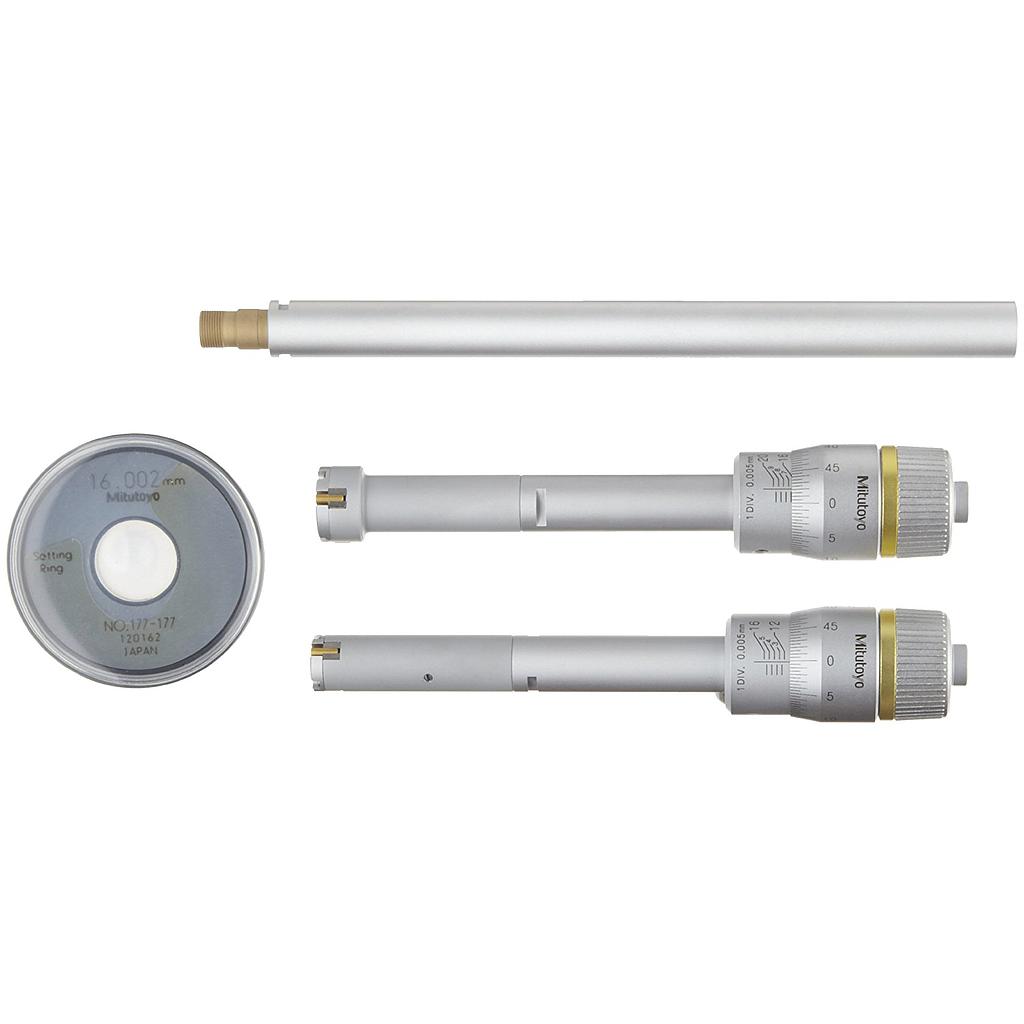
Why inside micrometers are used in precision internal measurement
Internal dimensions can be harder to verify than outside dimensions because the measuring surfaces are less accessible and often deeper inside the part. A caliper may be convenient for quick checking, but when tighter tolerances are involved, a dedicated internal measuring tool is often preferred. Inside micrometers are built to contact the internal surface more deliberately, helping reduce variation caused by tool position or operator technique.
This is particularly relevant in workshops that inspect the same feature repeatedly. A narrower measuring range is not a drawback in that context; it is often what helps maintain measurement stability. If your work also includes external checks on shafts or finished parts, it may be useful to compare with outside micrometers for the corresponding outer dimensions.
Common inside micrometer types in this category
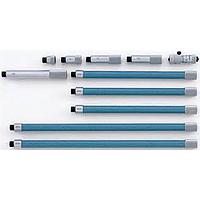
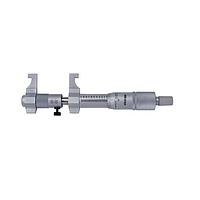
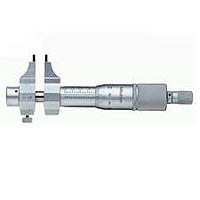
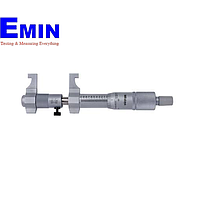
Not all internal measurement tasks require the same instrument structure. Traditional internal micrometers are often selected for straightforward diameter checking across defined ranges. Tubular designs are more suitable when the measurement span becomes much larger, while caliper-type models can be practical for specific internal access conditions.
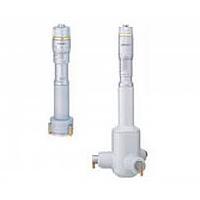
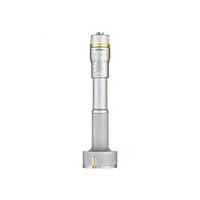
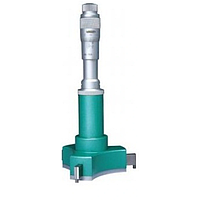
Another important group is the 3-point internal micrometer, commonly used when users need more centered contact inside a bore. This design is especially helpful in applications where repeatability and operator consistency are priorities. For users who want faster electronic reading, this category can also be considered alongside digital inside micrometers depending on the inspection workflow.
Representative products and where they fit
Several products in this category illustrate how different inside micrometer formats serve different tasks. The MITUTOYO 368-993 3-Point Internal Micrometer Holtest Set covers 50-100 mm with analog reading and 0.005 mm graduation, making it suitable for bore measurement where a 3-point method is preferred. Its set format also reflects a practical approach for users who need multiple sub-ranges within one solution.
For more traditional internal measurement, MOORE & WRIGHT models such as the 901M, 902M, and 903M represent metric options across progressively wider ranges, while the 901, 902, and 903 cover inch-based requirements. Where larger spans are needed, models like the MW300-01, MW300-02, and MW300-04 tubular inside micrometers extend coverage from 50 mm up to 2000 mm depending on the version. A caliper-type option such as the MOORE & WRIGHT MW280-04 can be relevant when access and handling style are part of the selection criteria.
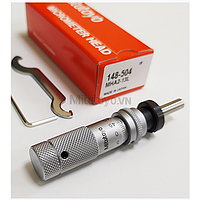
One listed product, the MITUTOYO 148-504 Micrometer Head, belongs more to the broader micrometer ecosystem than to standard handheld internal measurement. In many technical setups, micrometer heads are used as precision adjustment or positioning elements in fixtures and custom instruments rather than as direct replacements for inside micrometers.
How to choose the right model for your application
The first selection point is the measuring range. Inside micrometers are usually designed for specific intervals, so the best choice depends on the actual bore sizes or internal features you inspect most often. If the work involves one repeated size band, a dedicated range can provide better control than trying to cover too much with one tool.
Next, consider the measuring method and access condition. A deep bore, a narrow opening, and a large internal diameter each create different handling challenges. Traditional internal micrometers, tubular versions, and 3-point designs each solve a different measurement problem, so selection should follow the geometry of the part rather than habit alone.
Resolution and reading style also matter. Analog tools remain common in many machine shops because they are robust and familiar, while digital formats can help speed up reading and reduce interpretation errors. If bench work or repetitive inspection is part of your process, a micrometer stand may also support steadier handling in some measurement setups.
Brand context in this category
This category includes products associated with recognized industrial measurement brands such as Mahr, MITUTOYO, MOORE & WRIGHT, and Samyon. In practice, brand selection often depends on the level of inspection control required, preferred measuring format, and the standards already used in the workshop.
Within the featured products here, MITUTOYO and MOORE & WRIGHT are the clearest examples. MITUTOYO is represented by internal micrometer and micrometer head solutions, while MOORE & WRIGHT covers traditional, tubular, and caliper-type internal micrometers across metric and inch formats. Rather than choosing by brand name alone, most buyers benefit more from matching the product structure and range to the actual measuring task.
Practical usage considerations
Good internal measurement depends not only on the instrument but also on the measuring technique. Contact pressure, alignment inside the bore, and the user’s ability to find the correct measuring position all influence the result. This is why operators often find inside micrometers less intuitive than calipers at first, even though they offer better control in the right application.
In production environments, repeatability becomes more important than a quick single reading. A tool that fits the part geometry properly can reduce rechecking, improve confidence during inspection, and support more consistent process control. For teams working across both internal and external dimensions, combining inside micrometers with other dedicated micrometer categories is usually a more effective approach than relying on one general-purpose tool.
When this category makes sense
Inside micrometers are a strong fit for machining shops, maintenance departments, gauge rooms, and quality inspection processes where internal dimensions must be verified with more discipline than a caliper can usually offer. They are especially relevant for bores, liners, sleeves, bushings, and similar internal features where access, contact geometry, and repeatability affect the reading.
If your work involves regular bore measurement, narrow tolerance control, or repeated inspection of the same internal feature, this category provides a more suitable starting point. Reviewing the available measuring ranges, tool formats, and brand options will help narrow the selection to the instrument that matches your parts and workflow more closely.
Choosing an inside micrometer is ultimately about matching the instrument to the internal feature you need to control. Range, access, measuring method, and workflow all matter. With the right tool type in place, internal measurement becomes more repeatable, easier to standardize, and more reliable for day-to-day technical work.
Get exclusive volume discounts, bulk pricing updates, and new product alerts delivered directly to your inbox.
By subscribing, you agree to our Terms of Service and Privacy Policy.
Direct access to our certified experts