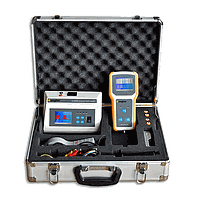
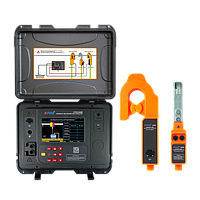
Ground Fault Locator
Electrical leakage problems rarely appear at a convenient time. In industrial plants, hospitals, utilities, and solar installations, a ground fault may develop gradually while the system continues to operate, creating safety risks, nuisance alarms, insulation stress, and difficult troubleshooting. In these situations, a Ground Fault Locator helps maintenance teams trace the fault path and narrow down the affected circuit faster than trial-and-error inspection.
This category focuses on instruments used to detect, map, and isolate earth leakage faults in energized or complex electrical networks. Instead of relying only on visual checks or full shutdown testing, technicians can use dedicated transmitters, receivers, and clamps to follow a diagnostic signal and identify where insulation breakdown, cable damage, or unintended leakage is occurring.
Why ground fault locating matters in real maintenance work
Many electrical faults do not immediately trip protective devices. A cable may leak current to ground intermittently, or insulation may degrade enough to affect reliability without causing a complete outage. That is why ground fault locating is especially important in facilities where continuity of operation matters as much as fault resolution.
Compared with basic verification tools such as a multimeter, a dedicated locator is designed for tracing the direction and relative strength of a fault-related signal through a live system. This makes it useful when the objective is not just confirming that a fault exists, but finding the branch, cable route, or section where corrective work should begin.
How a ground fault locator works
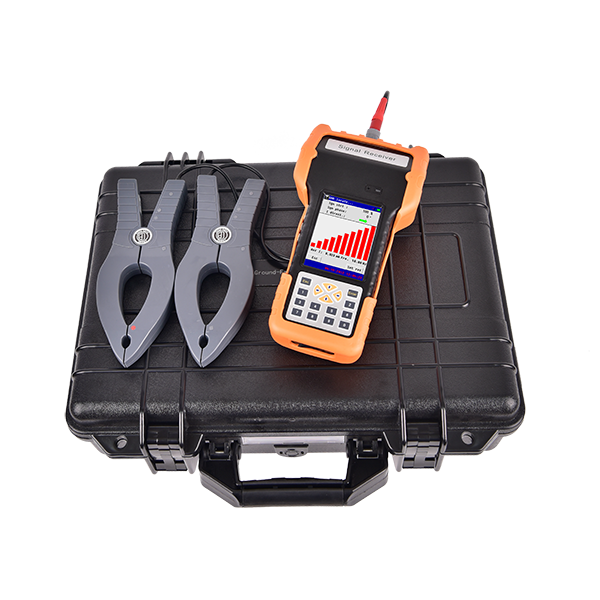
The general principle is straightforward. A transmitter applies a trace signal to the target circuit, and a receiver or clamp detects how that signal travels through the electrical path. Because leakage tends to follow the fault path, the technician can move along the installation and compare signal changes to identify the most likely fault location.
This approach is valuable in systems where shutting down equipment is costly or impractical. It also helps reduce unnecessary dismantling, since the operator can focus on the cable run or panel section showing the clearest fault indication. In broader troubleshooting workflows, these instruments are often used alongside an earth resistance/resistivity tester when grounding performance also needs to be assessed.
Typical applications across industrial and energy systems
Ground fault locators are used in a wide range of environments: manufacturing lines, data centers, building power systems, utility cabinets, and renewable energy installations. They are particularly useful where long cable runs, multiple branches, or distributed loads make manual isolation slow and uncertain.
Solar systems are a good example. In PV arrays, leakage and insulation issues may involve DC circuits, exposed cabling, connectors, combiner boxes, and environmental stress over time. A specialized solution such as the FLUKE-GFL-1500 Solar Ground Fault Locator is intended for tracing faults in high-voltage solar applications, where fast localization can help reduce downtime and improve maintenance efficiency.
Environmental factors that make faults harder to diagnose
Ground faults often become more visible under changing environmental conditions. Moisture is one of the most common triggers. When humidity penetrates insulation or collects around terminations, surface resistance can drop and leakage paths become easier to form. This is why some faults seem to appear only after rain, during fog, or in washdown and high-humidity production areas.
Heat also plays a major role. Repeated thermal cycling can harden or crack insulation, while sustained operating temperature accelerates aging in cable jackets, connectors, and internal insulating materials. In practice, this means a fault may worsen only under load, making intermittent problems much more difficult to catch without the right tracing instrument.
What to consider when choosing a ground fault locator
Selection should start with the type of electrical system involved. AC distribution networks, insulated systems, and solar DC installations do not always require the same test approach. Operating voltage, tracing method, signal detection style, and whether a current clamp is needed all influence which instrument will fit the job.
It is also worth checking field usability. Clear displays, audible guidance, portable form factors, and compatibility with energized troubleshooting can make a noticeable difference for maintenance staff working in large facilities or outdoor environments. For buyers comparing brands, the FLUKE portfolio is often considered when robust field instruments and electrical diagnostics are part of the requirement.
Using product examples in the right context
Not every locator is intended for the same application depth. Some tools are best suited to general earth fault tracing in building or industrial systems, while others are targeted at more specific use cases such as PV arrays or high-voltage DC troubleshooting. Looking at the product role in the diagnostic workflow is usually more helpful than comparing specifications line by line without context.
The FLUKE-GFL-1500, for example, combines a transmitter, receiver, and clamp-based workflow for fault mapping and tracing in solar environments. That kind of ecosystem matters because successful fault location often depends not on a single reading, but on how well the instrument supports signal injection, route checking, branch comparison, and field interpretation by the technician.
Good troubleshooting practice beyond the instrument itself
A locator works best when paired with a structured maintenance process. Technicians typically begin by reviewing system layout, identifying likely faulted sections, and checking whether the issue is persistent or intermittent. From there, the tracing process becomes more efficient because measurements are interpreted in the context of the actual cable network rather than as isolated signal readings.
It is also good practice to inspect connectors, cable joints, terminations, wet zones, and high-temperature areas once the probable fault location has been narrowed down. In many cases, the instrument speeds up the search, but lasting repair quality still depends on confirming the physical root cause and correcting the insulation or grounding issue properly.
Choosing the right category for your maintenance workflow
If your objective is to find leakage paths, isolate faulted branches, or troubleshoot energized electrical systems with less disruption, this category provides a focused starting point. Ground fault locators are especially valuable when the challenge is not simply measuring voltage or continuity, but tracing where an unwanted path to earth is developing inside a real installation.
For teams responsible for uptime, safety, and faster diagnostics, selecting the right tool means matching the instrument to the system type, working conditions, and tracing method required on site. A well-chosen ground fault locator can help reduce unnecessary shutdowns, shorten fault-finding time, and make electrical maintenance more targeted and predictable.
Get exclusive volume discounts, bulk pricing updates, and new product alerts delivered directly to your inbox.
By subscribing, you agree to our Terms of Service and Privacy Policy.
Direct access to our certified experts