ESD simulation
Electrostatic discharge testing is a practical requirement in electronics manufacturing, EMC validation, and reliability work. When a product must withstand handling, assembly, or real-world contact events, ESD simulation equipment helps engineers reproduce controlled discharge conditions and evaluate how a device or system responds under recognized test methods.
This category brings together instruments and accessories used for ESD test setup, discharge generation, waveform verification, and survey work. It is intended for laboratories, quality teams, compliance engineers, and production environments that need a more structured approach to electrostatic control and immunity testing.
Where ESD simulation fits in testing and production
In many facilities, electrostatic events are not just a cleanroom or handling issue. They can affect circuit reliability, cause intermittent faults, trigger resets, or damage sensitive assemblies during development, incoming inspection, and final verification. A proper ESD test setup makes it easier to check product robustness before failures appear in the field.
Depending on the task, users may need a handheld simulator for immunity testing, a current sensing target for waveform confirmation, or a survey kit to review the electrostatic condition of a workstation. In controlled production environments, ESD testing is often supported by broader contamination and personnel control measures such as air shower systems or bench-level clean environments, but the simulation process itself focuses on reproducing discharge events in a repeatable way.
Typical equipment found in this category
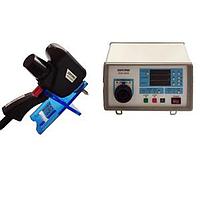
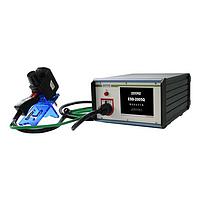
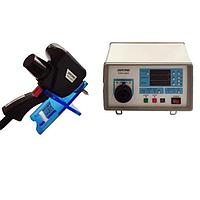
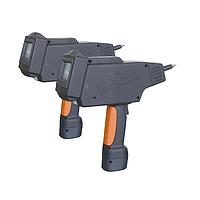
The most visible devices in this range are electrostatic discharge simulators. These are used to generate air discharge or contact discharge pulses so a device under test can be evaluated against common EMC and ESD procedures. For example, the NOISEKEN ESS-S3011A & GT-30RA Electrostatic Discharge Simulator and the NOISEKEN ESS-B3011A / GT-30RA Electrostatic discharge simulator represent dedicated solutions for controlled test execution across a broad voltage range.
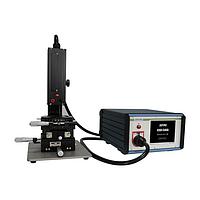
Another important group includes measurement accessories used to validate the test setup itself. Tekbox TBESDT1 and TBESDT2 current sensing transducers are intended for ESD waveform measurement, while the Tekbox TBESDMP1 ESD-Target mounting panel supports proper target installation. These components are relevant when engineers need to verify pulse characteristics rather than only apply discharges to the DUT.
For site assessment and electrostatic control checks, tools such as the Desco 19790 ESD SURVEY KIT can support routine evaluation of work areas. This is useful in manufacturing and handling environments where the electrostatic condition of the workspace matters just as much as formal immunity testing.
Representative manufacturers and solution styles
This category includes products from brands commonly associated with ESD and EMC work, including NOISEKEN, Schloeder, Tekbox, and Desco. Each serves a slightly different role in the workflow, from full-featured discharge simulation to test accessories and workplace survey tools.
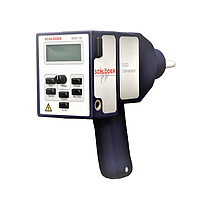
NOISEKEN and Schloeder are often considered when users need dedicated simulator platforms for structured test procedures. Tekbox products are especially relevant when building or checking the measurement side of an ESD setup, including target-related accessories and transducers. Desco is a natural fit for electrostatic control and audit-oriented tasks in assembly or handling areas.
How to choose the right ESD simulation equipment
A good starting point is to define whether the requirement is product immunity testing, waveform verification, or ESD control auditing. These are related tasks, but they do not always need the same equipment. A simulator is central when the goal is to apply discharge events to a DUT, while a current sensing target is more appropriate when checking the output behavior of the test setup.
Engineers should also consider the intended test method, the need for air versus contact discharge, voltage range, repetition control, and whether the setup will be used for bench testing, compliance pre-checks, or routine quality work. If the environment includes sensitive assembly operations, it can also be helpful to review nearby process controls such as clean bench solutions that support contamination and handling discipline alongside electrostatic precautions.
For organizations building a repeatable workflow, portability, accessory compatibility, and ease of setup can be just as important as headline output values. A lab validating pulse behavior may prioritize transducer compatibility and mounting accessories, while a manufacturing site may value faster operational checks and simpler operator handling.
Examples of use cases across the workflow
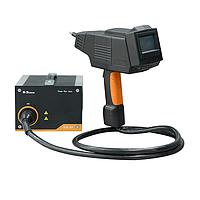
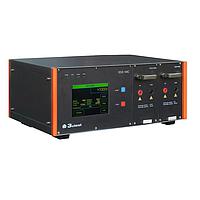
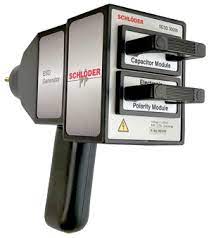
During development, a simulator such as the Schloeder SESD 230 ESD-Simulator or Schloeder SESD 30000 ESD-Simulator can be used to expose prototypes to repeatable discharge conditions and identify vulnerable interfaces, grounding weaknesses, or enclosure design issues. This can reduce redesign effort later in the EMC process.
In a validation or service lab, Tekbox targets and transducers may be used as part of the setup verification chain. Their role is not to replace the simulator, but to support confidence that the generated pulse is being measured in a controlled and traceable way. That distinction matters when the objective is reliable comparison between test sessions.
On the factory floor, a survey-oriented tool like the Desco 19790 ESD SURVEY KIT can help assess whether the work area remains suitable for handling electrostatic-sensitive devices. In broader controlled environments, users may also coordinate ESD control practices with room airflow, gowning, and cleaning routines, including support products such as cleanroom mops and dustcloths where appropriate.
Why setup quality matters as much as the instrument
ESD testing is only useful when the overall setup is stable and repeatable. Grounding arrangement, target mounting, cable condition, operator technique, and the physical test environment can all influence results. That is why accessory items such as an ESD target mounting panel or a current sensing transducer should be viewed as part of the measurement system, not as optional extras without consequence.
Repeatability also matters when results need to be compared over time, shared across teams, or used as evidence during internal qualification. A well-matched combination of simulator, target, and supporting accessories helps reduce uncertainty and makes troubleshooting more efficient.
Building a practical ESD testing workflow
For many users, the right approach is not simply choosing one instrument, but building a workflow that matches the stage of the product lifecycle. Early design teams often need flexible simulator access for debugging. EMC or QA teams may need a more structured station with targets and verification accessories. Production teams may focus on periodic survey checks and operator-safe procedures.
By selecting equipment according to the actual task, it becomes easier to balance technical depth, repeatability, and day-to-day usability. This category is designed to support that process, whether the need is a dedicated ESD simulator, a measurement accessory for setup validation, or a survey tool for electrostatic control in sensitive work areas.
Choosing ESD simulation equipment is ultimately about matching the test objective to the right combination of generator, target, accessory, and workplace control practice. A focused setup makes troubleshooting faster, improves consistency, and supports more confident decisions in development, validation, and electronics production.
Get exclusive volume discounts, bulk pricing updates, and new product alerts delivered directly to your inbox.
By subscribing, you agree to our Terms of Service and Privacy Policy.
Direct access to our certified experts