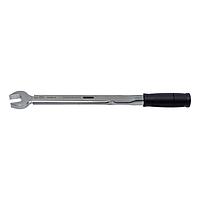
Adjustable torque Wrench
Accurate fastening matters wherever bolts, nuts, and threaded joints must be tightened to a defined value rather than by feel alone. In maintenance workshops, industrial assembly lines, automotive service, and general mechanical work, an adjustable torque wrench helps reduce the risk of under-tightening or over-tightening while improving repeatability across jobs.
This category brings together torque wrenches for different drive sizes and torque ranges, making it easier to match the tool to the application. Whether the task involves small fasteners, mid-range workshop assembly, or heavy-duty tightening at high torque values, selecting the right wrench starts with understanding the operating range, form factor, and working environment.
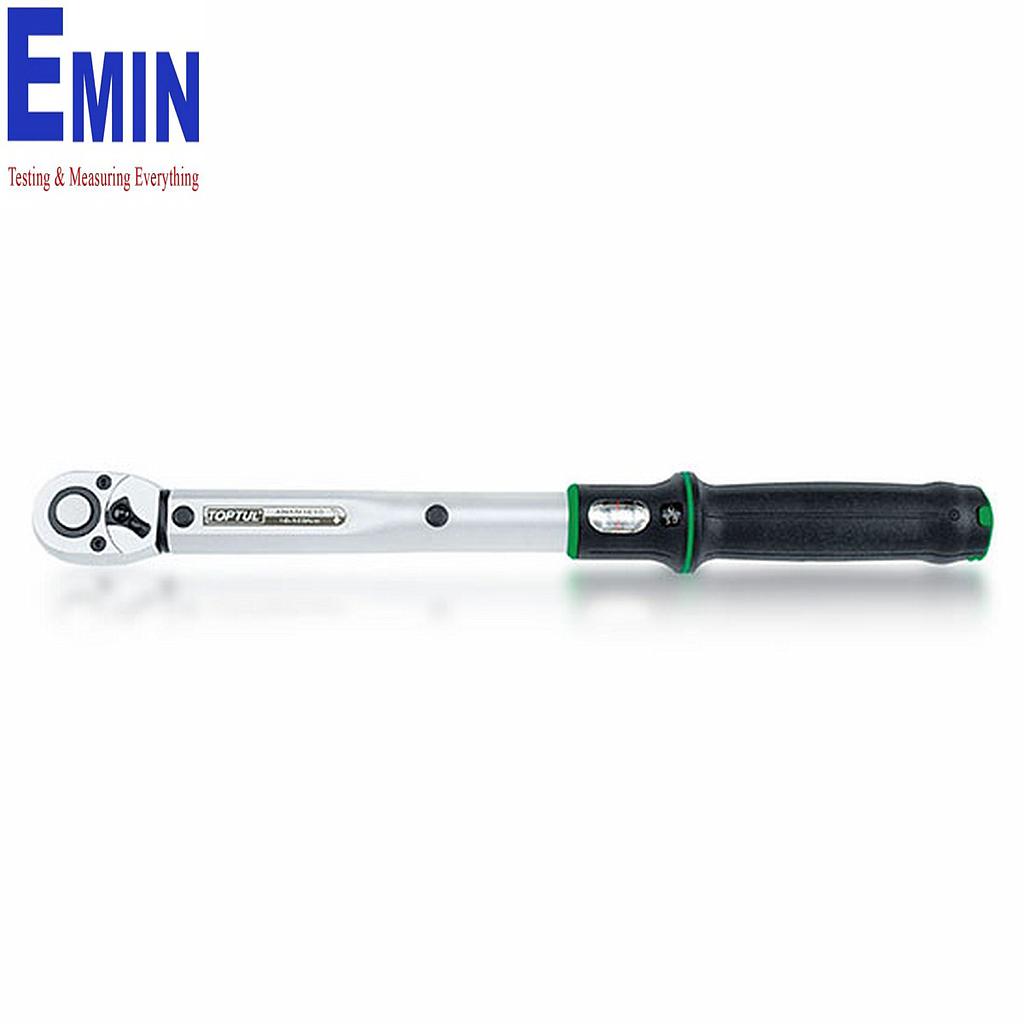
Why adjustable torque control is important
A torque wrench is designed to apply a specified amount of rotational force so that fasteners are tightened consistently. This is especially important when joints are part of a safety-related assembly, when materials can be damaged by excess force, or when manufacturers require controlled tightening during installation and servicing.
Compared with standard hand tools, an adjustable model gives users more flexibility because the set value can be changed within a defined range. That makes it practical for maintenance teams and technicians who work across different fastener sizes and applications, instead of relying on multiple fixed-torque tools.
Typical applications across workshop and industrial use
Adjustable torque wrenches are widely used in automotive repair, machinery servicing, production assembly, utility maintenance, and equipment installation. In these environments, the tool helps maintain proper clamping force on threaded connections, which supports mechanical reliability and reduces the chance of rework caused by inconsistent tightening.
For general assembly tasks, these tools are often used alongside complementary hand tools such as socket wrench sets, since the correct socket interface is essential for safe torque transfer. In broader maintenance work, technicians may also combine them with a repair kit to handle adjustment, replacement, and service operations more efficiently.
How to choose the right torque range and drive size
The first selection point is the torque range. A wrench should cover the target tightening value without operating too close to the extreme low or high end of its scale for every task. Lower-range tools are typically more suitable for lighter fastening work, while larger units are used for heavy mechanical joints that require significantly higher torque.
Drive size also affects compatibility and working capacity. Smaller square drives are commonly used for lighter-duty and more compact work, while larger drives are better suited to larger sockets and higher torque applications. Tool length, access space, and user handling should also be considered, especially when tightening in confined positions or when leverage is needed for high-load joints.
For example, compact options such as the YATO YT-07410 cover lower torque work in the 5-25 Nm range, while models like YATO YT-07413 and YATO YT-07414 fit more common workshop tightening ranges. At the heavier end, products such as TOPTUL ANAF2470, STANLEY 73-592, TOPTUL ANAQ32B0, and TOPTUL ANAQ48C0 illustrate how adjustable torque tools can extend into large-capacity industrial fastening applications.
Representative brands and product options in this category
This category includes products from recognized tool manufacturers used in professional workshop and industrial environments. Among the highlighted brands, STANLEY, TOPTUL, and YATO cover a practical spread of applications, from routine service work to higher-capacity torque tightening.
STANLEY models such as 73-590 and 73-592 are relevant for users who need adjustable torque tools for medium to higher torque requirements. YATO offers several ranges that are suitable for everyday workshop use, including 20-100 Nm, 40-200 Nm, 60-300 Nm, and 80-400 Nm classes. For demanding jobs, TOPTUL aluminum torque wrench models with 1" and 1-1/2" drives show the kind of capacity needed in larger industrial or heavy-equipment fastening tasks.
Other manufacturers in the broader brand portfolio, such as WERA, BRITOOL, KS Tools, Mountz, Tohnichi, JTC, and KANON, add useful context for buyers comparing professional torque tool ecosystems across maintenance and assembly environments.
Practical buying considerations for B2B users
For purchasing teams, maintenance planners, and industrial buyers, tool selection should go beyond the nominal torque value. It is useful to review the required range, square drive compatibility, total length, expected duty cycle, and whether the tool will be used mainly in field service, production assembly, or heavy maintenance. These factors influence productivity just as much as the stated torque capacity.
Another key point is application frequency. A workshop handling a wide mix of service tasks may prefer several adjustable wrenches covering low, medium, and high ranges rather than one broadly oversized model. In many cases, buyers also consider how the torque wrench fits into an existing hand tool setup that may already include hex wrench sets and other assembly tools used during installation and mechanical adjustment.
Using a torque wrench correctly
Proper use has a direct impact on fastening quality. The torque value should be set carefully according to the job requirement, and the tool should be used with the correct socket and a stable pulling motion. Jerking the handle or using unsuitable accessories can affect consistency and may also shorten tool life.
Users should also avoid applying a torque wrench as a general-purpose breaker bar unless the specific tool is intended for that kind of use. In production and maintenance environments, good handling practice, routine inspection, and suitable storage all help maintain measurement consistency and support dependable tightening results over time.
Finding the right adjustable torque wrench for your work
The right choice depends on how often the tool will be used, the fastener sizes involved, and how critical the tightening specification is for the application. A lower-range model may be the better fit for lighter mechanical work, while larger drive tools with extended bodies are more appropriate when the job calls for high torque on larger joints.
By comparing torque range, drive size, overall handling, and brand preference, buyers can narrow the selection to tools that align with their maintenance or assembly process. This category is intended to support that decision with a practical range of adjustable torque tools for both workshop-level and industrial fastening requirements.
FAQ
What is the main advantage of an adjustable torque wrench?
It allows the user to set different torque values within a defined range, making one tool suitable for multiple fastening tasks while improving consistency.
How do I choose between low-range and high-range models?
Start with the torque specification required by your application, then choose a wrench whose working range comfortably covers that value and matches the needed drive size.
Are high-capacity torque wrenches only for heavy industry?
They are most common in heavy maintenance and large mechanical assemblies, but they can also be relevant in any environment where large fasteners require controlled tightening.
When controlled fastening is part of the job, choosing the right torque wrench helps improve reliability, reduce fastener-related issues, and support more consistent maintenance or assembly results. A well-matched adjustable model gives users the flexibility to handle real working conditions without sacrificing torque control.
Get exclusive volume discounts, bulk pricing updates, and new product alerts delivered directly to your inbox.
By subscribing, you agree to our Terms of Service and Privacy Policy.
Direct access to our certified experts