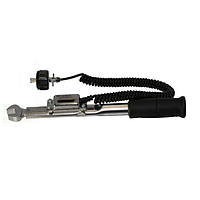
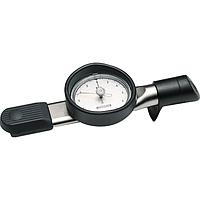
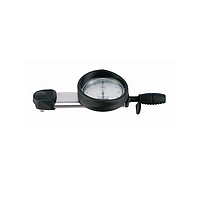
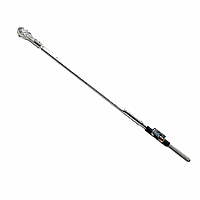
Indicating torque wrench
Precise fastening matters wherever assembly quality, repeatability, and thread protection are critical. In maintenance workshops, production lines, electronics work, and mechanical service tasks, an indicating torque wrench helps users apply a controlled tightening force while giving a clear torque reading during use, reducing the risk of under-tightening or overtightening.
This category is built for buyers who need more than a standard hand tool. It covers torque tools and related solutions used to monitor fastening values more accurately, whether the task involves light torque in small assemblies or higher torque ranges in industrial and automotive applications.
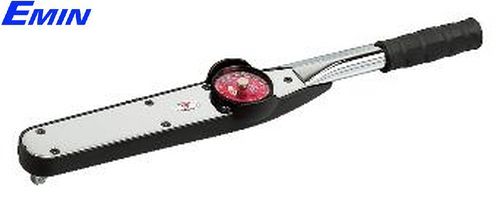
Where indicating torque tools are typically used
Torque-controlled fastening is common in applications where bolt load, joint integrity, and component protection must be managed carefully. Typical environments include equipment assembly, machine servicing, panel work, maintenance operations, and repair tasks where torque values need to be checked rather than estimated by feel.
These tools are especially useful when technicians work with mixed fastener sizes, different material combinations, or assemblies that can be damaged by excess force. In practical terms, an indicating design supports more consistent tightening and provides better process visibility than a basic wrench without torque feedback.
Mechanical and digital approaches in this category
Within this category, buyers may encounter both break-over torque wrenches and digital torque measuring solutions. Mechanical break-over styles are often selected for straightforward repetitive fastening, especially when a preset torque threshold is needed and a tactile response is preferred during operation.
For example, several Mountz TBIH break-over wrench models in this category illustrate how compact torque tools can support low-range fastening work. Options such as Mountz 068004-A, 068004-B, and 068004-D show how torque coverage can vary depending on the joint and application, making tool range selection an important part of the buying decision.
Digital options add another layer of control by displaying measured torque values directly. Products such as the TOPTUL DTA-030N Digital Torque Adapter and TOPTUL DTA-200N Digital Torque Adapter are suited to users who want readable measurements, multiple torque units, and basic data handling features in day-to-day service work.
Why digital torque adapters are relevant
A digital torque adapter can be a practical choice when users want to add torque indication to an existing ratchet or wrench workflow. Instead of replacing every hand tool setup, an adapter can provide measurement capability across different jobs while keeping the tool kit relatively flexible.
Models such as the TOPTUL DTA-135A4, DTA-200A4, and DTA-340A4 also add torque-and-angle capability, which is helpful in applications where tightening procedures involve both a torque target and a specified rotation angle. That kind of functionality is often relevant in maintenance and mechanical assembly processes where tightening sequences need closer control.
For more general fastening support around these tools, some buyers also review related hand tool ranges such as socket wrench sets, especially when drive compatibility and daily workshop use are part of the purchasing decision.
How to choose the right indicating torque wrench
The first step is to define the required torque range. A tool should cover the real working range of the application without forcing users to operate continuously at the extreme low or high end. Small fasteners, connectors, and light assemblies typically call for lower ranges, while industrial maintenance and mechanical equipment work often require much higher values.
The next consideration is the drive size and working method. A compact 1/4" adapter such as the TOPTUL DTA-030N fits lower-torque tasks and smaller hardware, while 1/2" solutions like the DTA-200N or DTA-340A4 are more aligned with heavier service work. Tool size, available space, and access angle all affect real usability.
Buyers should also think about reading method and workflow. Mechanical break-over tools are easy to integrate into repetitive operations, while digital tools are useful when users need visible readings, unit selection, memory functions, or track and peak hold modes. If the task involves sensitive RF or connector tightening, a specialized option such as the Tekbox TBTWR-05NM torque wrench may be more appropriate because it is designed for a very specific low-torque use case.
Examples of tools in this range
This category includes products suited to very different fastening scenarios. The Tekbox TBTWR-05NM is an example of a low-torque wrench intended for fine adjustment and connector-related work, with a narrow torque focus that supports controlled tightening where precision matters.
At the same time, the Mountz TBIH break-over wrench family demonstrates how compact mechanical tools can be applied across multiple low-torque bands. Models such as Mountz 068003-C and 068003-D are relevant where repeatable tactile indication is preferred over a digital display.
On the digital side, TOPTUL adapters cover a wider span of torque levels and operating styles. The DTA-030N serves lower-torque work, while the DTA-200N and DTA-340A4 address broader service requirements. This makes the category suitable for buyers comparing simple indication, multi-unit display, and torque-angle measurement in one place.
Selection factors for industrial buyers and maintenance teams
For B2B purchasing, tool choice is rarely based on torque range alone. Teams usually evaluate repeatability, readability, compatibility with existing hand tools, ease of use in confined spaces, and whether the tool fits the standard procedures already used on site.
Battery-powered digital models may be preferred when clear numerical feedback is needed, while purely mechanical options can suit environments where simplicity and robustness are priorities. Buyers managing broader tool inventories may also compare this category with adjacent assembly products such as hex wrench sets or repair kits depending on the overall maintenance workflow.
Practical buying guidance
When comparing products, it helps to start with the actual fastening task: fastener size, target torque, access limitation, and whether the job needs only torque indication or both torque and angle. A low-range precision job and a general mechanical maintenance task should not be handled with the same selection logic.
It is also important to consider unit preferences used by the team, such as Nm, Ft-Lb, In-Lb, or Kg-cm, especially for multinational plants or mixed documentation environments. Digital adapters with multiple unit options can simplify field work and reduce conversion errors.
If the application is repetitive and standardized, a break-over style may provide a fast, efficient solution. If traceable readings, flexible operation, or multi-scenario use are more important, a digital indicating tool may be the better fit.
Find the right torque indication setup for your work
This selection brings together torque tools for users who need more control during fastening, from compact low-torque wrenches to digital adapters for wider industrial use. Whether the priority is tactile indication, displayed torque values, or torque-and-angle capability, choosing the right tool starts with matching the torque range and workflow to the real application.
By reviewing the intended use, drive size, and level of measurement feedback required, buyers can narrow the options more effectively and select an indicating torque wrench solution that fits both the task and the maintenance environment.
Get exclusive volume discounts, bulk pricing updates, and new product alerts delivered directly to your inbox.
By subscribing, you agree to our Terms of Service and Privacy Policy.
Direct access to our certified experts