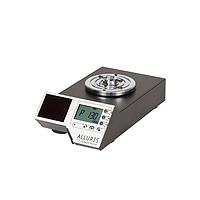
Torque meter
Precise torque verification is essential anywhere threaded joints, rotating assemblies, or controlled fastening processes have a direct impact on product quality. In production lines, maintenance workshops, and test benches, a reliable torque meter helps teams confirm that applied torque stays within the intended range, reducing the risk of under-tightening, over-tightening, and inconsistent assembly results.
This category brings together torque measurement solutions used for checking, monitoring, and analyzing rotational force in practical industrial environments. It is especially relevant for users working with hand tools, powered fastening systems, quality inspection stations, and component testing where repeatable torque data matters.

Where torque meters are commonly used
Torque measurement is a core requirement in many assembly and verification tasks. Manufacturers use torque meters to validate fastening processes, compare tool performance, inspect product reliability, and document process consistency. In maintenance and service work, they are also useful for troubleshooting joints that may have drifted outside specification over time.
These instruments are often selected for applications involving screwdrivers, wrenches, rotary tools, and drive systems. In broader assembly environments, they can complement other hand tools and support equipment such as socket wrench sets when users need both controlled tightening and post-process verification.
Understanding the role of a torque meter in testing and assembly
A torque meter is used to measure rotational force, typically during tool calibration, fastening validation, or mechanical testing. Depending on the setup, the device may be used to capture peak torque, monitor dynamic torque during rotation, or support angle-based analysis in more advanced test procedures.
For B2B users, the value of torque measurement goes beyond a single reading. It supports process control, traceability, and quality assurance, especially in operations where torque is part of a defined work instruction or inspection plan. This makes torque meters relevant not only to production teams, but also to QA, maintenance, and engineering departments.
Rotary torque and angle measurement options in this category
Several featured products in this category are rotary torque and angle sensors from Mountz, a manufacturer widely associated with torque-related assembly and testing equipment. These models illustrate how torque measurement can be integrated directly into rotating applications, rather than limited to static checking alone.
Examples include the Mountz RTSX10i-A and RTSX10i-HA for low torque measurement, the RTSX50i-A and RTSX100i-A for mid-range inch-pound applications, and larger-capacity models such as the RTSX50F-A, RTSX100F-A, RTSX400F-A, and RTSX800F-A for higher lbf.ft ranges. Across these examples, the product range covers different drive interfaces, including square drive and hex configurations, which helps match the sensor format to the tool or test fixture being used.
In practical terms, rotary torque & angle sensors are useful when users need to observe torque while a shaft or fastener is moving. This is especially relevant in tool evaluation, process development, and performance testing where both torque behavior and rotation data can improve insight into how an assembly is actually being tightened.
How to choose the right torque meter
Selecting the right model starts with the expected torque range. A sensor sized too high for the application may reduce measurement sensitivity at the low end, while one sized too close to the maximum working load may leave too little headroom. It is usually better to match the instrument to the normal operating range of the process rather than only its occasional peak.
Connection type is another important factor. In this category, some models use female and male square drives, while others use male and female hex interfaces. That difference affects how easily the torque meter can be inserted between the drive tool and the fastener or integrated into an existing test rig.
Users should also consider whether they need only torque data or both torque and angular movement. For many fastening and validation tasks, torque and angle measurement together can provide a clearer picture of joint behavior, seating, and consistency than torque alone.
What matters in industrial torque measurement
For technical buyers, performance is not just about range. Measurement linearity, overload capability, electrical output characteristics, and operating temperature all influence whether a torque meter fits a real production or lab environment. In rotary measurement applications, compatibility with connectors, signal conditioning, and downstream data collection can also affect implementation.
The featured Mountz RTSX series shows a consistent approach across multiple capacities, with models designed for repeatable measurement in controlled use conditions. For buyers comparing broader measurement brands and force-testing ecosystems, it can also be useful to review manufacturers such as FUTEK or Mark-10 where related sensing and test instrumentation may support adjacent requirements.
Typical users and buying scenarios
This category is relevant for manufacturers of electronics, automotive parts, appliances, industrial equipment, and precision mechanical assemblies. It also fits calibration labs, maintenance departments, and engineering teams building custom torque verification stations. In these environments, buyers often need more than a general-purpose tool; they need a measurement device that fits a defined range, interface, and test method.
Some users need compact low-range models for small fasteners and controlled screwdriver applications. Others require larger-capacity rotary sensors for heavy-duty assembly, validation of torque tools, or test setups involving shafts and couplings. If the application also includes routine tool servicing, related support items such as a repair kit may be part of the broader maintenance workflow.
Why category-level comparison is useful
Looking at torque meters at the category level helps buyers compare the overall measurement approach before choosing a specific model. Rather than jumping directly to one part number, it is often more effective to review the available torque ranges, mechanical interfaces, and intended use cases first. This is particularly important when a production line includes multiple fastening points with very different torque requirements.
The current selection highlights how one product family can scale from very low lbf.in measurement up to substantially higher lbf.ft capacities. That range makes it easier to standardize around similar sensor concepts while still matching different assembly stations or test benches to appropriate measurement limits.
Choosing with confidence
A well-matched torque meter supports better assembly quality, more dependable validation, and clearer process data. Whether the need is low-torque verification for smaller fasteners or rotary torque and angle sensing for higher-load applications, the right choice depends on range, interface, and how the instrument will be used in the real workflow.
By reviewing this category in the context of your tooling, test method, and quality objectives, it becomes easier to narrow the options to a practical solution that fits the job without adding unnecessary complexity.
Get exclusive volume discounts, bulk pricing updates, and new product alerts delivered directly to your inbox.
By subscribing, you agree to our Terms of Service and Privacy Policy.
Direct access to our certified experts