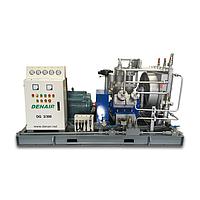
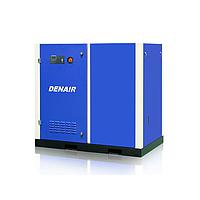
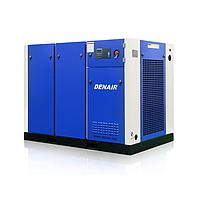
Air Compressor
Stable compressed air is the starting point for many assembly, maintenance, and workshop tasks. When pneumatic equipment is used day after day, choosing the right Air Compressor affects not only tool performance, but also operating consistency, noise level, pressure stability, and long-term serviceability.
This category brings together compressor options suited to different working environments, from compact units for light-duty benches to larger tank-based systems for continuous industrial use. Whether the goal is to supply a single handheld tool or support a broader pneumatic workstation, the right setup depends on airflow demand, tank size, working pressure, and power supply.
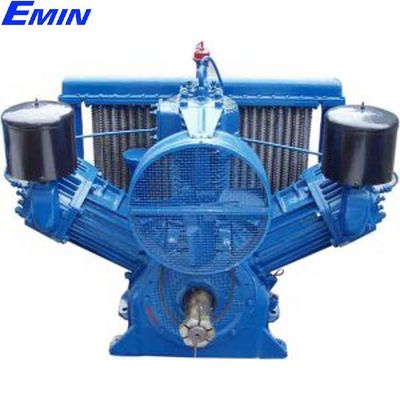
Why compressor selection matters in pneumatic applications
Compressed air systems are often selected based on pressure alone, but in practice airflow capacity is just as important. A compressor that can reach the required pressure but cannot sustain enough flow may cause tools to lose torque, slow down, or cycle inconsistently during operation.
In pneumatic tool environments, the compressor should match the real duty cycle of the application. This is especially relevant when powering equipment such as an air impact wrench or air-driven fastening tools, where short bursts and repeated demand can create pressure drops if the air supply is undersized.
Common compressor formats in this category
The range in this category includes compact portable models, workshop compressors with medium tanks, and larger belt-driven units intended for heavier industrial workloads. Smaller systems are useful where mobility, bench use, or occasional air demand is the priority, while larger receivers help buffer fluctuations and reduce frequent motor cycling.
For example, the Mountz MAC-20 Mini Air Compressor is suitable for low-flow tasks where portability matters. At the other end of the range, larger ABAC and PEGASUS models are more appropriate for workshops and production areas that need stronger and more sustained compressed air delivery.
Examples of products for different operating needs
For light-duty or specialized use, the PCE ACO 9500 Compressor offers a brushless design with adjustable speed and an LCD interface, making it a practical option where controlled airflow and compact form factor are useful. The Mountz MAC-20 Mini Air Compressor is another example of a small-format unit for tasks that do not require a large receiver or high-volume air supply.
For more conventional workshop use, the PEGASUS TM-W-0.36/8-180L Belt Driven Air Compressor provides a larger tank and higher flow capability than compact units, which can be beneficial for repetitive maintenance tasks. In heavier-duty segments, several ABAC compressors in this category cover a broad span, from smaller 24 L models such as POSITION 221 and POSITION 241 to industrial units like the B7000, B6000, and B7900S series with much larger tank capacities and three-phase power input.
How to choose the right air compressor
A practical selection process usually starts with the connected tool or process. If the compressor will run one tool at a time, the key questions are the required working pressure, average air consumption, and how often the tool runs during a shift. If several points of use are involved, sizing should allow for simultaneous demand and some reserve capacity.
It also helps to compare tank capacity, motor power, and available electrical supply. Compact 24 L systems may suit lighter workshop tasks, while 180 L, 270 L, 500 L, or even 900 L configurations are typically considered when longer duty cycles and more stable delivery are needed. Single-phase and three-phase availability can also strongly influence what is practical to install.
- Choose by real airflow demand, not pressure rating alone.
- Match tank size to duty cycle and expected peak consumption.
- Check site power requirements before narrowing the model range.
- Consider portability versus fixed installation needs.
Typical applications across workshops and industry
Air compressors in this category can support a wide range of pneumatic operations, including tightening, grinding, drilling, blowing, and general maintenance work. In many workshops, one compressor may serve multiple tool types over the course of the day, so flexibility and reserve capacity are often valuable.
Applications may include feeding air screwdrivers for assembly tasks, supplying an air grinder for surface preparation, or supporting intermittent service tools used by maintenance teams. For these use cases, stable pressure and sufficient receiver volume help maintain more predictable tool behavior.
Portable units versus larger stationary systems
Portable compressors are generally easier to move between workstations and are often chosen for lighter service jobs, field support, or bench-based applications. Their advantages usually include a smaller footprint and simpler deployment, but they may be less suitable for continuous high-flow demand.
Larger stationary systems are better suited to fixed workshop layouts and production support. Models such as the PEGASUS 180 L unit or larger ABAC tank-based compressors are more relevant where multiple operations rely on compressed air throughout the day, or where pressure drop and restart frequency need to be reduced.
Brand coverage and range context
This category includes products from recognized names such as Emerson, Hyundai, MAKITA, METABO, STANLEY, ABAC, Mountz, PCE, PEGASUS, and Trotec. Not every brand serves the same use case, so the practical comparison is less about brand visibility and more about how a model fits the operating profile, installation constraints, and expected duty cycle.
Among the listed examples, ABAC provides the broadest visible spread from smaller workshop units to high-capacity industrial configurations, while Mountz and PCE represent more compact application-specific formats. PEGASUS adds a useful mid-range workshop option for users who need a traditional belt-driven compressor platform.
Making a more reliable purchase decision
For B2B buyers, selecting a compressor is usually part of a wider pneumatic tool strategy rather than a standalone purchase. The compressor should be evaluated together with connected tools, expected operating hours, electrical availability, and the level of air stability required by the process.
If the workload is occasional and localized, a compact unit may be sufficient. If the compressor will support repeated fastening, grinding, drilling, or maintenance work across the workshop, stepping up to a larger receiver and stronger airflow capacity is often the safer long-term choice. Reviewing the models in this category with those criteria in mind will make it easier to shortlist the right solution for your application.
Get exclusive volume discounts, bulk pricing updates, and new product alerts delivered directly to your inbox.
By subscribing, you agree to our Terms of Service and Privacy Policy.
Direct access to our certified experts