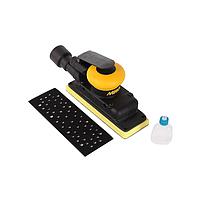
Sander
Surface preparation often determines the quality of the final result, whether the task involves paint finishing, metal polishing, deburring, or preparing wood and composite parts for the next production step. In these workflows, a sander is not just a convenience tool; it helps improve consistency, reduce manual effort, and support a cleaner finishing process across workshop and industrial environments.
This category brings together pneumatic sanding solutions and abrasive accessories suited to different surface conditions, working areas, and finish requirements. From compact palm sanders to dust-free random orbital models and abrasive discs in multiple grit ranges, the selection is designed to support practical sanding tasks rather than a one-size-fits-all approach.
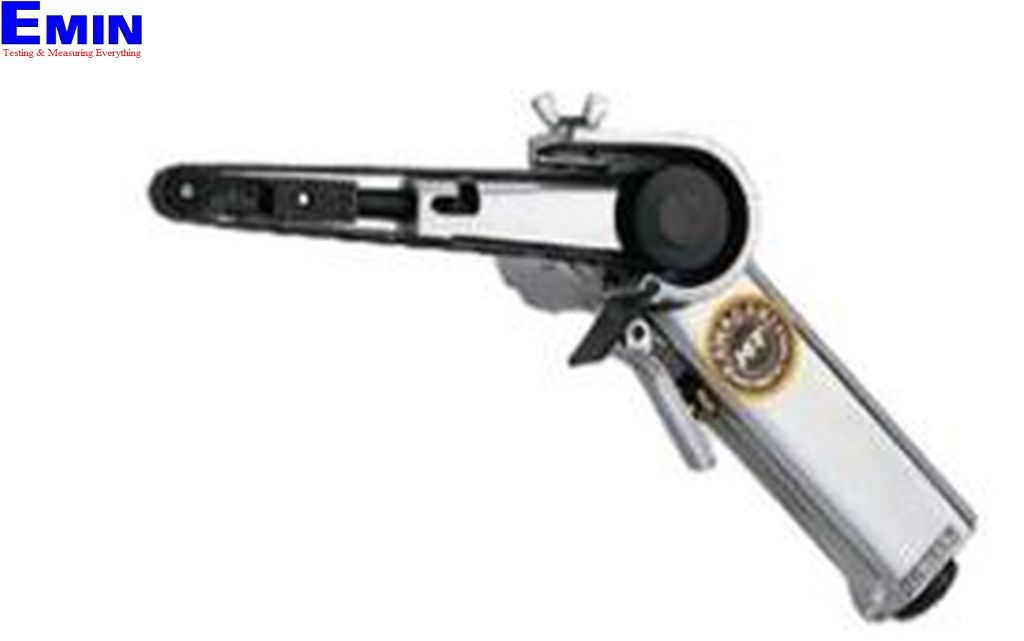
Why pneumatic sanders remain widely used in workshops
In production and maintenance settings, pneumatic tools are valued for their simple drive principle, steady operation, and suitability for repetitive work. A pneumatic sander is especially useful where compressed air is already available, allowing operators to work with a lightweight tool body and maintain good control during long sanding cycles.
Compared with manual sanding, these tools help create a more even finish on flat or curved surfaces while reducing fatigue. They are commonly used for sanding filler, feather-edging coatings, refining metal surfaces, and preparing parts before painting or assembly. If your workflow also includes material removal or edge correction, related tools such as an air grinder may be worth considering alongside sanding equipment.
Common sanding formats in this category
The range in this category reflects several practical sanding styles. Random orbital sanders are widely chosen for balanced surface finishing because their motion helps reduce visible swirl patterns while still offering efficient stock removal. They are a strong fit for automotive refinishing, fabrication, and general-purpose finishing work.
Palm sanders are typically selected where compact handling matters, especially on smaller parts or local repair areas. In this category, examples such as the AIRTEC 530 Random orbital palm sander and AIRTEC 532 Random Orbital Palm Sander illustrate compact pneumatic options for controlled work on smaller or medium-size surfaces.
For operations that place a high priority on workplace cleanliness, dust-free sanding configurations are especially relevant. Models such as the AIRTEC 533 series are designed for use in sanding processes where dust extraction is part of the workflow, helping maintain better visibility on the workpiece and supporting a cleaner environment.
How to choose the right sander for the job
Selection usually starts with the workpiece size and the finish quality you need. A smaller pad can be easier to control in confined areas or on detail work, while a larger pad is generally more efficient on broad panels and larger surfaces. For example, the AIRTEC 237 Orbital sander with a 75 mm pad suits smaller working areas, while AIRTEC 533 and AIRTEC 532 series models with 150 mm pads are better aligned with larger panel finishing tasks.
Another important factor is the orbit size, because it influences the balance between cutting speed and surface refinement. A finer orbit is often preferred for more delicate finishing stages, while a larger orbit can improve material removal in earlier sanding steps. Within this category, AIRTEC models are available in different orbit configurations such as 2.5 mm, 5 mm, and 10 mm, which helps users match the tool to prep work, intermediate sanding, or final finishing needs.
Compressed air requirements should also be checked before purchase. Air pressure, hose diameter, and consumption affect tool performance in daily operation. In busy pneumatic setups, it can also be useful to review other assembly and maintenance tools such as air screwdrivers if the same air system supports multiple workstations.
The role of abrasive discs in sanding performance
A sander performs best when paired with the right abrasive. Grit selection influences surface smoothness, removal rate, and the transition between sanding stages. Coarser abrasives are generally used for faster stock removal or stripping rough layers, while finer grades are better suited for surface refinement before painting or coating.
This category includes representative abrasive options such as the 3M P800 Abrasive Disc, the 3M P120 Abrasive Disc, and the AIRTEC P2500 Abrasive Disc. In practical terms, these examples show how different grit levels support different process stages, from more aggressive preparation to finer finishing work. For users standardizing around recognized consumable brands, the broader 3M range may also be relevant when building a consistent sanding process.
Representative products and application fit
Several products in this category help illustrate how the selection can be matched to actual work. The AIRTEC 533 Dust free random orbital sander and AIRTEC 533 B Dust Free Random Orbital Sander are suitable examples for operators who need a 150 mm pad format with dust-managed sanding. Versions such as the AIRTEC 533/25 and AIRTEC 533/25 B provide a finer 2.5 mm orbit, which is often preferred when a smoother finish is required.
Where faster removal is more important, the AIRTEC 533/10 offers a larger 10 mm orbit that may suit heavier preparation work. For compact handling, the AIRTEC 530 Random orbital palm sander and AIRTEC 237 Orbital sander are practical references for smaller sanding areas. On the consumables side, abrasive discs such as 3M P120 or AIRTEC P2500 support different finish stages without forcing users into a single abrasive strategy.
Brand preference can vary by application, maintenance policy, and operator familiarity. This category includes products associated with AIRTEC and 3M, while broader manufacturer options on the site may also help buyers compare tool ecosystems and consumable availability.
Good operating practice for better finish and tool life
Even the right tool and abrasive combination can produce inconsistent results if sanding technique is not controlled. In most cases, operators get better surface uniformity by allowing the tool to move freely with even pressure rather than forcing it aggressively onto the workpiece. Excess pressure can reduce finish quality, increase abrasive wear, and place unnecessary load on the tool.
It is also important to keep abrasive discs matched to the actual material and finishing stage. Changing grit progressively usually delivers a more predictable result than trying to complete the whole process with one disc type. In workshops where sanding is part of a larger compressed-air setup, adjacent tool categories such as air drill systems may share the same infrastructure, so air quality and line stability should not be overlooked.
For operator safety, eye protection and suitable dust control remain essential, especially during continuous finishing work. Dust-managed models can help reduce airborne particles around the station, but good extraction practices and routine maintenance are still important for reliable long-term operation.
Choosing within the category with more confidence
This category is most useful when viewed as a practical finishing toolkit rather than a simple list of products. The best choice depends on how much material must be removed, the finish level required, the size of the working area, and whether dust extraction is part of the process. A compact palm sander, a larger random orbital model, and the right abrasive disc each solve different parts of the same surface-preparation workflow.
If you are comparing options for production, maintenance, body repair, or finishing stations, focus on pad size, orbit, air demand, and abrasive compatibility first. That approach makes it easier to identify a sander setup that fits your process today and remains practical as your workload grows.
Get exclusive volume discounts, bulk pricing updates, and new product alerts delivered directly to your inbox.
By subscribing, you agree to our Terms of Service and Privacy Policy.
Direct access to our certified experts