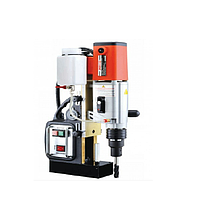
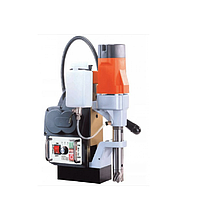
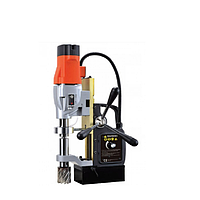
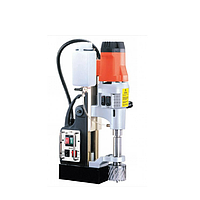
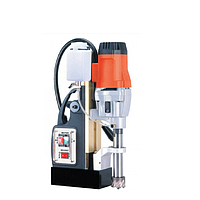
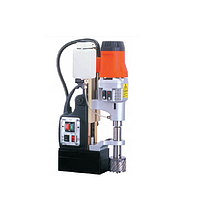
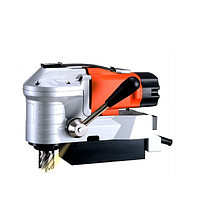
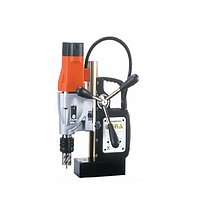
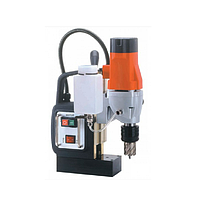
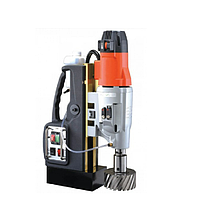
Electromagnetic drill
When drilling steel beams, plates, pipes, or structural frames on site, stability matters just as much as cutting power. That is why electromagnetic drills remain a practical choice for fabrication, maintenance, shipbuilding, bridge work, and other metalworking jobs where a conventional handheld drill may be harder to control.
This category focuses on magnetic-base drilling equipment designed for precise hole-making on ferrous surfaces. Compared with general-purpose drill machine options, these tools are built for secure positioning, cleaner hole production, and more reliable operation in vertical, horizontal, or elevated working positions.
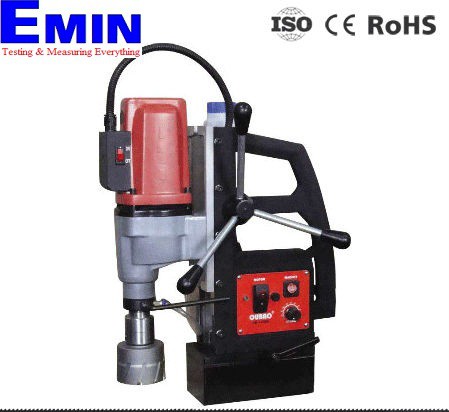
Why electromagnetic drills are widely used in metalworking
The main advantage of this tool type is its magnetic base, which holds the machine firmly on steel surfaces during drilling. This helps reduce movement at the contact point, improves hole accuracy, and gives operators better control when working on large workpieces or installed structures.
In many industrial environments, access is limited and work cannot always be brought back to a bench or workshop. An electromagnetic drill makes it easier to drill directly on columns, girders, tanks, and pipe sections, especially where portability and controlled feed are important.
How the tool works in practical terms
An electromagnetic drill combines a motor-driven spindle with a magnetic clamping base. Once the magnet is engaged on a suitable ferrous surface, the machine stays in position while the cutter or drill bit rotates and feeds into the material. This operating principle is straightforward, but it delivers a clear benefit: stable drilling on steel without relying entirely on hand pressure.
Many users choose this type of machine for annular cutting rather than only twist drilling. Annular cutters remove material around the hole instead of cutting the full diameter, which can improve efficiency for larger holes. Depending on the model, some machines also support tapping, reaming, or countersinking for more demanding fabrication tasks.
Common applications and working environments
These machines are commonly selected for structural steel fabrication, plant installation, heavy maintenance, railway work, shipbuilding, and mechanical assembly. They are especially useful when holes need to be drilled on installed components, overhead sections, or large metal parts that are not easy to move.
Another typical use case is pipe and curved-surface work. Some models in this category are specified for operation on pipe diameters from 80 mm, which helps in field applications where drilling must be done directly on round steel sections. For users handling a broader tooling setup, compatible drill bits and cutter selection also play an important role in final hole quality.
How to choose the right electromagnetic drill
The first point to consider is the required hole diameter and the type of cutting process. In the current range, compact models such as the Schifler-Germany SWC 35 H and SWC 35 PD are suitable for lighter to mid-range drilling capacity, while larger units like the SWC 65, SWC 80, SWC 100, and SWC 120 WT are intended for heavier-duty hole-making and broader application scope.
Power and spindle type should also match the job. Machines in this category range from 1100 W up to 2500 W, with examples using 19 mm Weldon, MT3, or MK-4 spindle configurations. If your work includes tapping or larger annular cutters, it is worth checking whether the machine supports those operations rather than choosing only by motor wattage.
A third factor is mobility. Weight affects how easily the machine can be carried, positioned, and used in tight or elevated locations. Lighter models can be easier for service teams and site contractors to handle, while heavier machines often provide expanded drilling capacity for workshop or heavy-structure applications.
Representative products in this category
The Schifler-Germany lineup provides a clear view of the capacity range available. For example, the SWC 35 AT and SWC 35 PD are geared toward smaller annular cutter diameters up to 35 mm, making them relevant for routine fabrication and maintenance work. The SWC 50 PD and SWC 50 PDT step up to 50 mm cutting capacity and add flexibility for users needing a wider working range.
For higher-capacity applications, models such as the SWC 65 WT, SWC 80 WT, SWC 100 WT, and SWC 120 WT extend the usable drilling range significantly. These heavier-duty machines are more suitable where larger holes, tapping functions, or more demanding metalworking processes are part of the daily workload. If you want to browse by brand, the Schifler-Germany page offers a focused view of this product family.
Brand options and product ecosystem
This category includes products associated with established industrial tool brands such as BOSCH, METABO, Milwaukee (tool), AGP, FEIN, BDS, POWERBOR, Mackma, magbroach, and Schifler-Germany. In practice, brand selection often depends on preferred tooling systems, service expectations, operating frequency, and whether the machine will be used mainly in the workshop or in field conditions.
It is also useful to think beyond the core machine. Electromagnetic drilling often works as part of a wider tooling setup that may include cutters, bits, lubrication or cooling support, and hole-finishing accessories. For jobs involving larger diameters in sheet or plate work, related tooling such as hole saw products may also be relevant depending on the material and required finish.
Good operating practice for safer and more consistent results
For this type of equipment, surface condition is important. The magnetic base needs proper contact with a clean ferrous surface to achieve secure holding force. Operators should also verify workpiece thickness, setup stability, and cutting-tool condition before starting the drilling cycle.
Correct speed selection, controlled feed, and appropriate tooling help improve cutter life and hole quality. On site, users should pay extra attention when drilling vertically or overhead, since the machine position, chip evacuation, and work environment can all affect both safety and productivity. Choosing a machine with capacity that matches the real application is usually more valuable than simply choosing the largest available model.
Finding the right fit for your application
An electromagnetic drill is typically chosen when the job calls for portable metal drilling, secure positioning, and dependable performance on steel structures. The right selection depends on hole size, work orientation, spindle format, weight, and whether you need added functions such as tapping or larger annular cutter support.
Explore the models in this category to compare capacities and working ranges, especially if your tasks vary from light fabrication to heavy structural drilling. A well-matched machine can make daily drilling work more controlled, more efficient, and better suited to the realities of industrial field use.
Get exclusive volume discounts, bulk pricing updates, and new product alerts delivered directly to your inbox.
By subscribing, you agree to our Terms of Service and Privacy Policy.
Direct access to our certified experts