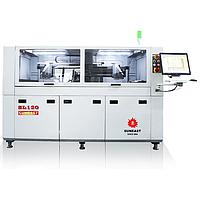
Glue dispensing machine
Precise adhesive application plays an important role in electronics assembly, product repair, sealing, bonding, and small-scale production. When the job requires more consistency than manual application can provide, a Glue dispensing machine helps control bead size, placement, and repeatability across different materials and process steps.
In this category, you can find equipment ranging from handheld glue guns for maintenance and workshop use to advanced fluid dispensing systems for automated production. That makes the range suitable for users who need anything from simple hot-melt application to controlled dispensing of process fluids in industrial environments.
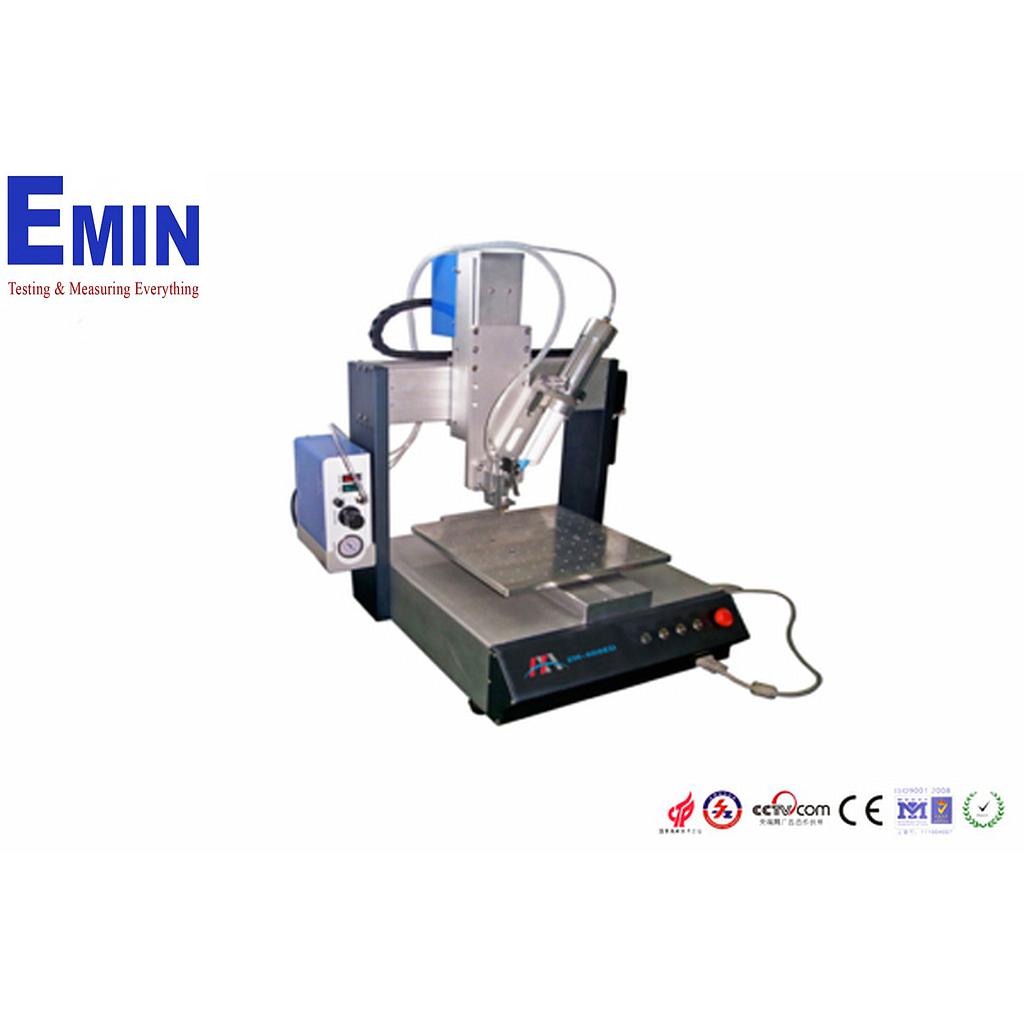
Where glue dispensing equipment is used
Glue and fluid dispensing is common in electronics manufacturing, SMT-related assembly support, enclosure bonding, cable fixing, component securing, potting preparation, and general industrial assembly. In repair environments, operators often need compact tools for quick adhesive work, while production lines usually require higher process control and stable output over repeated cycles.
The same category can therefore serve very different needs. A technician may only need a lightweight handheld unit for occasional work, while a factory may be looking for an automated dispensing system that integrates with board handling, process software, or valve control hardware.
From manual application to automated dispensing
At the entry level, hot-melt glue guns remain practical for light assembly, cable management, fixture preparation, and non-critical bonding tasks. Models such as the Proskit GK-360F Glue Gun (20W) and the BOSCH GKP 200 CE Glue Gun (500W) illustrate two common use cases: compact lower-power workshop tools and higher-output tools intended for faster adhesive flow.
For cartridge-based materials such as sealants and construction-style adhesives, the Milwaukee (tool) M12 PCG/310C-0 Caulk and Adhesive Gun (1780N) represents another type of dispensing solution. It is useful where controlled pushing force and cordless mobility matter more than thermal glue application.
At the industrial end, Nordson equipment in this category supports precision fluid handling for automated processes. Systems such as the Nordson Quantum Q-6800 High-value fluid dispensing system and the Unity series are designed for repeatable motion, controlled dispense patterns, and integration into production environments where quality variation must be reduced.
Key selection factors for B2B buyers
Choosing the right equipment starts with the dispensing material. Hot-melt glue, silicone, adhesive, sealant, and other process fluids behave differently in terms of viscosity, curing method, and required temperature control. That is why the dispensing method, applicator type, and control system should always be matched to the actual material used on the line or at the bench.
Next, consider the production context. For maintenance or low-volume assembly, a simple handheld solution may be enough. For repetitive workpieces, tighter placement tolerances, or process traceability, a programmable platform is usually more appropriate. Buyers should also evaluate work area, expected throughput, motion repeatability, and whether the process needs timed shots, continuous beads, or jet dispensing.
Support equipment can be just as important as the main machine. For example, a dispensing setup may require a dedicated controller and valve combination rather than a standalone robot only. In those cases, products such as the Nordson Liquidyn V200 Valve Controller, Nordson PICO Toµch XP Controller, and Nordson PICO Pµlse XP Jet Valve are relevant because they help shape how fluid is delivered, triggered, and stabilized during operation.
Examples of systems in this category
The category includes several Nordson Unity automated dispensing systems with different working envelopes, such as Unity 2, Unity 3, Unity 4, Unity 5, and Unity 6. These systems show how buyers can scale from compact work areas to larger platforms depending on board size, fixture size, payload, and the complexity of the dispense path.
For more demanding process control, the Nordson Quantum Q-6800 High-value fluid dispensing system is suited to applications where board handling, software-driven dispensing, and industrial compliance requirements are part of the project scope. In practical terms, this kind of platform is typically considered when adhesive or fluid deposition becomes a defined manufacturing step rather than a manual support task.
Meanwhile, portable tools from BOSCH, Milwaukee (tool), and Proskit remain useful for workshops, field service, prototyping, and general assembly support. They are often chosen for accessibility and ease of use rather than for full production automation.
How glue dispensing fits into electronics assembly workflows
Although adhesive application is different from soldering, it often appears in the same manufacturing or repair environment. Operators may use glue dispensing for strain relief, temporary fixation, insulation support, or mechanical reinforcement before or after thermal assembly steps. In such workflows, it is natural to evaluate dispensing equipment alongside tools like soldering stations or hot air rework systems.
For SMT and electronic repair teams, that broader view is important. A glue dispensing process is rarely isolated; it usually supports a larger sequence that may include board assembly, component rework, cleaning, inspection, and final mechanical stabilization. Selecting equipment with the right level of control can help reduce rework caused by excess adhesive, poor placement, or inconsistent application.
What to evaluate before ordering
Before selecting a machine, define the actual task in measurable terms: material type, dispense volume, pattern, cycle time, substrate size, and acceptable variation. This prevents overbuying an industrial platform for a simple bench process, or underbuying a manual tool for a job that really needs repeatable automation.
It is also helpful to check practical requirements such as power input, portability, controller compatibility, workspace limitations, and maintenance expectations. In industrial projects, buyers should review whether the dispensing setup needs software integration, motion programming, valve heating, or pressure management to achieve stable results over time.
- Choose handheld glue guns for light-duty, intermittent, or maintenance-oriented work.
- Choose cartridge or force-driven dispensers when material comes in tubes or cartridges and operator mobility is important.
- Choose robotic or controller-based dispensing platforms when repeatability, throughput, and process consistency are critical.
Finding the right fit for your process
This category covers a wide range of adhesive and fluid application needs, from simple workshop tools to precision dispensing systems used in industrial production. The best choice depends less on the product label and more on how the material behaves, how often the process runs, and how tightly the result must be controlled.
If you are comparing options for electronics assembly, repair support, or automated production, start by matching the dispensing method to your material and process target. A well-selected glue dispensing solution can improve consistency, reduce waste, and make adhesive application easier to standardize across technicians, batches, and production lines.
Get exclusive volume discounts, bulk pricing updates, and new product alerts delivered directly to your inbox.
By subscribing, you agree to our Terms of Service and Privacy Policy.
Direct access to our certified experts