PCB Depaneling Equipment
In PCB assembly and electronics production, separating individual boards from a larger panel is a small step with a big impact on yield, component safety, and downstream handling. Choosing the right PCB depaneling equipment helps reduce board stress, protect solder joints, and keep production flow consistent from SMT assembly to final inspection.
This category brings together equipment used for clean and controlled board separation, along with selected support tools that fit naturally into electronics manufacturing and bench work. It is relevant for manufacturers handling pre-scored panels, moderate to high-volume production, or applications where edge quality and repeatability matter.

Why depaneling method matters in electronics assembly
Depaneling is not only about cutting boards apart. The method used can influence mechanical stress on the PCB, clearance around components, edge finish, and the risk of micro-cracks in solder joints or laminate. For populated assemblies, these factors become especially important when components are placed close to the V-groove or routing line.
A suitable machine also supports process stability. Manual separation may be acceptable in simple or low-volume work, but production lines often need more predictable speed, alignment, and operator control. That is why blade-based, motorized, and pneumatic solutions are commonly selected based on board design and throughput requirements.
Equipment types commonly used in this category
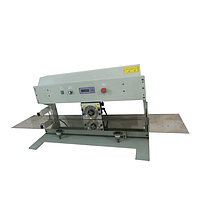
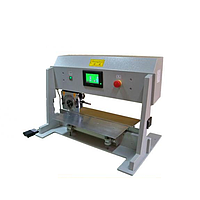
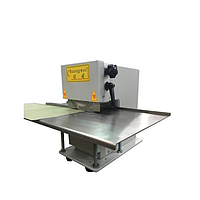
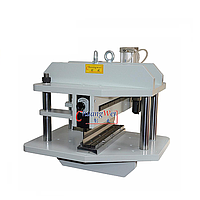
This category includes several approaches to PCB separation. Pre-scored board separators are typically used for V-grooved panels, where the goal is to split boards with controlled force. Models such as the REN THANG NTG-11 and REN THANG NTG-520N are examples of equipment intended for this kind of task.
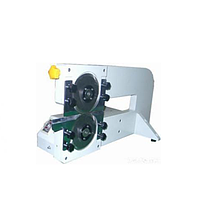
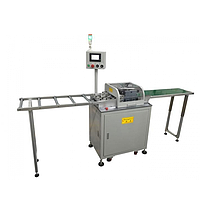
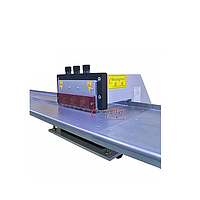
For applications that need more automated handling or smoother motion, blade movement systems are also represented. The REN THANG NTG-20 and REN THANG NTG-20-NS illustrate this type of setup, where consistent feed and cutting action can support repeatable operation in production environments.
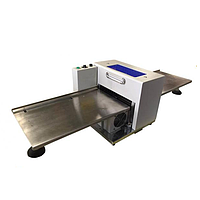
Motorized and higher-throughput depanelers are another important segment. The MANNCORP range in this category, including SDM-121, SDM-236, and SDM-313, reflects use cases where controlled speed, volume capability, or specific material handling needs are part of the selection process.
Typical applications and production context
PCB depaneling equipment is used in SMT assembly, electronics manufacturing, prototype-to-production transitions, and post-reflow finishing. It is especially useful when boards need to be separated without damaging nearby components, connectors, or delicate soldered areas. The more compact and densely populated the board, the more important controlled separation becomes.
Many users looking at this category are also working with related assembly and repair processes. In those environments, depaneling often sits alongside tools for soldering, touch-up, and rework. If your process also includes board-level assembly or repair, related solutions such as soldering stations and desoldering stations may help complete the workflow.
How to choose the right PCB depaneling equipment
The first point to evaluate is the panel design. Pre-scored boards usually call for a separator designed around V-groove geometry, while routed or specialized boards may require a different process. Board thickness, allowable stress, component height, and the distance between components and the separation line all affect equipment suitability.
The second factor is production volume. A compact bench-top unit may fit low to medium throughput, while motorized or pneumatic systems are more appropriate when consistency and output rate become priorities. It is also worth checking handling direction, worktable support, and how easily the machine integrates into the existing bench or line layout.
Maintenance and consumables should not be overlooked. In blade-based systems, the cutting element directly affects performance and edge quality. Items such as the REN THANG NK-200 tungsten carbide blade play a supporting role in keeping the equipment productive and consistent over time.
Representative products in this category
Several products in this category help illustrate the range of applications. The REN THANG NTG-350 PCB Depaneling Machine is relevant for users who need a dedicated machine for board separation across a practical PCB thickness range. The NTG-20 series adds a blade movement approach that can support more controlled and repeatable processing.
For users comparing production-oriented systems, the MANNCORP SDM-121 Motorized PCB Depaneler and MANNCORP SDM-313 PCB Depaneling Machine show two different directions in machine design and throughput. The Manncorp SDM-236 LED Depaneler is another example for operations looking at depaneling in a broader electronics manufacturing context.
This category also includes adjacent bench and support tools rather than depanelers alone. For example, the REN THANG KA-B80 Automatic PCB Brushing Machine fits cleaning and preparation tasks around PCB handling, while the HAKKO C1390C Omnivise supports secure holding during manual bench operations. For users already standardizing on HAKKO tools, this can be useful within a broader electronics workstation setup.
Integration with assembly, rework, and post-processing
Depaneling is often one part of a larger manufacturing chain rather than a standalone task. After boards are separated, they may move to inspection, connector assembly, touch-up soldering, or rework. A stable depaneling step helps reduce variation before these downstream operations begin.
In SMT and repair environments, it also makes sense to think about process compatibility. If board separation is followed by thermal repair or package-level rework, users may also explore BGA rework equipment or hot air systems in related categories. This broader view can help teams plan tooling around the full product lifecycle rather than around one isolated machine.
What to expect from this category
The selection here is suited to buyers who need practical options for separating PCB panels with better control than manual methods can provide. It covers bench-top separators, blade movement machines, motorized systems, and useful supporting items within the same electronics manufacturing ecosystem.
When comparing products, it is best to start with board type, stress sensitivity, production volume, and available workspace. From there, the right solution becomes easier to identify—whether the need is a compact pre-scored board separator, a more automated depaneling system, or complementary bench tools for assembly and finishing.
A well-matched depaneling setup helps protect assemblies, improve repeatability, and support a smoother production process. For electronics manufacturers, repair teams, and industrial buyers, that makes this category an important part of a reliable SMT and PCB handling workflow.
Get exclusive volume discounts, bulk pricing updates, and new product alerts delivered directly to your inbox.
By subscribing, you agree to our Terms of Service and Privacy Policy.
Direct access to our certified experts