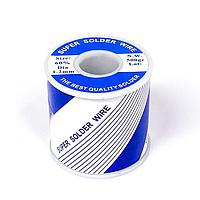
Solder material
Reliable soldering starts long before the iron touches the joint. The choice of wire, paste, and supporting accessories has a direct impact on wetting behavior, process temperature, joint appearance, and day-to-day productivity in electronics assembly and repair. For purchasing teams, maintenance engineers, and production users, selecting the right Solder material is therefore a practical process decision, not just a consumables purchase.
This category focuses on materials used across hand soldering, bench repair, and electronics assembly workflows. It includes common solder wire formats, lead-free and leaded options, solder paste for more controlled deposition, and practical accessories such as reel stands that help keep the workstation organized and efficient.
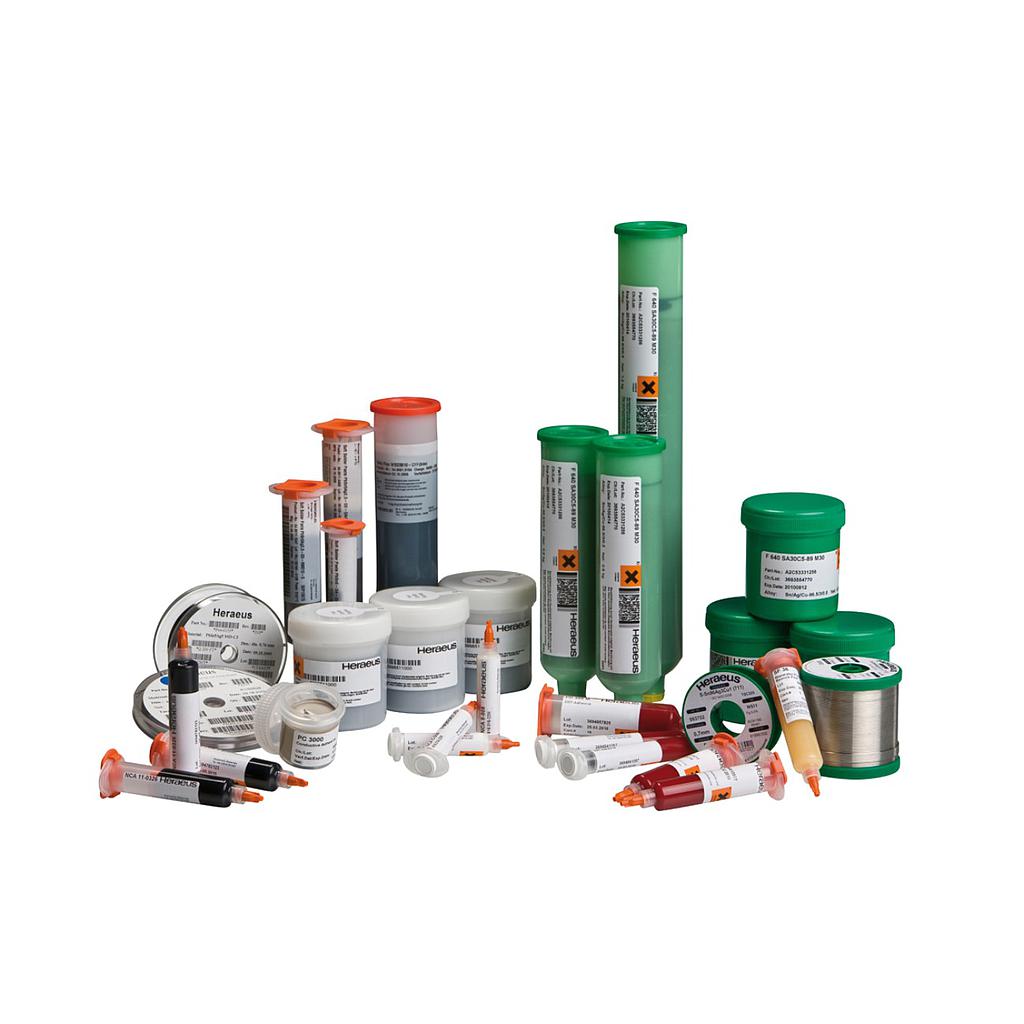
Where solder materials fit in electronics work
In electronic manufacturing and service environments, solder materials act as the connection medium between components, pads, terminals, and conductors. The exact form factor matters: solder wire is commonly chosen for manual assembly and repair, while solder paste is often used when controlled application or more complex board work is needed.
This category is especially relevant for users building or maintaining soldering benches alongside tools such as soldering stations or more advanced rework equipment. Good material selection helps stabilize process quality, reduce rework, and match the thermal behavior of the job at hand.
Main product types in this category
A large share of demand in this category comes from solder wire in different alloy compositions, diameters, and spool weights. For example, Asahi products in SN60/40 and SN63/37 formats cover typical hand-soldering requirements, with options such as 0.8 mm, 1.0 mm, and 1.2 mm diameters serving different joint sizes and operator preferences.
For users moving toward cleaner compliance-driven processes, lead-free alternatives are also represented. Products such as Asahi 130 Lead-free solder roll and Asahi SN99.3 CU0.7 Lead Free Solder are suitable when lead-free process compatibility is required. In parallel, materials like Heraeus PbSn5Ag2.5-D3-RM218-8 Solder Paste support applications where paste deposition and controlled reflow-style work are part of the workflow.
Supporting items should not be overlooked. The Proskit 8PK-033ST Solder Reel Stand is a simple example of an accessory that improves material handling by keeping the solder roll stable and easy to dispense during repetitive soldering tasks.
Leaded and lead-free options: how to think about the difference
One of the most common buying questions is whether to choose leaded or lead-free solder. Leaded wire, such as SN60/40 or SN63/37 formats, is still widely used in maintenance, prototyping, and certain repair environments because it is familiar to technicians and often supports smooth hand-soldering work. Product examples here include Asahi SN60/40 0.8 mm 100 g Lead Solder, Asahi SN60/40 1.2 mm Lead Solder (500g), and Dekko 238 Solder Wire.
Lead-free materials, including tin-copper formulations such as SN99.3 CU0.7, are generally selected when process standards, customer requirements, or compliance considerations call for them. They often require closer attention to temperature control and technique, which is why material choice should be considered together with the capabilities of the soldering equipment being used.
For businesses handling mixed repair and production needs, it is useful to standardize by application rather than trying to force one solder type into every process. That approach makes operator training, inventory control, and quality consistency much easier over time.
How diameter, weight, and format affect daily use
The physical form of solder material has a practical effect on process control. A smaller wire diameter, such as 0.3 mm or 0.8 mm, generally offers finer feed control for compact pads, lighter joints, and detail-oriented PCB work. This is one reason products like Asahi SN63/37 Soldering Wire or Asahi SN60/40 0.8 soldering lead are relevant in electronics repair and precision assembly.
Larger diameters, such as 1.0 mm or 1.2 mm, are often preferred when more filler material is needed per feed movement or when the operator is working on larger terminals and connectors. Spool weight also matters: 50 g, 100 g, 250 g, and 500 g packs serve different usage patterns, from occasional bench repair to higher-throughput workshop consumption.
Paste products follow a different logic. Instead of hand-feeding wire into the joint, solder paste supports controlled placement before heating. In workflows that involve hot air or localized rework, it may be useful to review related equipment such as hot air rework systems.
Representative brands and product examples
This category features materials from recognized names such as Asahi, Heraeus, Proskit, and Dekko. Each serves a different role within the soldering ecosystem, from everyday solder wire consumption to specialized paste use and workstation accessories.
Asahi appears strongly in this range with multiple alloy and size combinations, making it suitable for buyers who want consistent sourcing across several common solder wire requirements. Heraeus is relevant where solder paste is needed, while Proskit contributes bench-use accessories like reel handling hardware. Dekko offers another practical wire option for lighter-duty or general service use.
Rather than choosing by brand name alone, most professional buyers compare product form, alloy family, wire diameter, and package size against the actual soldering task. That is typically a more reliable selection method than relying on a single preferred label.
Selection points for maintenance, repair, and production teams
When evaluating solder materials for B2B purchasing, start with the application: PCB repair, cable termination, connector assembly, fine-pitch work, or general bench soldering. Then review the process constraints, including lead-free requirements, operator skill level, and whether the material will be used with conventional irons, multifunction repair systems, or dedicated rework equipment.
It is also helpful to align material choice with workstation setup. A stable bench often combines the right solder wire, proper dispensing support, and suitable heating equipment. If the process includes component removal as well as installation, related categories such as desoldering stations may also be worth reviewing.
Finally, pay attention to consumption planning. Small packs can be practical for maintenance departments and occasional use, while larger spools may be more economical for repetitive assembly work. Standardizing a manageable number of diameters and alloy types can simplify procurement and reduce handling errors.
Choosing the right solder material for your workflow
The most suitable option depends on how the material will actually be used at the bench or in production. A compact leaded wire may be appropriate for detailed repair, a larger spool may suit repetitive hand assembly, and a dedicated solder paste may be the better fit for controlled rework or application-specific processes. Accessories such as a reel stand can also improve consistency in small but meaningful ways.
By comparing alloy type, wire size, package format, and intended process, buyers can narrow the range to products that support real operating needs. This category brings those core materials together in one place, making it easier to source solder consumables that match electronics assembly, repair, and workshop maintenance requirements.
Get exclusive volume discounts, bulk pricing updates, and new product alerts delivered directly to your inbox.
By subscribing, you agree to our Terms of Service and Privacy Policy.
Direct access to our certified experts