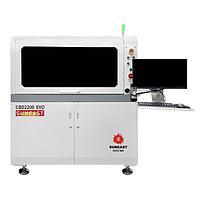
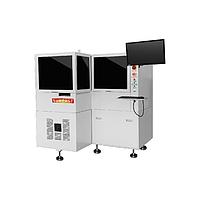
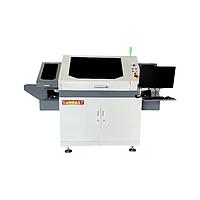
Surface Mount Machines (SM)
Efficient SMT assembly depends on more than placement speed alone. Teams also need the right balance of accuracy, feeder flexibility, board handling, and workflow fit, especially when production ranges from prototype work to repeatable batch manufacturing. This category brings together Surface Mount Machines (SM) used to support PCB assembly environments that require dependable component placement and practical integration into an electronics production process.
Within this range, buyers can compare manual, semi-automatic, and automatic solutions for different throughput targets. The selection is relevant for engineering labs, contract manufacturing, LED production, electronics repair departments, and small-to-medium assembly lines where component handling, vision alignment, and consistent repeatability all matter.
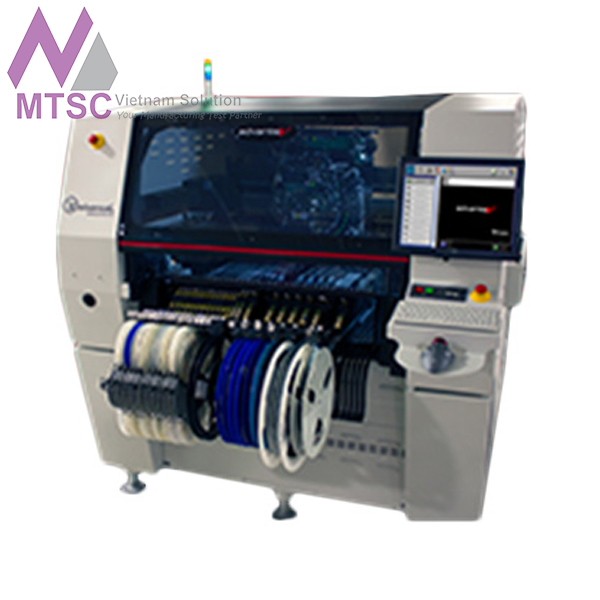
Where surface mount machines fit in an SMT workflow
Surface mount equipment is used to place SMD components onto printed circuit boards before the soldering stage. In a typical line, the placement step sits between material preparation and reflow or related joining processes, making it one of the key stages for yield, placement consistency, and overall assembly efficiency.
For many applications, these machines work alongside supporting tools such as soldering stations for touch-up, manual assembly, or post-process correction. In repair and rework environments, placement capability may also be paired with BGA rework equipment when dealing with more complex packages and board recovery tasks.
Common machine types in this category
The product mix in this category spans several practical use cases. A manual platform such as the Manncorp SMT Place 2000 can make sense for prototyping, operator-led assembly, training, and very small batch work where flexibility matters more than hourly output. This kind of setup is often chosen when frequent changeovers are expected and capital investment needs to stay controlled.
At the automatic end, machines like the Manncorp MC-300, MC-400, MC-385V1V, MC-385V2V, MC-392, and MC-389 reflect different levels of placement throughput, feeder capacity, and board handling. These systems are more suitable when process stability, repeatability, and higher daily volume become more important than manual operator intervention.
The category also includes LED-oriented pick and place solutions such as the Manncorp MC-LEDV4, MC-LEDV4-1800, and MC-LEDV6. These are relevant where long boards, LED assemblies, or dedicated lighting production formats influence machine selection and production layout.
What to evaluate before choosing a machine
A good buying decision usually starts with the component mix. If your assemblies use very small passives, fine-pitch devices, BGAs, or a broad range of package sizes, then vision alignment, placement accuracy, and nozzle/tool flexibility should be reviewed carefully. For buyers handling high-mix work, feeder count and programming convenience can be just as important as stated speed.
Board dimensions are another major factor. Some machines are better suited to compact PCBs, while others are built for longer panels or inline handling. For example, the long-board orientation of models such as the MC-LEDV4-1800 can be relevant in LED production, while high-mix machines such as the MC-389 or MC-392 are more aligned with varied assembly requirements.
It is also worth checking whether your operation is batch-based, bench-top, or moving toward a connected SMT cell. In that context, manufacturer ecosystems from companies such as MANNCORP and Metronelec may help buyers compare not only machines themselves, but also how those machines support preparation, packaging, and downstream handling.
Examples of equipment covered in this range
Several products in this category illustrate how different surface mount needs can be addressed. The Manncorp SMT Place 2000 is a manual pick and place system intended for lower-volume assembly and operator-guided work. It is a practical option for labs, development teams, and users who need controlled placement without stepping immediately into a fully automatic platform.
For growing production requirements, the Manncorp MC-300 and MC-400 represent entry points into automatic placement. Moving further up, the MC-385V1V, MC-385V2V, MC-392, and MC-389 support broader production demands where feeder availability, component range, and repeatable positioning become increasingly important.
This category also includes related preparation equipment such as the Metronelec TRM Tape And Reel Machine. While it is not a placer itself, it supports the broader SMT ecosystem by helping organize components into tape-and-reel packaging formats, which can be important for handling efficiency and feeder compatibility in production environments.
Role of manufacturers in practical SMT selection
Brand matters in SMT, but only when it aligns with the application. MANNCORP appears prominently here with a broad spread of manual, automatic, LED-focused, and high-mix placement machines, making it easier for buyers to compare options within one familiar equipment family. That can simplify evaluation when the goal is to scale from prototype assembly to more consistent production.
Metronelec contributes value from the material handling and packaging side, which is often overlooked during machine selection. Meanwhile, Fuji is represented through a reel holder accessory for NXT platforms, showing that this category can also include support items that matter in real SMT operations, especially where feeder and reel management are part of the workflow.
Universal Instruments is also relevant in the broader surface mount landscape represented by the available manufacturer set. For many B2B buyers, comparing manufacturers is less about marketing claims and more about serviceability, operator familiarity, spare parts strategy, and compatibility with existing production methods.
Related equipment often considered together
Surface mount machines rarely operate in isolation. Buyers planning or upgrading an SMT workstation often review adjacent tools for soldering, inspection, repair, and rework at the same time. For example, manual correction and post-placement tasks may still depend on desoldering stations or controlled heating tools used during component replacement and process recovery.
For assemblies involving removal, rework, or thermal intervention on populated boards, a hot air rework system can be a natural companion purchase. Thinking in terms of the full assembly and repair chain often leads to a more practical equipment decision than focusing only on placement speed.
Who typically buys from this category
This category is relevant to electronics manufacturers, OEM production departments, EMS providers, R&D labs, technical schools, and repair organizations working with SMT boards. Some buyers need a compact and adaptable solution for new product introduction, while others need automated platforms capable of supporting repeat orders and more predictable cycle times.
The right machine depends on production reality: component diversity, expected throughput, operator skill level, available air and power, and whether the process is standalone or part of a more connected line. Looking at those factors together usually leads to a better fit than selecting purely by headline CPH figures.
Choosing with process fit in mind
When reviewing surface mount machines, the most useful approach is to match machine capability to your real assembly profile. Prototype and low-volume work may benefit from simpler operator-controlled placement, while high-mix or LED production often requires stronger vision support, larger feeder capacity, and board handling tailored to the application.
This category is designed to help buyers compare that range in a more practical way, from manual pick and place systems to automatic and specialized SMT equipment, plus selected accessories that support production readiness. If you are planning an SMT setup or expanding an existing line, use the available models and manufacturer pages to narrow the shortlist based on accuracy, workflow, and long-term usability rather than speed alone.
Get exclusive volume discounts, bulk pricing updates, and new product alerts delivered directly to your inbox.
By subscribing, you agree to our Terms of Service and Privacy Policy.
Direct access to our certified experts