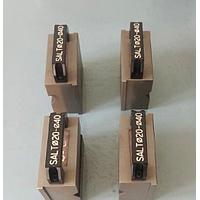
Civil Engineering Training
Hands-on learning is essential in civil engineering, where students and trainees need more than theory to understand materials, structures, site practice, and inspection methods. A well-planned Civil Engineering Training setup helps bridge the gap between classroom concepts and real-world construction, giving learners practical exposure to measurement, testing, and field-oriented workflows.
This category brings together equipment that supports training activities across concrete assessment, construction handling, surveying support, and practical demonstration. It is suitable for universities, technical colleges, vocational centers, laboratories, and research environments that need reliable tools for teaching fundamental and applied civil engineering tasks.
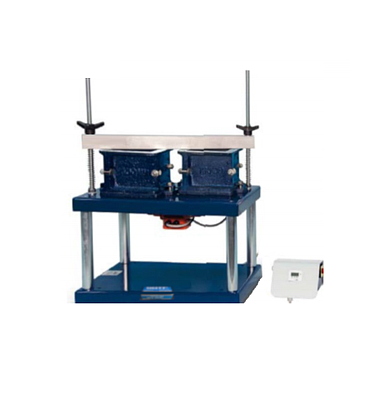
Why practical equipment matters in civil engineering education
Civil engineering is taught most effectively when learners can connect formulas and standards with observable behavior in materials and structures. Training equipment allows instructors to demonstrate how concrete quality is evaluated, how field tools are handled, and how measurement data supports engineering decisions.
In many training programs, the goal is not only to introduce instruments but also to build confidence in test procedures, inspection logic, and site safety awareness. This makes practical equipment valuable for both entry-level instruction and more advanced modules in structural assessment, quality control, and construction technology.
Typical training scope covered by this category
The range of equipment in this category can support several common learning scenarios in civil engineering. These include introductory concrete testing, surface hardness evaluation, corrosion assessment concepts, basic surveying accessories, and selected tools used in finishing or installation practice.
For institutions that run broader technical programs, this category also fits naturally alongside basic practice equipment used for foundational science and engineering training. That combination is often useful when a curriculum moves from general laboratory skills into more discipline-specific civil engineering applications.
Concrete testing and structural assessment training
One of the most relevant areas in civil engineering education is the evaluation of concrete and reinforced concrete. Training on these topics helps learners understand how non-destructive and semi-field methods are used to investigate structural condition without major damage to the tested element.
Examples in this category include the PROCEQ product range, which is widely associated with construction material inspection and structural diagnostics. Instruments such as the PROCEQ 34110351 Impact spring type N Silver Schmidt Rebound Hammer and the PROCEQ 31099013 Impact Spring N/NR/ND Rebound Hammer are suitable references for teaching rebound hammer testing, where surface hardness is used as an indicator in concrete assessment workflows.
For more advanced instruction, the PROCEQ PM8500 Profometer Corrosion Potential can help illustrate the principles of corrosion potential measurement in reinforced concrete. In a teaching environment, this type of instrument is useful for explaining how corrosion risk is assessed, how measurement grids are interpreted, and why reinforcement condition is important in durability studies.
Surveying and site-support tools for field training
Civil engineering programs also benefit from equipment that supports site layout, leveling, and field observation exercises. These tools may not always be the center of a structural testing lesson, but they are important in helping trainees develop proper handling habits and understand how fieldwork is organized.
A practical example is the MYZOX AGX5.5MF Aluminium Staff, a telescopic aluminum staff that can be used in basic surveying and leveling demonstrations. In training sessions, this kind of accessory helps students become familiar with field setup, visual readings, and coordination between measurement tools and support equipment.
Where training is part of a larger educational offering, institutions may also explore related learning resources in application training to support instructor-led demonstrations and practical exercises across multiple technical disciplines.
Construction handling and installation practice
Some civil engineering courses extend beyond testing and surveying into construction methods, finishing work, and jobsite tool handling. In these cases, training equipment can include devices that demonstrate how materials are positioned, leveled, or stabilized during installation tasks.
The Yamasu cordless tile vibration suction lifter series is a good example of this application-oriented training approach. Models such as the Yamasu YMS-MRG190, YMS-MRG160, YMS-MRG123, and YMS-MRG130G2 can be used to illustrate handling principles for tile placement, vibration-assisted leveling, suction holding, and operator control during surface finishing tasks.
These products should be understood in their correct role within the training ecosystem: not as universal civil engineering instruments, but as useful tools for demonstrating installation workflow, ergonomics, and practical construction techniques in specialized teaching modules.
How to choose civil engineering training equipment
Selection should start with the training objective. If the program focuses on concrete diagnostics and structural inspection, rebound hammers and corrosion-related instruments are more relevant. If the curriculum emphasizes site practice, surveying accessories and material-handling tools may be more appropriate.
It is also important to match equipment complexity to the learner level. Entry-level programs often benefit from robust, easy-to-demonstrate tools, while higher-level education may require instruments that introduce data interpretation, inspection methodology, and comparative testing approaches.
Buyers should also consider whether the equipment will be used for classroom demonstration, repeated lab sessions, student group practice, or research support. In many cases, institutions build a mixed setup that combines durable training tools with a smaller number of advanced instruments for instructor-led analysis.
Suitable users and learning environments
This category is relevant for universities, colleges, vocational schools, training centers, and research labs that support civil engineering education. It can serve courses in structural materials, construction technology, non-destructive testing, durability assessment, and field methods.
It is also a useful reference point for interdisciplinary programs that overlap with infrastructure, architecture, and applied technical education. Organizations developing broader educational labs may find it helpful to compare with information technology training or other technical categories when designing cross-functional teaching spaces.
Frequently asked questions
What types of equipment are most useful for civil engineering training?
The answer depends on the course focus. Common needs include concrete testing tools, corrosion assessment instruments, surveying accessories, and selected site-practice tools for construction handling or installation exercises.
Are these products intended only for schools?
No. They can also be relevant for laboratories, research departments, technical training providers, and organizations that need equipment for demonstrations, workshops, or skills development.
Can this category support both basic and advanced training?
Yes. The category can support introductory practical learning as well as more advanced instruction in testing methods, structural condition assessment, and field-oriented procedures, depending on the equipment selected.
Building a practical civil engineering training setup
Effective civil engineering education depends on tools that make concepts visible, measurable, and repeatable in practice. From rebound hammer demonstrations and corrosion potential assessment to surveying support and installation handling, the equipment in this category helps create a more applied learning environment.
When choosing products, the most useful approach is to align each item with the course outcome, learner level, and teaching method. That makes the training space more coherent, more relevant to real engineering work, and more valuable for long-term educational use.
Get exclusive volume discounts, bulk pricing updates, and new product alerts delivered directly to your inbox.
By subscribing, you agree to our Terms of Service and Privacy Policy.
Direct access to our certified experts