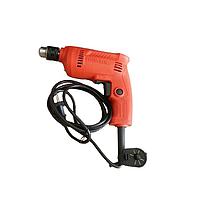
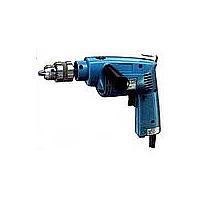
Drill machine
Choosing the right drilling tool starts with understanding the workpiece, the hole size, and the operating environment. In workshops, maintenance teams, installation jobs, and construction support tasks, a well-matched drill machine can improve speed, control, and finish quality while reducing operator fatigue and tool wear.
This category brings together drilling solutions for common industrial and professional applications, from standard rotary drilling in metal or wood to impact drilling in masonry and rotary hammer work in concrete. The range includes corded and cordless options, compact installation tools, and heavier-duty SDS Plus machines for more demanding site work.

Understanding the main drill machine types
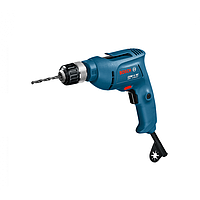
Not every drilling task requires the same mechanism. A standard drill is typically used for clean rotary drilling in wood, plastic, or metal, while an impact drill adds a hammering action for light masonry work. When drilling into harder concrete more frequently, a rotary hammer is usually the more practical choice because it delivers impact energy more effectively through an SDS Plus system.
Within this category, users may be comparing compact installation drills, percussion drills, impact drills, and rotary hammers. If your work regularly involves concrete anchor holes, wall chasing support, or repetitive masonry drilling, it is also worth reviewing compatible drill bits to match the tool type and material.
Where drill machines are commonly used
Drill machines are widely used across maintenance, MRO, electrical installation, metal fabrication, furniture assembly, and light construction. In a production or service setting, the same team may need one tool for steel panels, another for timber framing, and a more robust hammer unit for concrete fixing points.
This is why selection should be based on the actual application rather than power alone. For example, a compact cordless installation drill can be useful in cabinets, service spaces, and overhead work, while a heavier corded hammer model is better suited to repetitive drilling in masonry or reinforced surfaces.
How to choose a suitable model
A practical comparison usually starts with four points: material, drilling diameter, duty cycle, and mobility. Wood and sheet metal tasks often prioritize speed control and handling, while masonry and concrete jobs require impact performance and the right chuck or bit interface. Corded tools remain a common choice for continuous operation, whereas cordless platforms are often preferred where portability matters.
Users should also consider weight, grip style, and access constraints. A right-angle drill is helpful in narrow spaces, while a D-handle rotary hammer can provide better control in repetitive vertical or horizontal drilling. For larger diameter cutting in panels, wood, or thin metal, compatible hole saw accessories may be more appropriate than a conventional twist bit.
Representative products in this category
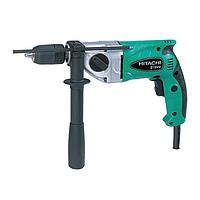
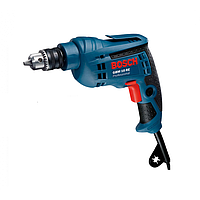
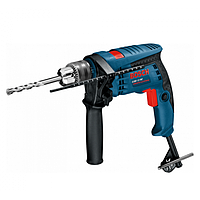
Several models in the current range illustrate how different drill machines fit different workloads. For general-purpose corded drilling, the HITACHI KOKI D13VH Drilling Machine offers a classic format with a 13 mm chuck capacity and two-speed operation, making it relevant for everyday workshop and maintenance use.
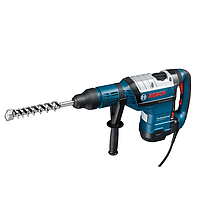
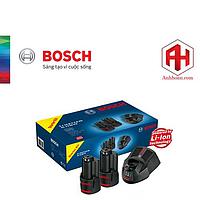
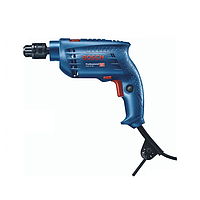
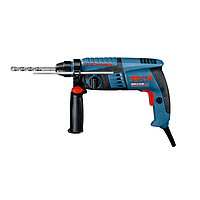
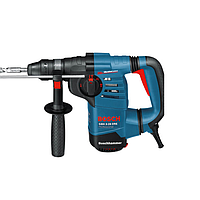
For light masonry and mixed-material site work, the BOSCH GSB 600 Set Impact Drill Set is positioned as a compact impact drilling option, while the BOSCH GBH 2-26 DRE Rotary Hammer is more suitable when concrete drilling becomes a regular requirement. At the heavier end, the BOSCH GBH 8-45 D Rotary Hammer is designed for larger diameter and more demanding drilling in concrete and masonry.
On cordless platforms, Milwaukee (tool) provides examples across several use cases. The M18 FPD3-0 FUEL Percussion Drill supports high-torque drilling and percussion work, the M18 FHX-0X0 SDS Plus Rotary Hammer and M18 BLHACD26-0X0 cover cordless concrete drilling, and compact tools such as the M12 FDDXKIT-0X Installation Drill or C12 RAD-0B Right Angle Drill help address confined-space installation tasks.
Corded vs. cordless in B2B environments
The decision between corded and cordless tools often depends on workflow more than on raw performance. Corded drill machines are typically chosen for stable power delivery, long operating periods, and jobsites where mains supply is readily available. They can be a straightforward solution for bench work, fabrication areas, and repetitive drilling tasks.
Cordless drill machines are attractive when technicians move frequently between service points, work at height, or need cleaner cable management. Battery-platform consistency can also simplify fleet management for maintenance teams already using other cordless tools. Where the job is specifically focused on reinforced steel sections or structural fabrication, a dedicated electromagnetic drill may be worth considering alongside standard hand-held drill machines.
Why brand and ecosystem matter
In professional procurement, the tool itself is only part of the decision. Buyers often look at the broader ecosystem: accessory availability, battery compatibility, service support, and whether the manufacturer covers multiple drilling formats. Within this category, names such as BOSCH, HITACHI KOKI, and Milwaukee (tool) are relevant because they span different drilling applications rather than only one tool style.
That matters when a business needs to standardize across technicians or departments. A supplier relationship built around a stable accessory and spare-part ecosystem can reduce downtime and make replacement planning easier over time.
Good operating practice for longer tool life
Even the right drill machine will underperform if the setup is wrong. Matching the bit to the material, using the correct operating mode, and avoiding excessive feed force are basic steps that improve hole quality and reduce unnecessary load on the tool. In masonry and concrete work, worn bits can significantly affect speed and vibration.
Routine checks are equally important in B2B use: inspect the chuck or SDS interface, verify switch response, monitor heat buildup during long cycles, and replace worn accessories before they affect productivity. For teams purchasing at scale, it is often more efficient to evaluate the tool and consumables together rather than as separate decisions.
Finding the right drill machine for your workload
The most suitable choice depends on whether your priority is compact access, everyday workshop drilling, occasional masonry work, or sustained concrete drilling on site. A standard drill, impact drill, or rotary hammer each serves a different role, and understanding that difference helps avoid overspending on features that are not needed or underbuying for demanding tasks.
Explore the category with your application in mind, compare drilling capacity and tool format, and review accessory compatibility before ordering. A well-selected drill machine supports safer operation, more predictable results, and better long-term value for professional users.
Get exclusive volume discounts, bulk pricing updates, and new product alerts delivered directly to your inbox.
By subscribing, you agree to our Terms of Service and Privacy Policy.
Direct access to our certified experts