Transistors
Switching, amplification, and signal control all rely on one essential building block: the transistor. In practical design work, engineers usually choose between several transistor technologies depending on voltage, current, switching speed, gain behavior, package limits, and circuit complexity. This category brings those options together so it is easier to compare devices for power stages, interface circuits, RF front ends, and compact embedded electronics.
Transistors are used across industrial electronics, automation hardware, communication systems, consumer devices, and automotive designs. Whether you are selecting a low-voltage MOSFET for efficient switching, a bipolar transistor for analog or general-purpose control, or a pre-biased device to simplify PCB layout, the goal is the same: match the device structure to the electrical task and the assembly constraints of the final product.
Understanding the role of transistors in circuit design
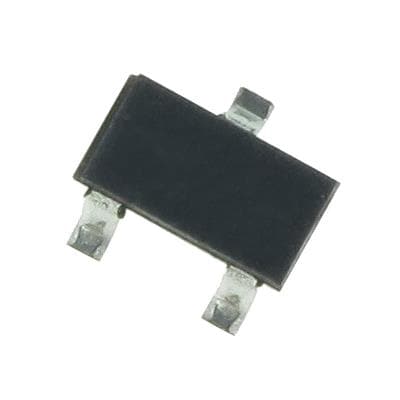
At a system level, a transistor acts as either a controlled switch or a gain element. That makes it relevant in everything from load driving and DC-DC conversion to signal conditioning and high-frequency front-end design. The right selection depends not only on electrical ratings, but also on how the part behaves in the wider circuit, including drive requirements, thermal conditions, and response speed.
Compared with other discrete semiconductor devices such as diodes and rectifiers, transistors provide active control rather than one-way conduction alone. In many designs they also work alongside protection and power-stage components, so this category is often a starting point when building or maintaining a broader discrete component sourcing list.
Main transistor types covered in this category
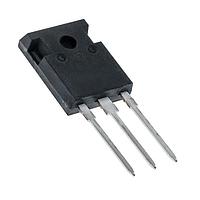
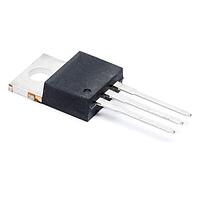
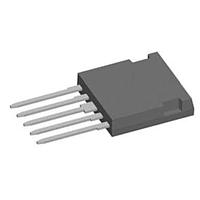
This category spans several widely used transistor families, each suited to different design priorities. MOSFETs are commonly selected for fast switching, low on-resistance, and efficient load control. Bipolar transistors remain relevant where predictable current gain, simple analog stages, or established circuit topologies are preferred.
You will also find device groups used for more specialized requirements, including JFETs, IGBTs, Darlington transistors, digital transistors, GaN FETs, and SiC MOSFETs. That range is useful when a project moves from low-power logic-level switching to higher-efficiency power conversion or when RF and low-noise behavior become more important than purely resistive switching performance.
Typical selection criteria for engineers and buyers
A practical shortlist usually starts with a few core parameters: drain-to-source or collector-emitter voltage, continuous current, power dissipation, package style, and mounting method. After that, the decision often becomes application-specific. For MOSFETs, designers may focus on gate threshold, drive voltage, input capacitance, and on-state resistance. For BJTs, gain characteristics, saturation behavior, and biasing approach are often more relevant.
Pre-biased transistors can be especially useful where board space is limited and component count matters. Devices such as the Diodes Incorporated DDTB114GU-7-F and DDTB114TC-7-F integrate bias resistors, helping simplify interface and switching circuits. For general switching needs, examples like the Diodes Incorporated ZVN4206AVSTOA or DMN3018SFG-13 show how MOSFET options can support different combinations of voltage, current, and drive requirements.
Examples of devices found in this range
The products highlighted in this category illustrate the breadth of available transistor solutions rather than a single device style. From Diodes Incorporated, parts such as the ZVN4206NTA and ZVN4206AVSTOA represent compact MOSFET choices for switching applications, while the BCX5116TC and DDTB114EU-7-F reflect bipolar and resistor-equipped transistor use cases.
For RF-oriented or high-frequency designs, Broadcom parts such as the ATF-58143-TR1, ATF-58143-TR2, and ATF-55143-TR2 show the importance of transistor selection beyond simple load switching. In another common design scenario, the Alpha and Omega Semiconductor AO3401 provides a P-channel MOSFET option for circuits that need high-side switching in a small footprint. These examples help show why transistor sourcing is usually driven by topology and application context, not by one universal specification.
Where transistors fit in the broader discrete ecosystem
Transistors rarely operate in isolation. They are often paired with gate protection, flyback paths, current limiting elements, or power-control devices depending on the application. In power and switching circuits, buyers may also review related categories such as discrete and power modules when the design moves beyond single-device implementations.
In protection-focused environments, complementary components like surge protectors may also be relevant, especially where inductive loads, transient-rich power rails, or exposed field wiring are involved. Looking at the surrounding component ecosystem can reduce redesign work and help ensure the selected transistor performs reliably under actual operating conditions.
Manufacturer coverage and sourcing considerations
This category includes products from recognized semiconductor manufacturers used across commercial and industrial supply chains. Broadcom, Diodes Incorporated, and Alpha and Omega Semiconductor are among the names represented in the featured products, covering use cases that range from compact switching stages to RF transistor requirements.
When comparing manufacturers, it helps to look beyond the headline electrical rating. Package compatibility, availability across multiple variants, long-term sourcing stability, and fit with existing BOM standards can matter just as much. For design teams and procurement specialists alike, a well-structured transistor category helps speed up part filtering while keeping technical evaluation grounded in application needs.
Choosing the right transistor for the application
If the circuit is primarily a low-loss electronic switch, MOSFET selection often starts with voltage margin, current capability, and gate-drive compatibility. If the design is centered on amplification, signal shaping, or straightforward current control, a bipolar transistor may be more appropriate. For compact logic interfaces, resistor-equipped digital or pre-biased transistors can reduce external component count and simplify routing.
It is also worth considering the operating environment early in the selection process. Temperature range, switching frequency, PCB copper area, and transient exposure can all affect device behavior in the final assembly. A good category page should therefore do more than list parts; it should help narrow the choice based on how the transistor will actually be used in the finished equipment.
Final thoughts
A well-chosen transistor supports stable switching, efficient power handling, and dependable signal performance across many types of electronic systems. By comparing device families, package styles, and representative products in context, engineers and B2B buyers can move more quickly toward a practical shortlist.
If you are evaluating options for new designs, production purchasing, or replacement sourcing, this category provides a useful starting point for identifying transistor technologies that align with your voltage, current, control, and integration requirements.
Get exclusive volume discounts, bulk pricing updates, and new product alerts delivered directly to your inbox.
By subscribing, you agree to our Terms of Service and Privacy Policy.
Direct access to our certified experts