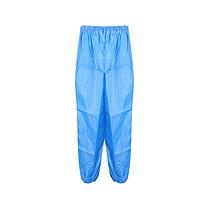
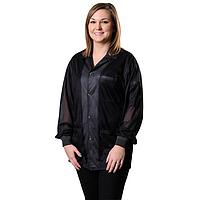
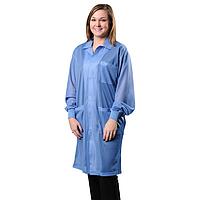
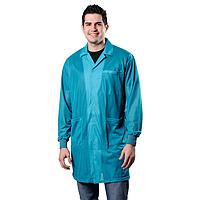
Apparels
Protective clothing plays a practical role in laboratories, clean work areas, and controlled industrial environments. The right garments help reduce contamination, improve operator safety, and support more consistent day-to-day work, whether the task involves routine sample handling, chemical splash protection, or dust-sensitive processes.
Apparels in this category cover common laboratory wear such as coats, aprons, and arm covers. Instead of treating these items as simple accessories, it is more useful to view them as part of a broader protection system alongside workflow discipline, workspace organization, and supporting laboratory equipment.
Where laboratory apparel is typically used
In many workspaces, clothing selection depends on the type of exposure the operator may face. A general lab coat is often chosen for everyday protection against light splashes and incidental contact, while aprons and sleeve protection are useful when the forearm and front body area are more directly exposed during washing, transfer, preparation, or cleaning tasks.
Controlled environments also place added importance on particle management. In these settings, garments made for dust control, clean room use, or waterproofing can help limit contamination from the operator to the process, while also protecting the wearer from moisture, residues, or handling-related contact.
Main product types in this category
This range includes several practical garment formats. Lab coats are commonly used as general outerwear for laboratory staff, technicians, and operators who need routine coverage during daily tasks. An example is the Cherokee WW410AB-SW Lab Coat, which represents the classic coat style often used where comfort and professional presentation matter alongside basic protection.
Aprons are better suited to tasks where the front torso is more exposed. Products such as the Apro A7.A001 clean room apron, the Apro A7.A002 urethane apron, and the 3M MC3000 MG3000 chemical-resistant apron illustrate different protection priorities, including dust control, moisture resistance, and handling in more demanding splash-prone work.
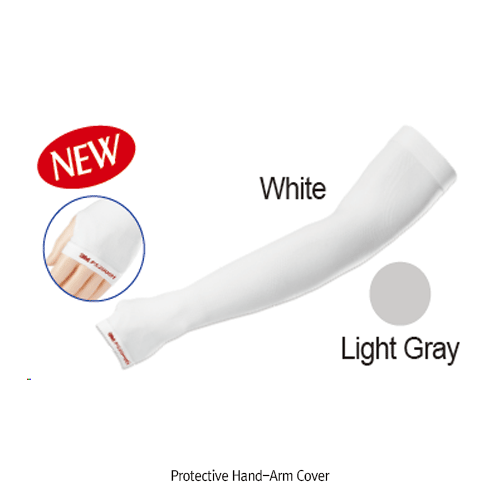
Arm covers add targeted protection without requiring a full garment change. Examples in this category include 3M Pro-Sleeve2000 arm covers and multiple DaiHan options such as cooling, non-woven, and PU waterproof arm covers, which are relevant when forearm exposure is frequent or when sleeve contamination needs to be controlled more carefully.
How to choose the right apparel for the job
A good starting point is to match the garment to the actual work area rather than choosing only by appearance or habit. If the risk is mostly light dust or routine bench work, a standard coat may be sufficient. If there is repeated contact with wet surfaces, cleaning agents, or splash zones, an apron or waterproof sleeve protection may be more appropriate.
Material and coverage are also important. Chemical-resistant garments are typically selected differently from apparel intended mainly for dust control or clean room use. Length, sleeve coverage, ease of movement, and disposable versus reusable use patterns can all affect whether a garment fits a workflow efficiently.
For teams building a complete PPE and lab workflow setup, it can also be helpful to review related handling and transport equipment when garments are used during material movement, storage, or process transfer between workstations.
Examples from leading manufacturers
This category includes products from recognized names such as 3M, Cherokee, DaiHan, and Apro. Each serves a slightly different role within laboratory and controlled-environment apparel, from general lab wear to more task-specific protective garments.
3M appears in this range with arm covers and aprons suited to hand and torso protection. Cherokee is represented by a lab coat format that aligns with routine professional laboratory wear. DaiHan offers multiple arm-cover styles, including cooling, waterproof, and non-woven variants, while Apro contributes clean room apron options intended for dust-sensitive and moisture-related applications.
For users already standardizing around that brand in their laboratory setup, you may also want to explore other DaiHan laboratory products to maintain consistency across equipment and accessories.
Why apparel matters in contamination and safety control
Protective garments help support both personnel protection and process protection. In a laboratory, this dual role matters because contamination can move in both directions: from the process to the worker and from the worker to the sample, equipment, or clean area. Even simple items such as sleeve covers can reduce accidental contact with benches, vessels, or surfaces during repetitive work.
Apparel choice also affects compliance with internal procedures. When clothing is well matched to the task, staff are more likely to wear it correctly and consistently. That can improve cleanliness, reduce garment-related discomfort, and make it easier to separate tasks by risk level or workspace type.
Building a more complete laboratory apparel setup
Most facilities do not rely on one garment type alone. A practical setup often combines coats for general use, aprons for higher-exposure tasks, and arm covers for localized protection. This layered approach can be more efficient than over-specifying a single garment for every activity.
It is also worth considering how apparel fits into the wider laboratory equipment environment, especially where workflows include preparation benches, cleaning stations, transport steps, or heat-related tasks. In some applications, teams reviewing protective clothing may also assess nearby tools such as burners and torches to ensure PPE selection matches the operating conditions.
Practical buying considerations for B2B users
For procurement teams, apparel selection is usually about repeatability as much as protection. Sizing approach, free-size compatibility, garment length, replacement frequency, and suitability for specific work zones all affect long-term purchasing efficiency. Standardizing by task type can simplify stocking and reduce mismatches between users and garments.
It is also sensible to compare whether a garment is intended for general lab use, clean room dust control, waterproof handling, or chemical exposure support. Looking at those distinctions first will usually lead to a better choice than filtering only by color or product format.
Conclusion
Choosing laboratory apparel is easier when the garments are matched to real operating conditions rather than selected as generic PPE. Coats, aprons, and arm covers each serve different purposes, and this category helps bring those options together for cleaner, safer, and more organized work.
Whether you are equipping a small lab, a controlled workspace, or a larger industrial testing environment, reviewing protection level, coverage area, and workflow compatibility will help narrow the right apparel options with less guesswork.
Get exclusive volume discounts, bulk pricing updates, and new product alerts delivered directly to your inbox.
By subscribing, you agree to our Terms of Service and Privacy Policy.
Direct access to our certified experts