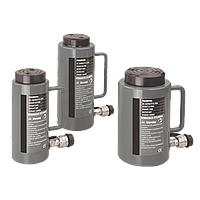
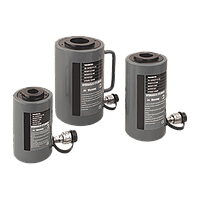
Hydraulic cylinder
Reliable linear force is essential in lifting, clamping, pressing, positioning, and many other industrial tasks. When motion must be transferred with high load capability and stable control, hydraulic cylinder solutions remain a practical choice across workshops, maintenance environments, production systems, and heavy-duty equipment.
This category brings together hydraulic cylinder options used in fluid power systems where compact installation, controlled stroke movement, and repeatable output are important. Whether the requirement is replacement, system expansion, or component selection for a new build, understanding the role of the cylinder within the wider hydraulic circuit helps narrow down the right product more efficiently.
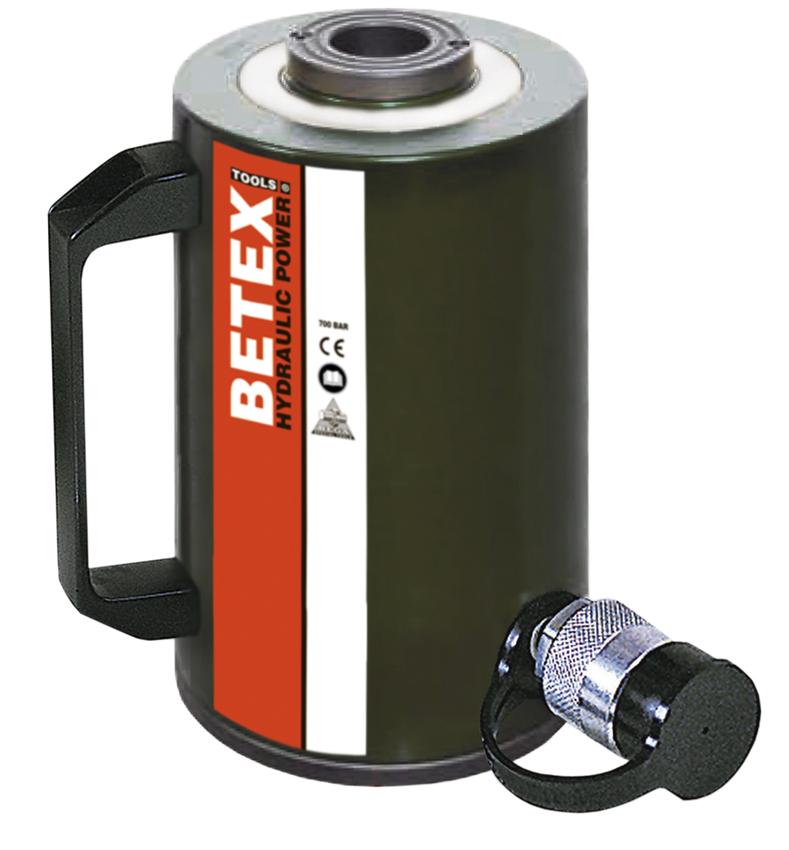
Where hydraulic cylinders fit in industrial systems
A hydraulic cylinder converts fluid pressure into linear motion. In practical terms, it is the actuator that performs the physical work: pushing, pulling, lifting, or holding a load once pressure is supplied by the system. This makes it a core component in many machines that require higher force density than purely mechanical solutions can provide in the same footprint.
Because a cylinder works as part of a broader hydraulic assembly, selection should not be isolated from the rest of the system. Pressure source, stroke requirement, mounting arrangement, speed, duty cycle, and load direction all affect suitability. In many applications, pairing the actuator with a properly matched hydraulic pump is just as important as choosing the cylinder itself.
Common application needs behind cylinder selection
Buyers looking through this category often have one of several goals: replacing a worn actuator, building a compact force mechanism, or standardizing components across multiple machines. Hydraulic cylinders are widely considered when the application needs dependable force output, controlled extension and retraction, and integration with an existing fluid power circuit.
Typical use cases can include lifting assemblies, pressing actions, fixture movement, maintenance tooling, and material handling support systems. In broader load-handling setups, cylinders may also work alongside equipment such as hydraulic spreader/lifting tools where controlled force transmission is required in confined or demanding working conditions.
What to evaluate before choosing a hydraulic cylinder
The first step is defining the job the actuator must perform. Required force, stroke length, mounting orientation, available space, and operating pressure determine the basic cylinder profile. Buyers should also consider whether the application involves static holding, repetitive cycling, shock loading, or exposure to dirt, moisture, or chemicals, since these factors influence long-term reliability.
It is also useful to review connection compatibility and maintenance expectations. Seal performance, rod protection, and service access can matter as much as nominal force capability, especially in equipment that runs frequently or is difficult to shut down. For users building a full fluid power setup, it may be helpful to compare related components and actuator arrangements within the broader hydraulic cylinder range before finalizing a replacement or project specification.
Representative products in this category
This category includes examples from established industrial manufacturers such as Festo, Parker, and SMC. Products such as the Festo MS6-LFM-A, Festo MS6-LFM-BI, Parker P31KA00ESE, Parker P31KA00ESC, and SMC AMC-EL6 illustrate the kind of components buyers may review when comparing available options for machine integration or maintenance replacement.
These references are useful as examples of market availability, but the best choice always depends on system context rather than brand alone. Mounting constraints, media conditions, pressure range, and application behavior should guide selection more than model familiarity. For procurement teams and maintenance engineers, this approach reduces mismatch risk and supports more consistent performance after installation.
Brand landscape and sourcing considerations
Festo, Parker, and SMC are well-known names in industrial motion and fluid power environments, so they are often shortlisted when buyers need dependable component sourcing. Each may be preferred depending on site standards, existing installed base, spare part policy, or compatibility with the rest of the machine architecture.
For B2B purchasing, manufacturer preference is only one part of the decision. Availability, lead time, documentation consistency, and interchangeability with existing assemblies can be just as important. A practical category page should therefore support both brand-led browsing and application-led selection, especially for users managing maintenance stock or planning phased equipment upgrades.
Understanding the wider hydraulics context
A cylinder does not operate alone. In a complete hydraulic system, overall behavior is influenced by the pump, valves, hoses, fittings, pressure conditions, and the mechanical load itself. Even a correctly sized actuator may perform poorly if the surrounding system is underspecified or if the installation introduces side load, contamination risk, or unstable pressure conditions.
This is why many buyers review adjacent product groups during selection. If the application involves broader lifting or service equipment, categories such as tower jacks or hand-operated handling tools may also be relevant depending on how force is applied in the field. Looking at the system as a whole usually leads to better equipment life and more predictable maintenance planning.
Why clear category structure matters for technical buyers
On industrial e-commerce platforms, category content should do more than repeat product names. Technical buyers need quick orientation: what the products are used for, how they fit into a hydraulic circuit, and what criteria matter before requesting a quote or placing an order. That is especially true in categories like hydraulic cylinders, where several items can appear similar at first glance but serve different operational needs.
A well-structured category also helps procurement teams compare options faster, while giving engineers a starting point for deeper specification review. Instead of relying on broad assumptions, users can move from application requirements to suitable product families and then into detailed model-level evaluation with more confidence.
Final selection guidance
Choosing the right hydraulic cylinder starts with the job to be done: force, movement, installation, and operating conditions. Once those basics are clear, it becomes easier to compare products from brands such as Festo, Parker, and SMC and identify options that align with system requirements rather than just catalog familiarity.
For teams working on new builds, replacements, or maintenance planning, this category is best used as a technical starting point. Reviewing the cylinder together with the surrounding hydraulic components will usually lead to a more suitable, longer-lasting solution and a smoother purchasing process.
Get exclusive volume discounts, bulk pricing updates, and new product alerts delivered directly to your inbox.
By subscribing, you agree to our Terms of Service and Privacy Policy.
Direct access to our certified experts