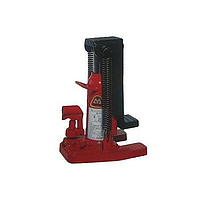
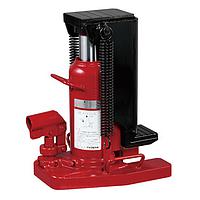
Tower jack
When equipment, vehicles, or heavy machine components need to be raised safely for inspection, repair, or positioning, choosing the right lifting device matters as much as the lifting capacity itself. This category brings together tower jack and closely related hydraulic jacking solutions used in workshops, maintenance areas, industrial sites, and material handling environments where controlled lifting and stable support are essential.
In practice, buyers looking for tower jacks are often comparing several jack styles at the same time: bottle jacks for vertical lifting, service jacks for mobile workshop use, and toe or hook jacks for loads with very low ground clearance. Understanding these differences helps narrow down the right tool for the application instead of selecting only by tonnage.
Where tower jacks fit in hydraulic lifting work
A tower jack is typically considered when the job requires a compact lifting solution with straightforward mechanical or hydraulic operation, especially in maintenance and load positioning tasks. In industrial purchasing, this category is also closely associated with workshop jacks, low-profile jacks, toe jacks, and bottle jacks because they often solve similar lifting problems under different site conditions.
For example, a standard service jack may be suitable for garage and vehicle work, while a toe jack becomes more practical when lifting machinery from a very low contact point. If the lifting system needs a separate power source for higher-force hydraulic operations, it may also be useful to review hydraulic pumps as part of the broader lifting setup.
Common jack types found in this category
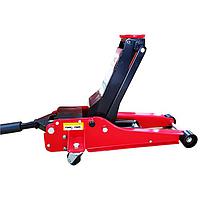
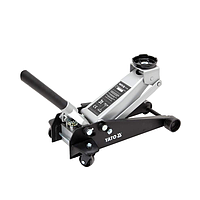
One of the most common formats is the service jack, designed for mobility and ease of positioning under vehicles or equipment frames. A model such as the Yato YT-17211 hydraulic trolley jack, with a lifting range from 130 mm to 465 mm, is a good example of a workshop-oriented solution where reach and maneuverability are important.
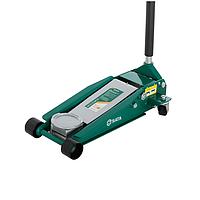
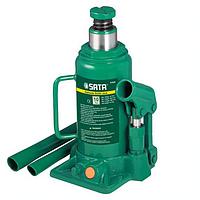
Another widely used format is the bottle jack. Products like the SATA 97810A Hydraulic Bottle Jack 50T are relevant when users need high lifting force in a relatively compact vertical body. This style is often selected for maintenance work where space around the lifting point is limited but overhead clearance is less of a concern.
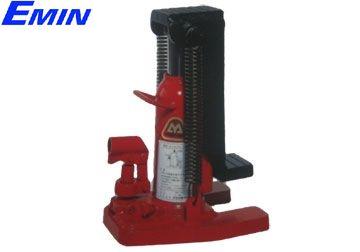
For machinery moving, installation, or maintenance on low-clearance bases, toe jacks are especially important. Models such as MASADA MHC-2RS-2, MASADA MHC-5RS-2, MASADA MHC-10RS-2, and Toe jack Masada MHC-15T show how toe capacity, head capacity, and minimum toe height directly affect suitability for industrial lifting tasks.
Why low-clearance lifting often requires a toe jack
In many factories and maintenance workshops, the challenge is not only lifting force but also access to the load. A conventional jack may not fit beneath a machine frame, skid, or structural base. That is where a low toe height becomes critical, allowing the jack to engage the load from the side at a very shallow starting point.
The MASADA MHC-2RS-2, for instance, is built around lower-capacity, low-entry lifting needs, while larger models such as the MASADA MHC-10RS-2 or MHC-15T are more suitable when handling heavier equipment. The DBK MHC-2.5RS Hydraulic Hook Jack and KAWASAKI MHC-5RS Hydraulic Toe Jack are also relevant examples for buyers comparing hook lifting versus head lifting in compact industrial environments.
Where load stabilization or follow-up support is needed after lifting, support equipment such as the TOPTUL JHAA0203 jack stands can be an important part of the workflow. Jack stands do not replace the lifting jack, but they are often used to hold a raised load more securely during service operations.
How to choose the right tower jack or hydraulic jack
The first factor is always the actual load condition, not just the nominal weight of the equipment. Buyers should consider the lifting point, the distribution of the load, the minimum insertion height, and whether the lift will be done from the toe, saddle, or head. A 5-ton or 10-ton rating may sound sufficient, but the usable lifting method can change the practical result.
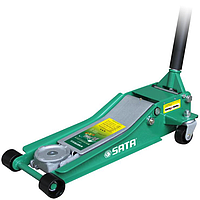
The second key factor is lifting range. Some applications require a low starting height and moderate stroke, while others need a higher maximum lift. For example, a service jack such as the SATA 97816 Heavy Duty Low Profile Service Jack 1.5T is more suitable for low vehicle entry, while a bottle jack like the SATA 97810A focuses more on vertical load capacity.
Mobility and operating environment also matter. Workshop jacks need wheels and easy placement, while industrial installation work may prioritize compact construction, side access, and controlled lift from a base edge. If the application involves pushing, spreading, or synchronized hydraulic force rather than only vertical lifting, related tools such as hydraulic cylinders or hydraulic spreaders and lifting tools may be worth reviewing.
Representative brands and product options
This category includes products from established tool and lifting equipment brands such as MASADA, SATA, KAWASAKI, TOPTUL, YATO, and DBK. Each brand appears in different parts of the lifting spectrum, from workshop jacks and stands to specialized hydraulic toe jacks for machinery handling.
MASADA stands out in the current selection for toe jack configurations, including MHC-2RS-2, MHC-5RS-2, MHC-10RS-2, MHC-15T, and MHC-3SL-2. SATA is represented by bottle and service jack options, while YATO provides a hydraulic trolley-style solution for garage and maintenance work. TOPTUL contributes support equipment through jack stands, which are often paired with lifting operations rather than used alone.
Typical applications in workshops and industry
In automotive and fleet maintenance, service jacks are commonly used to raise vehicles for tire, brake, suspension, and underbody work. Low-profile versions are especially relevant where clearance is limited. In these cases, the lifting tool must be easy to position, stable during operation, and appropriate for the service bay layout.
In industrial plants, toe jacks are more frequently chosen for lifting machinery, presses, generators, or heavy equipment bases during installation and relocation. The ability to lift from a low side contact point makes them practical for rigging teams and maintenance crews working in restricted spaces.
For general workshop support, jack stands, bottle jacks, and portable hydraulic jacks often work together as part of a broader lifting process. The right selection depends on whether the job requires temporary lifting, load holding, equipment repositioning, or access for maintenance personnel.
Selection guidance for B2B buyers
For procurement teams, selecting from a tower jack category is usually less about finding one universal product and more about matching the tool to real operating conditions. Capacity, minimum height, maximum lift, floor conditions, portability, and access to the lifting point should all be reviewed together before purchase.
It is also useful to think in terms of the complete lifting workflow. A workshop may need a service jack plus stands, while a machinery maintenance team may require a toe jack for initial lift and separate hydraulic equipment for controlled force application. Looking at the category this way helps reduce mismatched purchases and improves safety in day-to-day use.
Find the right lifting solution for your application
This category is intended for buyers who need dependable lifting tools for maintenance, repair, installation, and workshop support. Whether the requirement is a mobile service jack, a high-capacity bottle jack, or a low-clearance toe jack, the best choice depends on how the load is accessed and how the lift will actually be performed.
By comparing lifting style, working height, and application environment, it becomes much easier to identify the right equipment for the job. If you are building out a broader hydraulic lifting setup, this category can also serve as a starting point for selecting related components and support tools that work together in the same maintenance or handling process.
Get exclusive volume discounts, bulk pricing updates, and new product alerts delivered directly to your inbox.
By subscribing, you agree to our Terms of Service and Privacy Policy.
Direct access to our certified experts