Reference Thermometers
Accurate temperature work depends on more than a stable process or a capable calibrator. In laboratories, maintenance workshops, and validation environments, the measurement chain often starts with a dependable reference thermometer that can be trusted when checking sensors, transmitters, and temperature instruments across a defined range.
This category brings together solutions used where repeatability, traceability support, and low measurement uncertainty matter. Whether the job involves comparing RTDs, checking thermocouples, or supporting routine calibration workflows, Reference Thermometers play a central role in establishing a reliable temperature baseline.
Where reference thermometers fit in calibration work
Reference thermometers are typically used as higher-confidence instruments for verifying or comparing temperature points during calibration and testing. They are common in quality control, instrument maintenance, thermal process validation, and metrology-related applications where the measured value must remain stable and defensible.
In practice, these instruments are often used alongside baths, dry blocks, or other temperature calibration equipment. They can also be part of a wider workflow that includes signal simulation and loop verification using multifunction calibrators when temperature measurement is only one part of the overall test procedure.
Common probe types and measurement approaches
The products in this category reflect the different sensing approaches used in precision temperature measurement. Some applications rely on platinum resistance sensors for stable, repeatable readings over a broad range, while others use thermocouple-based probes where fast response or process-specific construction is more suitable.
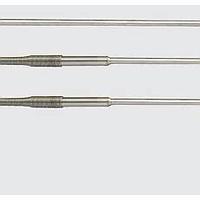
A good example is the PRESYS 04.06.0001-21 Industrial Standard Probe, a Pt-100 based probe designed for industrial calibration tasks. Its published range from -200 to 420 °C and low long-term drift illustrate why this type of sensor is often selected for reference duties where consistency over time is important.
This category also includes several probes from Fluke (Calibration), such as the 5609-15-D, 5610-6-P, 5609-20-M, and 5622-10-S. These examples show that users may need different probe constructions and lengths depending on immersion depth, medium, response requirements, and the specific point being measured.
How to choose the right reference thermometer
Selecting the right model starts with the actual calibration task rather than the model name alone. The first consideration is the temperature range you need to cover, including both the normal working point and any margin required for verification above or below process conditions.
Next, look at the sensor type, expected accuracy, drift behavior, and the mechanical design of the probe. Probe diameter, insertion length, sheath construction, and compatibility with the measurement environment all affect real-world performance. A reference thermometer used in a controlled lab setup may not be the best fit for field calibration on installed equipment.
It is also important to consider whether the thermometer will be used as a comparison standard, a transfer standard, or a routine shop-floor reference. These use cases do not always require the same level of performance, and choosing the proper balance between uncertainty, ruggedness, and handling convenience can improve both measurement quality and workflow efficiency.
Examples from the available product range
Several listed products illustrate the breadth of the category without turning it into a simple product list. The PRESYS 04.06.0001-21 Industrial Standard Probe is relevant for users looking for an industrial-style Pt-100 reference probe with a clearly stated measurement range and stability-oriented characteristics.
On the thermocouple side, models such as Fluke (Calibration) 5609-15-L, 5609-20-P, 5608-12-D, 5606-50-P, and FLUKE 5608-12-B suggest options for users who need different probe formats for varying insertion depths or process access points. While final suitability depends on the full measurement setup, these products indicate the category’s focus on practical calibration-grade temperature sensing rather than general-purpose handheld sensing only.
For buyers comparing multiple options, it is usually more useful to focus on sensing principle, physical design, and calibration role than to compare model codes in isolation. That approach makes it easier to narrow down a shortlist that fits the actual test environment.
Integration with broader calibration systems
Reference thermometers rarely operate alone. In many facilities, they are part of a broader calibration ecosystem that may include temperature sources, documenting instruments, and process calibration tools. The thermometer provides the trusted temperature reading, while the rest of the system helps generate stable points, log results, or verify associated instrumentation.
For applications that combine thermal checks with pressure-related maintenance tasks, users may also work across categories such as pressure calibrators. This is especially common in process plants where technicians validate multiple variables during one service visit and need instruments that fit into a coordinated maintenance workflow.
What matters in day-to-day use
Beyond stated specifications, day-to-day usability has a major effect on measurement quality. A reference thermometer should be easy to handle, mechanically appropriate for the insertion point, and stable enough for repeated use without creating unnecessary doubt between calibration intervals.
Probe immersion, thermal contact, response behavior, and environmental handling all influence the final reading. Even a capable probe can deliver poor results if the setup is inconsistent. For this reason, many users standardize their procedures for insertion depth, stabilization time, and comparison method to get the full value from a high-quality reference instrument.
Another practical factor is how the thermometer supports documentation and traceable workflows. In quality-sensitive industries, clear identification of the reference device and consistent use within a controlled process are just as important as the sensor technology itself.
Choosing with confidence
This category is intended for users who need more than a basic temperature indication. From Pt-100 industrial reference probes to thermocouple temperature probes from recognized calibration-focused manufacturers, the range supports different calibration methods, environments, and accuracy expectations.
If you are selecting a solution for bench calibration, field verification, or routine instrument checks, start with the required range, sensor type, and mechanical fit, then match those needs to the available models. A well-chosen reference thermometer helps create more reliable comparisons, more consistent documentation, and better confidence in every temperature-related calibration task.
Get exclusive volume discounts, bulk pricing updates, and new product alerts delivered directly to your inbox.
By subscribing, you agree to our Terms of Service and Privacy Policy.
Direct access to our certified experts