
Air purifier
Cleaner indoor air matters in offices, meeting rooms, service areas, laboratories, and light industrial spaces where dust, odors, and fine particles can affect comfort and daily operations. Choosing the right air purifier is not only about room size; it also involves filtration stages, airflow performance, noise level, maintenance intervals, and how the unit fits into the working environment.
On this category page, you can explore air purification solutions for different coverage ranges and usage needs, from compact units for small rooms to higher-capacity systems for larger shared spaces. The selection also includes replacement filters and supporting filtration components, helping buyers compare both the main equipment and the maintenance ecosystem around it.
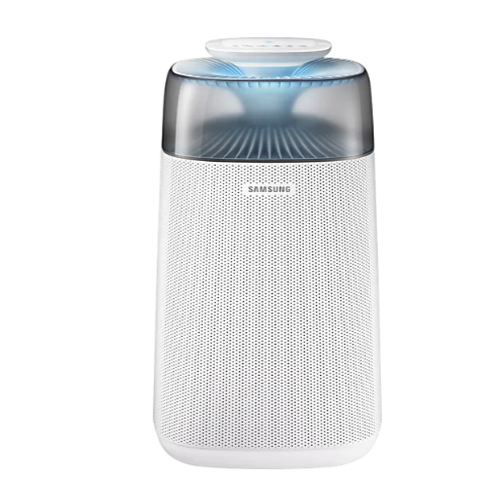
Air purification solutions for different room sizes
Coverage area and airflow are usually the first parameters buyers review. In smaller rooms, a compact model may be enough to manage airborne particles and everyday odors while keeping power consumption and operating noise relatively controlled. Examples in this category include the FUJIE AP100 and FUJIE AP200, which are suitable for lighter-duty use in limited spaces.
For medium rooms such as offices, reception areas, treatment rooms, or meeting spaces, units like the FUJIE AP300, AP600, and AP700 offer broader coverage with multi-stage filtration and practical operation modes. Larger spaces may require higher filtration capacity, where models such as BOHMANN B5.02 or BOHMANN B4.02 become more relevant thanks to their stronger airflow and wider usable area.
What to evaluate when selecting an air purifier
A practical buying decision should focus on usable area, filtration structure, and air delivery performance rather than headline wattage alone. A purifier with suitable CADR or filtration capacity can circulate and clean room air more effectively, especially in spaces with frequent occupancy or recurring dust load.
It is also important to check the number and type of filter stages. Across this category, you will find combinations such as primary filtration, activated carbon, antibacterial layers, HEPA or HEPA H13 filtration, and in some models additional UV, ionizer, or PCO-related stages. These configurations help address different air quality concerns, including coarse dust, fine particles, and unwanted odors.
Day-to-day operation should not be overlooked. Noise level, auto mode, sleep mode, filter replacement reminders, and smart functions such as Wi-Fi or PM2.5 indication can make a noticeable difference in real working environments where equipment runs for long periods.
From compact room units to higher-capacity systems
This category includes more than tabletop or room-scale devices. Many buyers need a range of solutions depending on the site layout, occupancy pattern, and contamination source. Compact products can support local treatment in private rooms, while larger freestanding units are more appropriate for open areas with greater air circulation demand.
For heavier airflow requirements, products such as the Trotec TTR filter box 610 illustrate the broader end of the filtration spectrum. Rather than serving as a typical household-style purifier, this kind of filtration component supports air handling setups that require much higher flow rates and integration into larger air movement systems. If your application is closer to technical ventilation or industrial air management, it may be useful to also review the available range from Trotec.
Examples of products in this category
Several representative models help show how the category is structured. The BOHMANN B5.01 and B5.02 are positioned for spaces that need multi-layer filtration with practical room coverage. For buyers comparing FUJIE units, the AP300, AP400, AP600, and AP700 span different area ranges and feature sets, including air quality indication, automatic operating modes, and filter replacement reminders.
The category also includes replacement filter sets, such as the FUJIE AP600 Filter Filter Set and FUJIE AP700 Filter Air Filter Set. These items are important because purifier performance depends not only on the main unit but also on regular filter maintenance. In long-term operation, filter lifetime and replacement planning are part of the true ownership cost.
Maintenance and filter replacement considerations
An air purification system performs best when the filter condition is monitored and replacement is done at the proper interval. Clogged or overdue filters can reduce airflow, lower filtration efficiency, and increase operating noise. That is why buyers should look beyond the initial device specification and consider the availability of compatible consumables.
In this category, filter service life varies by model and filter set. For example, some FUJIE replacement filters are listed with specific lifetime values, which can help maintenance teams estimate replacement cycles in advance. This is especially useful for businesses managing multiple rooms or standardizing air treatment equipment across a facility.
How air purifiers fit into a broader cleaning and hygiene setup
Air treatment is only one part of indoor environmental control. In many commercial and technical spaces, air purification works best alongside routine floor and surface cleaning to reduce the total particle load in the environment. Buyers managing larger facilities may therefore evaluate air equipment together with tools for dust and debris removal.
Depending on the application, it can be useful to explore related cleaning equipment such as vacuum cleaners and floor scrubbers for indoor maintenance, or an industrial sweeper for wider operational areas. This broader approach often helps maintain more stable air quality by reducing the amount of dust that becomes airborne in the first place.
Choosing the right option for your application
The most suitable model depends on where the purifier will be installed, how often the space is occupied, and what type of contaminants are most common. A small office may prioritize quiet operation and compact size, while a larger room may need stronger airflow and broader filtration coverage. In odor-sensitive spaces, activated carbon stages may be especially relevant, while fine dust control often makes HEPA filtration a key consideration.
When comparing options, it is helpful to shortlist products based on room area, filtration stages, maintenance needs, and operating features rather than looking at one specification in isolation. That approach leads to a more reliable match between the device and the actual site conditions.
This category brings together air purifiers, replacement filters, and higher-capacity filtration equipment for a range of indoor applications. By comparing coverage, filtration design, and maintenance requirements carefully, buyers can select a solution that supports cleaner air and more consistent day-to-day operation.
Get exclusive volume discounts, bulk pricing updates, and new product alerts delivered directly to your inbox.
By subscribing, you agree to our Terms of Service and Privacy Policy.
Direct access to our certified experts
