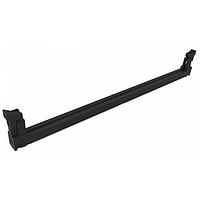
Memory Socket Connectors
Reliable board-to-card and module-to-board connections are critical in compact electronics, embedded systems, industrial control hardware, and data storage interfaces. When a design depends on removable media or pluggable memory modules, choosing the right Memory Socket Connectors helps improve signal stability, mechanical retention, assembly compatibility, and long-term serviceability.
This category is intended for engineers, buyers, and product teams looking for connector solutions used with memory cards or memory-style modules in space-constrained electronic assemblies. It covers formats commonly selected for PCB integration, cable-mounted interfaces, and device designs where repeated insertion cycles, mounting orientation, and contact layout all matter.
Where memory socket connectors are used
These connectors are typically found in equipment that needs removable storage, firmware loading, logging, compact media access, or modular memory integration. Common examples include industrial HMIs, handheld devices, communication hardware, embedded controllers, test equipment, and custom electronics that use SD, microSD, CompactFlash, or module-based memory interfaces.
In many designs, the connector is not just a physical interface. It also affects board layout, insertion direction, enclosure clearance, and maintenance workflow. A right-angle socket may simplify low-profile PCB assemblies, while a vertical or straight style may better suit internal cable routing or module access from the top of the board.
Typical connector formats in this category
The range of memory socket connectors can include card sockets for SD and microSD media, CompactFlash interfaces, and other memory-related connector styles used in embedded electronics. Depending on the application, engineers may need to compare pitch, number of positions, mounting orientation, and solder termination style rather than focusing only on card format.
Examples in this category illustrate that variation clearly. The Amphenol 114-00841-68 is a micro SD card socket with a compact right-angle SMD form factor, while the Alps Alpine SCDA3A0202 is designed for SD card integration. For CompactFlash-style applications, the JAE Electronics JC26A-BB16 shows how a higher pin-count right-angle header can support denser card-based designs.
If you need a broader view of card-interface options, the related memory card connector range can help when comparing socketed and card-specific connection approaches.
Key selection factors for engineering and sourcing teams
The right part usually depends on a few practical design constraints. Mounting style, insertion direction, contact pitch, and PCB real estate are often the first filters, especially in portable or compact industrial products. Right-angle SMD parts are popular where board height is limited, while straight connectors may fit better in service-accessible designs.
It is also important to consider the expected insertion/removal frequency and the mechanical behavior of the media in real operation. A socket used for field data transfer may need secure card retention and good accessibility, while an internal memory interface used mainly during assembly may prioritize compactness over user access.
Electrical fit should not be overlooked. Position count, contact arrangement, and interface compatibility must align with the memory standard or module being used. Even when several connectors appear similar, differences in layout and mating structure can significantly affect board design and manufacturability.
Examples of products and interface styles
Several featured products help show the diversity within this category. From Amphenol, parts such as the C70710M0065002A, C707 10M006 522 2 A, and SCE2MSDZN76A121SN represent memory connector options suitable for applications where card-based interfaces need compact board integration. The 114-00841-68 specifically points to a microSD-oriented design with right-angle SMT mounting.
JAE Electronics contributes several examples as well, including the JC26A-BB16 Compact Flash connector and models such as ST1W008S4A, ST10S008V4BR1800, and SF2W006S4KE3000. These parts highlight that memory socket selection is often tied to mechanical format and installation method as much as to the memory medium itself.
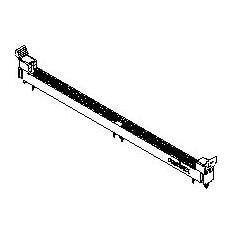
Other representative options include the Hirose Electric MQ198B-10(4)S-CV1 for cable-mount use cases and the ITT Cannon CCM03-3004LFT R102 for specialized memory connection requirements. In some projects, designers may also compare module-oriented interfaces such as the Amphenol FCI 10145891-1631J13LF DDR4 DIMM connector when the requirement extends beyond removable card media into board-level memory module connectivity.
How to choose between card sockets and module-style memory interfaces
Not every memory-related connector solves the same problem. Card sockets are generally selected for removable media such as SD, microSD, or CompactFlash, especially where data transfer, firmware updates, or local logging are required. Module-style interfaces, by contrast, are more relevant when a design uses pluggable memory boards or standardized memory modules in computing or embedded processing hardware.
This distinction matters during sourcing because the mechanical envelope, retention method, service expectations, and mating cycle profile can differ substantially. If your project is centered on pluggable memory modules rather than removable media cards, it may be useful to review the broader memory socket connector category alongside individual product formats to ensure the chosen interface matches both electrical and mechanical requirements.
Design considerations for industrial and embedded applications
In industrial electronics, connector reliability is often influenced by vibration, operator handling, enclosure design, and maintenance access. A connector that works well in a consumer device may not be ideal in a control cabinet, mobile platform, or instrument exposed to repeated servicing. For that reason, engineers typically evaluate not only dimensions and pitch, but also how the socket behaves during assembly and use.
Board layout compatibility is another major factor. Fine-pitch connectors can support compact designs, but they also demand careful footprint control and assembly quality. When selecting a part, it is worth checking how the connector orientation supports cable routing, card insertion clearance, shielding strategy, and nearby component placement.
Teams working on embedded platforms may also prefer suppliers with broad connector ecosystems. Brands such as Alps Alpine, Hirose Electric, JAE Electronics, and Amphenol are often considered when consistency in sourcing and interface quality is important across multiple product revisions.
What buyers should check before ordering
For procurement teams, the most common risk is ordering a connector that matches the memory type in name but not in footprint, orientation, or assembly process. Before purchase, confirm the exact card or module standard, number of positions, PCB mounting preference, and whether the design needs surface-mount, cable-mount, straight, or right-angle construction.
It is also useful to align purchasing with the engineering bill of materials and prototype status. Early-stage builds may allow evaluation of multiple socket styles, while production programs usually need tighter control over approved form factors and second-source strategy. This helps reduce redesign risk and supports smoother transitions from prototype to volume manufacturing.
Find the right connector for your memory interface
A well-chosen memory socket connector supports more than simple card insertion. It helps balance electrical compatibility, mechanical durability, space efficiency, and service access across the full product lifecycle. Whether you are integrating SD or microSD media, CompactFlash-style interfaces, or memory-related module connections, the right selection starts with the actual usage environment and board constraints.
Use this category to compare connector formats, mounting styles, and representative products from established manufacturers. For technical projects, taking the time to match the connector to the enclosure, PCB layout, and maintenance workflow usually leads to a more reliable and easier-to-build system.
Get exclusive volume discounts, bulk pricing updates, and new product alerts delivered directly to your inbox.
By subscribing, you agree to our Terms of Service and Privacy Policy.
Direct access to our certified experts