
Other Connectors
When a project does not fit neatly into a standard connector family, engineers often end up searching for parts with unique form factors, specialized mounting styles, or application-specific interfaces. That is where Other Connectors becomes useful: a practical category for hard-to-classify connection components that still play an important role in electrical integration, panel wiring, equipment assembly, and field service.
This page is intended for buyers, design engineers, and maintenance teams who need broader connector options beyond the most common product groupings. Whether you are replacing an installed part, sourcing a compatible interface, or building a mixed connector ecosystem, this category helps narrow down suitable options without forcing every requirement into a rigid connector type.
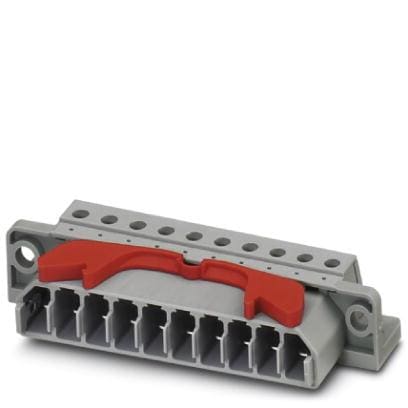
Why this category matters in real-world design and sourcing
In industrial and electronic applications, not every connector belongs to a simple, universally recognized family. Some parts are defined more by legacy use, series-specific geometry, installation method, or equipment compatibility than by a broad market label. A category like this supports those cases by grouping products that are still relevant for procurement, repair, and system expansion.
It is especially helpful in B2B environments where a purchasing team may already have a part number but limited descriptive data. Instead of filtering only through mainstream connector classes, users can review a wider set of connection solutions that may include circular interfaces, panel-mount components, accessories, and specialized terminations.
Typical applications for other connector types
These products can appear in control cabinets, industrial machines, test fixtures, communication hardware, power distribution assemblies, and equipment that relies on established connector standards or legacy footprints. In many cases, the connector is not unusual because it is unimportant, but because it serves a very specific electrical or mechanical requirement.
For example, some applications demand rugged body construction, secure mating, or compatibility with existing field wiring. Others need connector hardware or support parts that complete an assembly rather than acting as the primary interface. If your project also involves pre-terminated solutions, it may be useful to compare requirements with cable assemblies for faster integration in production or maintenance workflows.
Representative products in this range
The products listed in this category illustrate the variety engineers may encounter. Several Amphenol items, such as 97-3101A22-10P-958-940, 10-48217-2S, and 97-3106A18-4P-621-940, reflect the kind of specialized connector references often used in industrial and equipment-level sourcing. These parts are typically selected when an exact interface, mating pattern, or installation style matters more than a generic category label.
There are also examples such as Amphenol 162GB30T1832SZ416, identified as a circular wall-mount connector with crimp termination and 32 positions, which shows how this category can include highly specific connection formats. In addition, products like 3M 80610712210 and 3M M14-10FBX-BOTTLE highlight that connector accessories and related interconnect components may also appear here when they support the broader connection system.
How to evaluate selection criteria
Because this is a broad category, selection should begin with the actual application rather than the category name alone. The most important factors are usually mating compatibility, mounting style, termination method, contact count, environmental conditions, and the physical constraints of the enclosure or panel.
It is also worth checking whether the part is a complete connector, a mating half, or a supporting item such as hardware or an accessory. In some designs, the actual electrical path depends just as much on the installed contacts as on the connector housing itself, particularly when serviceability or replacement cycles are part of the maintenance plan.
Brand context and ecosystem fit
Several recognized manufacturers appear across this connector landscape, including 3M and Amphenol. Their presence in this category is useful for customers who already standardize around known interconnect suppliers and want continuity in sourcing, documentation, and product familiarity. Even within a mixed BOM, keeping connector-related components aligned with established brands can simplify qualification and purchasing.
At the same time, this category should not be treated as limited to one style or one industry. Some parts may support aerospace-inspired or rugged connection approaches, while others are better suited for electronic packaging, panel integration, or general industrial equipment. The key is to evaluate the connector in the context of the full assembly rather than by name alone.
When to use this category instead of a more specific connector group
If you already know you need a clearly defined connector family, a narrower category may speed up selection. But if your reference comes from an existing drawing, an OEM spare part list, or a legacy part number with limited metadata, this broader page can be the better starting point. It helps surface valid options that might otherwise be missed when filtering too aggressively.
This is also useful when comparing adjacent interconnect solutions. For bench work, prototyping, or test environments, some users may also review banana and tip connectors if the application calls for quick temporary connection rather than fixed installation. In contrast, the products here are often more tied to equipment integration and defined mating interfaces.
Practical buying tips for engineers and procurement teams
Before ordering, confirm the exact manufacturer part number, mating requirements, and installation constraints. Connector sourcing errors often come from small differences in shell style, pin arrangement, mounting orientation, or accessory compatibility. For maintenance purchases, matching the installed part exactly is often more efficient than trying to interpret the connector family from appearance alone.
For new designs, think in terms of the full interconnect system: connector body, termination approach, accessory needs, and downstream cable or panel interface. That approach reduces rework and makes future replacements easier. It also helps teams avoid selecting a part that is electrically suitable but mechanically impractical.
Find the right fit for specialized connection needs
This category supports projects that fall outside the most common connector groupings while still demanding accurate, dependable component selection. From specialized Amphenol connector references to supporting 3M interconnect items, the range here can help bridge the gap between standard catalog structure and real-world application needs.
If you are comparing parts for replacement, integration, or procurement planning, focus on compatibility, installation method, and system context first. That makes it easier to choose the right connector solution with fewer sourcing delays and better fit in the final assembly.
Get exclusive volume discounts, bulk pricing updates, and new product alerts delivered directly to your inbox.
By subscribing, you agree to our Terms of Service and Privacy Policy.
Direct access to our certified experts
