
RF Connector Tools
Reliable RF terminations depend on more than the connector alone. In assembly, maintenance, and field service work, the right tooling helps achieve consistent crimp quality, protects delicate contact geometry, and reduces rework when working with coaxial and other RF interconnect systems. That is why RF Connector Tools are an important part of any professional cable and connector workflow.
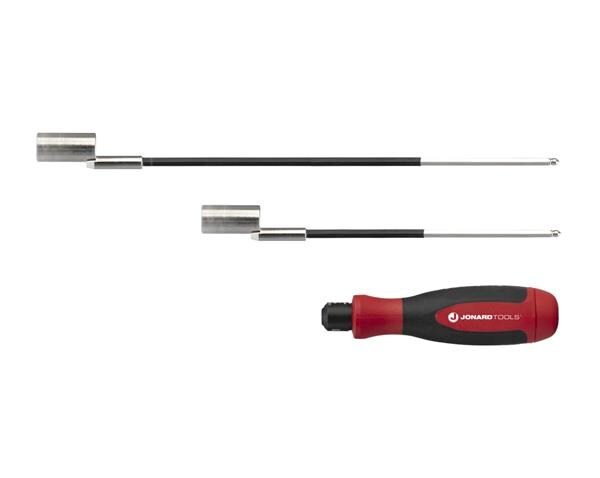
Why RF connector tools matter in connector assembly
RF connectors are used in applications where signal integrity, mechanical stability, and repeatable installation all matter. Even when the connector itself is well specified, poor tool selection can lead to inconsistent crimps, damaged contacts, or assembly errors that affect long-term performance.
Dedicated tooling supports more controlled preparation and termination, especially when working with connector families that require precise alignment or defined crimp geometry. For buyers supporting production lines, repair benches, or cable assembly operations, selecting the correct tool is often just as important as selecting the connector.
Typical tool types found in this category
This category includes tools used to support the termination and handling of RF connector components, particularly in cable assembly environments. Depending on the connector series and assembly method, users may need hand tools, application-specific tools, or positioning accessories that help align conductors and contacts correctly.
Some products are general connector tools, while others are built around a very specific connector platform. For example, the Amphenol M22520/1-02 Turret or Positioner Crimping Tool illustrates the role of a positioner in repeatable crimping setups, where accurate conductor placement is essential for quality results.
Application-specific tooling for RF connector families
Many RF assembly tools are designed around particular connector or contact formats rather than broad universal use. This is common in environments where repeatability and compatibility are more important than tool flexibility. In practice, this means the part number of the tool should be matched carefully to the connector system being assembled.
Examples in this category include several tools from Hirose Electric, such as AP105-DF50-3032S, AP-GT13-2428/F45S-51B(61), and GT36-1629S(A)/CK-AD-A. These products show how manufacturers provide dedicated tooling to support specific termination processes, helping users maintain consistent assembly quality across defined cable and connector combinations.
How to choose the right RF connector tool
The first step is to match the tool to the exact connector or contact series in use. In RF interconnect work, small differences in contact design, conductor size, or cable structure can make one tool suitable and another unsuitable. Buyers should verify compatibility at the manufacturer part-number level whenever possible.
It is also useful to consider the operating environment. A service technician may prioritize portability and ease of use, while a production team may focus more on repeatability, training simplicity, and reduced assembly variation. If the process also includes related components such as RF connector accessories, tool selection should be reviewed as part of the full assembly workflow rather than as a standalone purchase.
Representative products in this range
The products listed in this category reflect the practical, model-specific nature of RF connector tooling. From Hirose Electric, examples such as APGT1-1P-2428/1.6C-WS(69), APGT1-1S-2428/1.6C-WS(62), and AP105-BH12-SC-1(61) are intended to support defined connector assembly tasks rather than general-purpose bench work.
From Amphenol, tools such as TA 0000 502 and 357-579 highlight another common purchasing scenario: replacing or standardizing tooling for existing connector programs. In both cases, the most effective approach is to treat the tool as part of the connector ecosystem, not as an isolated accessory.
Where these tools fit within the wider RF interconnect workflow
RF connector tools are typically selected alongside connectors, adapters, cable assemblies, and related support items. Teams working across multiple project stages may also compare this category with RF connectors and coaxial connectors when defining a complete assembly path from cable selection to final termination.
In some applications, preassembled solutions may reduce the need for in-house termination, making RF cable assemblies a practical alternative. However, when customization, repair, prototyping, or controlled production is required, dedicated tooling remains essential for process consistency and handling accuracy.
What buyers should check before ordering
Before purchasing, confirm the exact tool reference required for the connector family, contact style, and intended assembly method. This is especially important for application tools that are designed for one narrow use case. A visually similar part may not deliver the same positioning, crimp behavior, or compatibility.
It is also worth checking whether the requirement is for a complete tool, a crimping accessory such as a turret or positioner, or a model-specific assembly aid. Reviewing the broader interconnect setup in advance helps avoid delays, duplicate purchases, or mismatched tooling on the bench.
Support more reliable RF assembly work
Choosing suitable RF connector tooling helps improve repeatability, reduce handling errors, and support better day-to-day assembly performance. Whether the need is a dedicated Hirose Electric application tool or an Amphenol crimping accessory, the right match depends on connector compatibility and the realities of the assembly process.
Explore the available range of RF Connector Tools to find tooling that aligns with your connector series, workflow, and maintenance or production requirements.
Get exclusive volume discounts, bulk pricing updates, and new product alerts delivered directly to your inbox.
By subscribing, you agree to our Terms of Service and Privacy Policy.
Direct access to our certified experts
