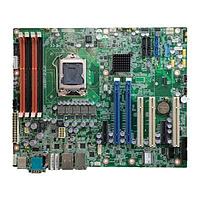
Audio Modules
Audio capability is often a small part of a larger embedded design, but it can have a major impact on usability, communication quality, and system integration. Whether the goal is voice transmission, local amplification, digital audio networking, or adding sound I/O to an industrial computer platform, choosing the right Audio Modules helps reduce development effort and simplifies deployment.
In embedded and industrial environments, audio hardware is rarely selected on sound quality alone. Interface compatibility, operating range, board-level integration, and the intended signal path all matter. This category brings together modules and related audio interface products used in embedded systems, communication devices, public address applications, and platform-specific expansion designs.
Where audio modules fit in embedded systems
Many embedded platforms need more than basic audio output. A system may require microphone input, speaker drive, line-level conversion, wireless voice transport, or integration with a networked audio infrastructure. In these cases, dedicated modules can provide a practical path to add audio functions without redesigning the entire main board.
This is especially relevant in kiosks, industrial HMIs, communications equipment, control terminals, tour guide systems, and public address installations. Some modules are designed as compact board-level building blocks, while others act as adapters between analog audio signals and digital transport environments. If the wider project also involves connected devices or protocol-based data exchange, related Ethernet & Communication Modules may be useful alongside the audio layer.
Common product types in this category
The scope of this category includes several different roles within an audio chain. Some products are true embedded audio modules, such as add-on boards, audio cards, or amplifier modules intended for integration into a host platform. Others support conversion or transport, helping move audio between analog, serial, or network-based environments.
For example, the Advantech AIMB-AUDIO-HDA1E is positioned as an audio card for compatible ISMB motherboards, making it relevant where platform-specific expansion is required. ADLINK Technology DLAP-3000 variants are examples of modules that support speaker and input functions in embedded systems, while products such as the NEUTRIK NA-2I-DLINE or NA-2I2O-DLINE are better understood as audio interface adapters that bridge line-level signals and Dante-based workflows.
Manufacturer ecosystem and solution direction
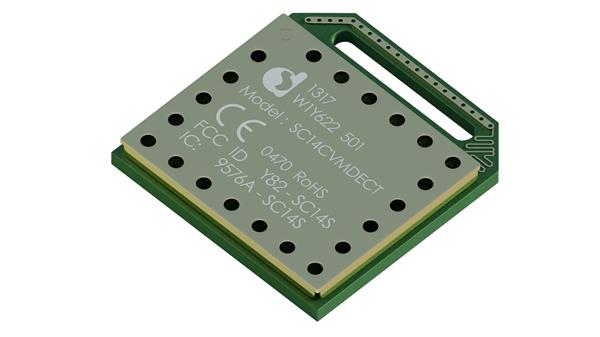
Several established suppliers appear in this category, each reflecting a different integration approach. Dialog Semiconductor is represented with compact wireless and DECT-related modules, which are relevant for voice-focused applications where cordless communication is part of the design. Advantech and ADLINK Technology are more closely associated with embedded computing ecosystems, where audio is added as a subsystem within a larger industrial platform.
Other manufacturers support adjacent use cases. Analog Devices appears with an audio add-on board format, while NEUTRIK products address signal interfacing in professional audio distribution. Tripp Lite and CCS illustrate how this category can also include practical interface hardware such as extractors or sound card interfaces when the application requires a specific audio connection path rather than a full custom audio design.
Examples of applications supported by audio modules
A useful way to evaluate this category is to think in terms of the final system. In a public address or guided tour environment, a wireless audio module such as the Dialog Semiconductor SC14WAMDECT SF01T may be relevant because it aligns with cordless voice distribution needs. In an embedded panel PC or industrial motherboard project, a dedicated audio card or amp module may be more appropriate.
There are also cases where the requirement is not playback alone, but signal conversion between devices. NEUTRIK Dante adapters, for instance, fit installations where analog line-level signals must enter or leave a networked audio environment. A product like the Tripp Lite P130-06N-AUDIO is closer to extraction and routing, useful when audio has to be separated from an HDMI source for downstream equipment.
How to choose the right module
Selection usually starts with the intended audio path. First, determine whether the project needs input, output, amplification, wireless voice capability, or protocol conversion. Then check how the module connects to the host system, such as UART, serial, line-level audio, or a board-specific interface. This is often more important than comparing products that appear similar at a glance.
Environmental and mechanical constraints also matter. Some listed products indicate operating temperature ranges or compact dimensions, which can be important in industrial enclosures or portable equipment. For projects that also depend on analog signal handling or mixed-signal design, exploring Data Conversion Modules may help complete the broader system architecture.
It is also worth checking whether the item is a complete functional module, a host add-on board, or an adapter. An embedded amplifier module, a motherboard audio card, and a Dante interface may all sit in the same category, but they solve very different engineering problems. Focusing on the role of the product in the system prevents mismatch later in integration.
Integration considerations for engineering teams
In B2B and OEM projects, audio is rarely isolated from the rest of the system. Power availability, firmware control, enclosure acoustics, and upstream software all influence final performance. A board using UART or serial communication for audio-related control may need close coordination with firmware resources, while platform-specific audio cards require compatibility with the target motherboard or embedded computer.
Where audio behavior is shaped by drivers, codecs, or application logic, software support becomes part of the selection process as well. Teams working on complete embedded deployments may also need supporting software tools to configure, manage, or validate the final solution. Looking at the module in the context of the full product stack usually leads to a better long-term choice than comparing isolated hardware features.
What makes this category useful for sourcing
This range is valuable because it covers more than one layer of the embedded audio chain. You can find compact wireless voice modules, host-specific audio expansion boards, amplifier-oriented modules, and interface products that support audio transport between different environments. That makes the category relevant not only for new designs, but also for upgrades, retrofits, and platform expansion.
Examples from manufacturers such as Analog Devices, NEUTRIK, ADLINK Technology, and Dialog Semiconductor show how varied the design intent can be. Some products are meant for direct integration into embedded hardware, while others solve a connectivity problem between audio sources, endpoints, or networked infrastructure. This flexibility is useful when building systems that combine embedded computing, communications, and user interaction.
Final considerations
Choosing audio hardware for embedded applications is usually a matter of system fit rather than broad feature comparison. The right product depends on whether you need local audio I/O, wireless voice transmission, amplification, or interface conversion within a larger technical environment. Reviewing interface type, installation context, and host compatibility will usually narrow the options quickly.
This Audio Modules category is designed to support that process by bringing together products for different embedded and industrial audio tasks. If you are building a communication device, adding sound to an industrial platform, or linking analog signals into a digital audio workflow, a clear understanding of the signal path will help you identify the most suitable module or adapter for the job.
Get exclusive volume discounts, bulk pricing updates, and new product alerts delivered directly to your inbox.
By subscribing, you agree to our Terms of Service and Privacy Policy.
Direct access to our certified experts