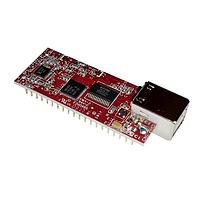
System On Modules
When a project needs the performance of an embedded computer without the time and cost of designing every processing function from scratch, a modular approach often makes the most sense. System On Modules help engineering teams shorten development cycles by integrating the core computing elements into a compact building block that can be paired with a custom carrier board for application-specific I/O, power, and mechanical design.
In embedded computing, this approach is widely used for industrial automation, machine vision, edge AI, HMI systems, transportation electronics, and smart devices that need a balance of flexibility, scalability, and faster deployment. This category brings together module-based computing platforms for designs that require proven processing architecture with room for product differentiation.
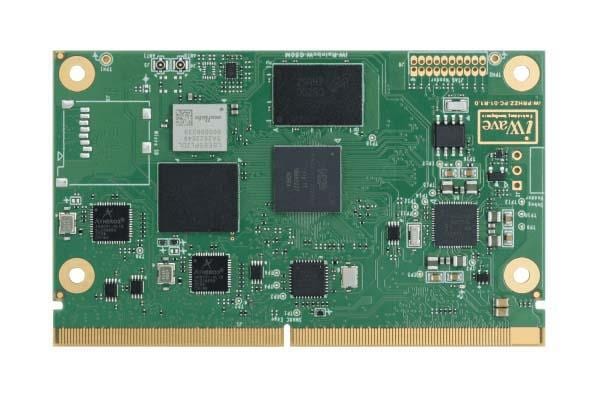
Why System On Modules are widely used in embedded design
A system on module typically combines processor, memory, and essential high-speed interfaces on a compact board. Instead of creating a full CPU board at the start of every project, developers can focus on the carrier board and the interfaces that matter most for the target machine or device.
This design strategy can reduce hardware risk, simplify prototyping, and support easier platform updates over time. For many OEM and industrial teams, it also creates a practical path from proof of concept to production, especially when product requirements may evolve across multiple generations.
Where SOMs fit in the embedded computing ecosystem
System On Modules sit between fully integrated industrial computers and low-level component design. If an application needs a ready-to-deploy enclosure and standard interfaces, embedded box computers may be a better fit. If the goal is to create a custom device around a pre-validated computing core, SOMs offer more design freedom.
They are also closely related to computer on modules, a category often considered alongside SOM-based platforms during architecture selection. In practice, terminology can overlap, but the key buying consideration is the same: how much integration, customization, and lifecycle control the project requires.
Typical applications for System On Modules
SOMs are a strong fit wherever embedded intelligence must be combined with application-specific hardware. Common use cases include industrial controllers, inspection systems, robotics, medical devices, kiosks, digital signage, edge gateways, and compact HMI terminals. Their modular nature is especially valuable when developers need to support multiple product variants from a shared computing platform.
They are also relevant in AI-enabled systems that process camera data, sensor inputs, or real-time machine information at the edge. In those scenarios, the module provides the processing foundation while the carrier board adapts the design to required ports, displays, storage, networking, and environmental constraints.
Examples of platforms in this category
This category includes solutions from established embedded manufacturers such as Advantech and Nvidia, covering both general embedded processing and more demanding AI or vision-oriented workloads. For example, modules such as the Advantech SOM6763D0001E-T and Advantech 96MPXE-2.9-12M13T represent the type of compact computing core often selected for industrial integration and custom platform development.
For edge AI and accelerated vision applications, products like the Nvidia Jetson TX2 Module, Nvidia Jetson AGX Xavier Developer Kit, Nvidia Jetson AGX Orin 64GB, and Nvidia Jetson Orin NX 8GB illustrate how SOM-based and development-kit ecosystems support high-performance embedded processing. These products are useful reference points when evaluating CPU or GPU resources, camera support, display capabilities, and expansion needs for advanced edge systems.
How to choose the right module for your project
The best starting point is the application workload. Some designs prioritize deterministic control, low power consumption, or long-term embedded stability, while others require parallel processing for computer vision, analytics, or AI inference. Matching compute capability to the real software stack is more important than selecting the highest available performance on paper.
Teams should also review interface requirements early in the design stage. Display outputs, camera connectivity, Ethernet, PCIe, storage options, and power input expectations all affect carrier board complexity and system architecture. If environmental robustness, lifecycle availability, or certification planning are important, those factors should be considered at the same time as processing performance.
Another practical consideration is the development path. Some projects begin with a developer kit to accelerate software work, then transition to a production module and custom carrier. Others move directly to production-oriented SOMs when hardware requirements are already well defined. In either case, the module should align with the intended deployment model, not just the initial prototype.
Selection considerations for industrial and B2B buyers
For industrial procurement and engineering teams, choosing a SOM is rarely just about the processor. A good evaluation also includes vendor ecosystem, documentation quality, software support, thermal design implications, and how easily the module can be integrated into the broader product lifecycle. This is especially important in markets where maintenance, field service, and revision control matter as much as initial performance.
It can also help to think beyond the module itself. Some applications may ultimately be better served by a full panel PC platform for operator-facing systems, while others may start with a SOM and later expand into related embedded hardware. Looking at the overall architecture early can prevent unnecessary redesign work later in the project.
System On Modules for scalable product development
One of the main advantages of the SOM approach is scalability. A team can develop a common carrier strategy and adapt the compute module over time as software demands increase or product variants expand. That makes SOMs attractive not only for first-generation devices, but also for platform roadmaps that need a clear migration path.
For organizations building industrial, commercial, or intelligent edge systems, this category offers a practical foundation for modular embedded design. By comparing processing architecture, interface mix, development ecosystem, and long-term integration needs, buyers can identify a module platform that supports both near-term deployment and future product evolution.
Get exclusive volume discounts, bulk pricing updates, and new product alerts delivered directly to your inbox.
By subscribing, you agree to our Terms of Service and Privacy Policy.
Direct access to our certified experts