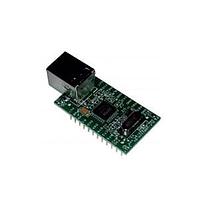
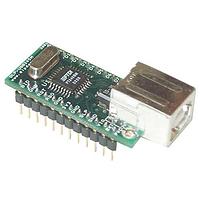
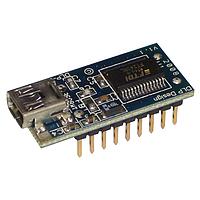
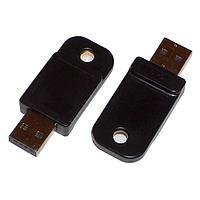
Interface Modules
Reliable signal transfer is a core requirement in embedded systems, especially when different boards, buses, and voltage domains need to work together without adding instability to the design. In that context, Interface Modules help bridge communication paths, support data integrity, and simplify integration across industrial, commercial, and development platforms.
This category brings together devices and related embedded interface components used to connect subsystems more effectively. Whether the goal is extending I2C communication, supporting point-to-point or multidrop data links, or adding practical expansion support around embedded hardware, these products fit into the broader workflow of embedded design, prototyping, and deployment.
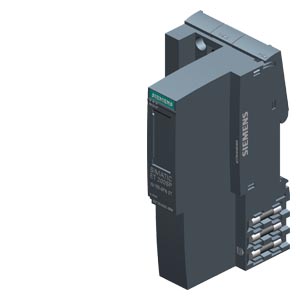
Where interface modules fit in embedded system design
Embedded platforms rarely operate as isolated devices. They typically communicate with sensors, controllers, expansion boards, edge devices, displays, or higher-level processing hardware. Interface modules are used to manage these connections in a controlled way, especially where signal conditioning, bus extension, protocol support, or electrical compatibility matters.
In practical terms, these modules can support communication paths that would otherwise become unreliable because of cable length, bus loading, hot-swap conditions, or voltage differences. For projects that also require broader connectivity functions, related options in Ethernet and communication modules may be useful alongside interface-focused components.
Typical functions covered in this category
The products in this category can serve several roles within an embedded architecture. Some are aimed at signal interfacing and bus management, while others are used as supporting hardware around embedded expansion ecosystems. The result is a category that is relevant both to hardware engineers building custom designs and to buyers sourcing integration-ready components.
Examples from this range include interface-oriented parts such as the Analog Devices ADM1181AAN and LTC2845CUHF#PBF, which are positioned around data transmission connectivity, as well as I2C-focused devices like the Analog Devices LTC4311ISC6#PBF and LTC4310CDD-2#PBF. On the platform side, items such as the Advantech UNO-2271G-EKAE expansion kit illustrate how interface-related accessories can support embedded installation and system extension rather than acting as standalone processing hardware.
Common application scenarios
Interface Modules are commonly selected when a design needs more robust communication between boards or subsystems. This includes embedded controllers in industrial equipment, edge gateways, machine interfaces, monitoring systems, and development platforms that combine multiple peripherals on shared buses.
I2C buffers and isolator-type devices are often relevant when bus capacitance, address conflicts, hot insertion, or overall line stability becomes a concern. Point-to-point and multidrop interface components can also support applications where several devices must share communication resources without compromising signal quality. In systems that also process analog signals close to the edge, adjacent categories such as data conversion modules may complement the interface layer.
Featured manufacturers and product examples
Several well-known suppliers appear in this category, with Analog Devices standing out in the current product mix for interface and bus-support components. Its listed products reflect use cases such as logic buffering, hot-swappable I2C support, and communication interface implementation in compact embedded designs.
Advantech is also relevant here through embedded solution accessories and expansion-oriented hardware, including the UNO-2271G-EKAE and related X-INN accessories. In addition, Adafruit expansion boards in this category can be useful where development flexibility, rapid prototyping, or add-on functionality is part of the system workflow. These examples show that the category is not limited to one form factor; it spans both interface IC-oriented modules and ecosystem accessories that help embedded platforms connect and expand.
How to choose the right interface module
Selection should start with the communication requirement itself. The first questions are usually about protocol, topology, voltage level, and system behavior during connection or power transitions. A design using I2C, for example, may benefit from a buffer or isolator when bus reliability is becoming a limitation, while another application may require an interface device designed for point-to-point or multidrop links.
It is also important to consider the surrounding hardware. Some buyers need a compact component for board-level design, while others need an accessory or expansion kit that fits an existing embedded platform. Mechanical integration, supply voltage compatibility, and the number of drivers or receivers can all influence suitability. If the project also involves application-layer deployment or embedded packages beyond hardware, related software resources may also play a role in the final system architecture.
Integration considerations for stable communication
A good interface design is not only about making two devices talk to each other. It is also about ensuring that communication remains stable under real operating conditions such as cable loading, temperature variation, startup sequencing, and field maintenance. That is why engineers often look beyond nominal compatibility and evaluate how a module behaves in the full embedded environment.
For example, buffered or isolated I2C paths can help maintain bus performance when devices are added or removed, while dedicated interface modules can reduce troubleshooting effort in more complex communication chains. Where expansion performance and processing offload are part of the design, some projects may also be paired with accelerator cards to support broader embedded functionality.
Suitable for development, prototyping, and deployment
This category serves more than one purchasing scenario. Development teams may use expansion boards and interface accessories to validate communication concepts quickly, while OEM and industrial buyers may focus on repeatable interface components for integration into deployed equipment. That combination makes the category relevant across the product lifecycle, from early evaluation through to production-oriented sourcing.
Products such as Adafruit expansion boards support experimentation and peripheral connectivity, while Analog Devices interface parts suit more targeted communication tasks. Advantech accessories, meanwhile, help extend or adapt embedded hardware platforms in ways that are practical for field-ready systems. Together, these options make the category useful for buyers who need both flexibility and technical focus.
Final considerations
Choosing the right interface hardware can reduce integration risk, improve communication reliability, and make embedded systems easier to scale or maintain. The best fit depends on how the system communicates, what constraints exist around voltage and topology, and whether the requirement is for a board-level interface component or a platform accessory.
By reviewing the available interface modules in the context of your embedded architecture, it becomes easier to narrow down products that support stable data exchange and cleaner system integration. For design teams, prototyping groups, and industrial buyers alike, this category is a practical starting point for building more connected embedded solutions.
Get exclusive volume discounts, bulk pricing updates, and new product alerts delivered directly to your inbox.
By subscribing, you agree to our Terms of Service and Privacy Policy.
Direct access to our certified experts