Modules Accessories
Building a reliable embedded platform often depends on more than the core module itself. Mounting hardware, chassis parts, riser cards, interface modules, and protection accessories all play a practical role in how a system is installed, expanded, and maintained in the field. That is where Modules Accessories become important for engineers, machine builders, and industrial system integrators.
Supporting the full embedded system, not just the main board
In embedded and industrial computing projects, accessories are often the parts that make a design usable in real operating conditions. A system may need slide rails for rack installation, a riser card for expansion, a chassis for protection, a mounting arm for operator access, or a sealing plate to improve enclosure integrity. These details directly affect serviceability, mechanical fit, and long-term deployment.
This category is especially relevant for applications where the embedded platform must fit into a cabinet, vehicle, control station, kiosk, or industrial workstation. Rather than treating accessories as secondary items, many buyers evaluate them as part of the complete system architecture from the start.
Typical accessory types found in this category
The range of products in this category reflects the broad needs of embedded integration. Some items are designed for mechanical installation, such as rack slides, glass mount kits, scanner mounts, and support arms. Others focus on system expansion, including riser cards and I/O-related modules that help adapt a base platform to a specific application.
There are also products intended for enclosure and platform completion, such as chassis components and sealing kits. For example, an industrial chassis like the Advantech HPC-8212SE-80RB1 is relevant when a project requires a rack-ready housing, while items such as the Advantech AIMB-RP10P-01A1E or Advantech 9892662200E support internal expansion in systems where board layout and available slots matter.
Examples of how these accessories are used in real projects
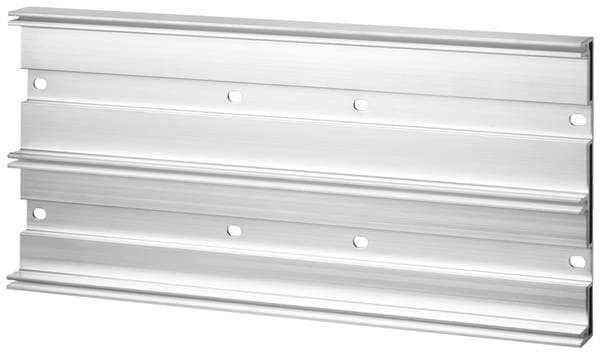
In industrial computing, integration requirements vary widely depending on the operating environment. A rack-based control or server deployment may need slide rail accessories such as the Advantech 9680017207 or Advantech 96OT-MT-690120 to simplify cabinet installation and maintenance access. In mobile or operator-facing environments, mounting hardware like the Advantech DLG-A-RAM-701296 or DLG-A-SCA-701100 can help position displays, scanners, or terminals for daily use.
Some accessories are closely tied to specific device families. The Advantech UTC-GLASS-MOUNT1E, for example, supports glass-mounted installation for selected UTC series systems, while the Advantech 9768INKT000 sealing plate kit is intended for compatible DLT-V83/V72 platforms. This shows why compatibility checking is essential: many accessories are not universal and must match the intended host device or mechanical standard.
How to choose the right module accessory
The first step is to confirm the target platform compatibility. Many accessories are designed for a defined series, enclosure type, or board format, so buyers should verify the host model, mounting pattern, slot arrangement, and required space inside the system. This is particularly important for riser cards, transmission modules, and mechanical kits.
The second consideration is the installation environment. Indoor HMI mounting, transportation systems, rack cabinets, and sealed industrial enclosures all create different requirements. A glass mount kit serves a different purpose from a chassis, and a scanner bracket solves a different integration problem than a PCI riser. Thinking in terms of the final use case usually leads to a more efficient selection process.
It is also useful to consider future expansion. If a system may later require more communication interfaces, processing add-ons, or specialized connectivity, it can be helpful to review related categories such as Ethernet and communication modules or accelerator cards during the design stage.
Brand and ecosystem considerations
A large share of the highlighted products in this category comes from Advantech, which is consistent with the way many industrial embedded systems are deployed: as part of a broader hardware ecosystem with compatible chassis, risers, mounting kits, and display accessories. Working within a single ecosystem can simplify procurement and reduce uncertainty around fit and installation.
There are also accessory products from Hirschmann, such as the GPS1-KEX9HH, showing that module accessories may also support communication and networking related installations. In many B2B projects, the accessory layer is where mechanical, electrical, and connectivity requirements come together, so brand compatibility and system context matter as much as the main device specification.
Related functions in an embedded solution stack
Accessories are rarely selected in isolation. A complete embedded solution may combine computing hardware, communication interfaces, software, and signal handling components into one deployable platform. That is why accessory decisions often connect to neighboring product groups, especially when a project includes system expansion, remote communication, or application-specific I/O.
For example, if the system design also involves sensor data handling or interface adaptation, buyers may want to explore data conversion modules. If deployment and configuration are software-dependent, the available software options may also influence which hardware accessories make sense for commissioning and long-term support.
What buyers should verify before ordering
For this type of category, the most important checkpoint is not only function but fit. Verify whether the accessory is intended for a specific product family, confirm mechanical dimensions where relevant, and review how it will be mounted or connected inside the target system. Even straightforward items such as rails, mounting kits, or sealing plates should be checked against the exact platform revision and installation method.
It is also worth separating core accessories from supporting hardware. A chassis or riser card may directly affect system layout and expansion capability, while a mount, sealing kit, or scanner bracket supports usability and deployment. Both are important, but they solve different integration tasks and should be evaluated accordingly.
Conclusion
Choosing the right accessories helps turn an embedded module or industrial computer into a workable, serviceable, and application-ready system. From chassis and risers to mounting kits and sealing components, this category supports the practical side of system integration where reliability often depends on correct mechanical and interface choices.
If you are specifying parts for a new build or an upgrade, focus on compatibility, installation conditions, and future expansion needs. A well-matched accessory set can make deployment cleaner, maintenance easier, and the overall embedded solution more consistent from design through operation.
Get exclusive volume discounts, bulk pricing updates, and new product alerts delivered directly to your inbox.
By subscribing, you agree to our Terms of Service and Privacy Policy.
Direct access to our certified experts