Other Modules
Many embedded projects rely on specialized add-on hardware that does not fit neatly into standard processor, communication, or I/O categories. That is where Other Modules become useful: they cover application-specific boards, interface accessories, security extensions, storage-related modules, and support hardware that helps complete an embedded system design.
For engineers, system integrators, and B2B buyers, this category is often the place to find the missing functional block needed to finish a platform, expand compatibility, or improve system reliability. Instead of treating these modules as miscellaneous parts, it is more practical to view them as solution-enabling components within a wider embedded architecture.
Where this category fits in an embedded system
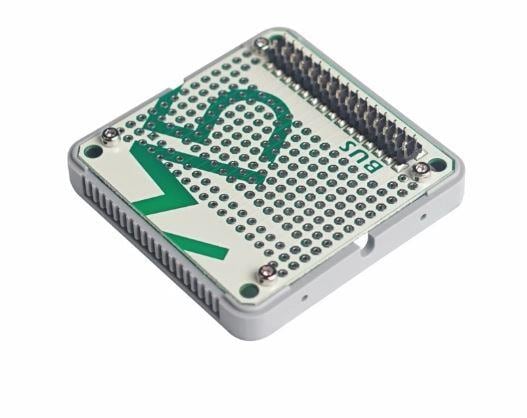
Not every embedded application is built only from a CPU board and a few standard peripherals. Industrial computers, edge gateways, storage appliances, and control platforms often need security modules, interface adapters, link modules, transceiver-related accessories, or evaluation hardware for development and validation.
This category is especially relevant when a project requires a specific supporting function that sits between major subsystems. In some cases, buyers may also compare products here with more application-focused groups such as Ethernet and communication modules or signal-focused options like data conversion modules, depending on the design objective.
Typical module roles covered in this range
The products highlighted in this category suggest a broad mix of supporting functions. Some modules are designed for hardware security, such as the Advantech PCA-TPM-00B1E TPM 2.0 module, which is relevant when trusted platform capabilities are needed for embedded CPU cards. In industrial and networked systems, this type of module can support secure boot strategies, device authentication, and platform integrity planning.
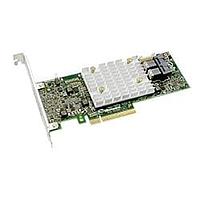
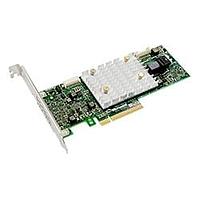
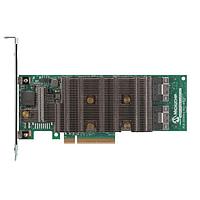
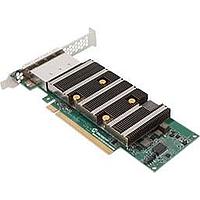
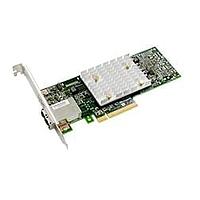
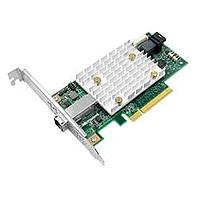
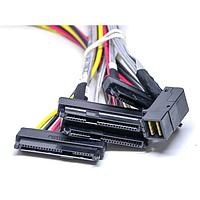
Other examples point toward storage and connectivity infrastructure. Broadcom and Microchip Technology products in this category include controller-related and cable or adapter-oriented modules that can play a role in storage expansion, interface bridging, or system-level integration. These are not always the main processing element, but they can be critical to achieving the required architecture, bandwidth path, or physical connection scheme.
The category also includes industrial interface modules such as Omron Automation and Safety B7A series I/O link modules. These products illustrate how “other modules” can extend field wiring or connect output functions within automation-oriented systems, particularly when compact interfacing and distributed control are important.
Representative manufacturers and product examples
Several established suppliers appear in this range, including Advantech, Broadcom, EPCOS, Microchip Technology, and Omron Automation and Safety. Their presence shows that this category is not limited to generic accessories; it includes purpose-built modules from manufacturers active in embedded computing, connectivity, industrial control, and support electronics.
Examples from the current selection include the Advantech PCA-TPM-00B1E for trusted platform functions, Broadcom 05-50077-01 and 05-50118-00 modules for storage or interface-oriented integration tasks, Microchip Technology 2280100-R and 2283400-R modules for supporting system connectivity, and Omron Automation and Safety B7A-R6A13 or B7A-R6B16 for transistor I/O link applications. EPCOS products such as the NB-59S-20S-0 module and the PiezoBrush PZ3-c evaluation kit further show that this category can also include specialized development or application support hardware.
How to evaluate the right module for your application
Because this is a broad category, selection should start with the module’s system role rather than the product label alone. Buyers should identify whether the requirement is related to security, storage infrastructure, interface adaptation, evaluation, or distributed I/O expansion. That helps narrow the shortlist quickly and avoids comparing products that serve very different purposes.
Next, review integration factors such as interface type, supported voltage range, physical form factor, and environmental fit. For example, the listed Omron modules reference 2-wire interfacing and 12 V to 24 V operation, while the Advantech TPM module is intended for CPU card integration through LPC. These details matter more than category naming because they determine whether the module will fit mechanically and electrically into the target platform.
It is also worth checking whether the project needs associated firmware, drivers, or configuration support. In development-heavy environments, teams may need to consider related software resources to ensure deployment, compatibility, and maintenance are handled properly.
Common application scenarios
In industrial embedded design, these modules are often used to close functional gaps without requiring a full platform redesign. A TPM module may be selected for secure edge devices or industrial PCs that need stronger identity and trust features. Storage-related controller or interconnect modules may support data-intensive systems such as recorders, appliance platforms, or embedded servers.
In automation contexts, I/O link modules can simplify output distribution and panel wiring strategies. Evaluation-oriented products may also be useful during proof-of-concept stages, especially when engineering teams need to test a process, validate a surface-treatment method, or assess whether a specialized hardware function is viable before moving to production.
Where high-performance computing or offload capability is the main requirement, users may also benefit from reviewing adjacent categories such as accelerator cards rather than relying on a general-purpose support module.
Why this category matters for B2B procurement
From a purchasing perspective, categories like this are important because many real-world builds depend on small but critical parts that are easy to overlook during early specification work. A project may be delayed not by the main board, but by the lack of a compatible trusted platform module, interconnect accessory, or industrial link interface.
For OEMs, integrators, and maintenance teams, having access to a concentrated range of specialized modules helps reduce sourcing friction. It also makes it easier to compare manufacturers, verify interface alignment, and identify whether a supporting module should be procured alongside the main embedded hardware instead of later in the integration cycle.
Choosing with a system-level view
The most effective way to browse this category is to think in terms of architecture, not just part numbers. Ask what function is missing in the system, how the module will connect, what operating conditions apply, and whether the design needs a production-ready component or an evaluation-stage tool. That approach is especially useful in a category that brings together several different module types under one umbrella.
Whether the need is trusted platform support, storage-side integration, industrial I/O linking, or a specialized evaluation module, this category provides practical options for completing embedded designs with fewer compromises. A careful review of function, compatibility, and deployment context will usually lead to a faster and more reliable selection.
Get exclusive volume discounts, bulk pricing updates, and new product alerts delivered directly to your inbox.
By subscribing, you agree to our Terms of Service and Privacy Policy.
Direct access to our certified experts