Sensor Modules
Reliable sensing is often the starting point for embedded design, whether the goal is distance measurement, object detection, motion feedback, touch input, or environmental monitoring. Choosing the right module early can simplify integration, reduce development time, and help a system deliver cleaner, more actionable data at the edge.
Sensor Modules in embedded systems bridge the gap between raw sensing elements and practical deployment. Instead of building every interface from discrete components, engineers can work with ready-to-integrate modules that support prototyping, machine development, industrial automation, smart devices, and connected products.
Where sensor modules fit in embedded solutions
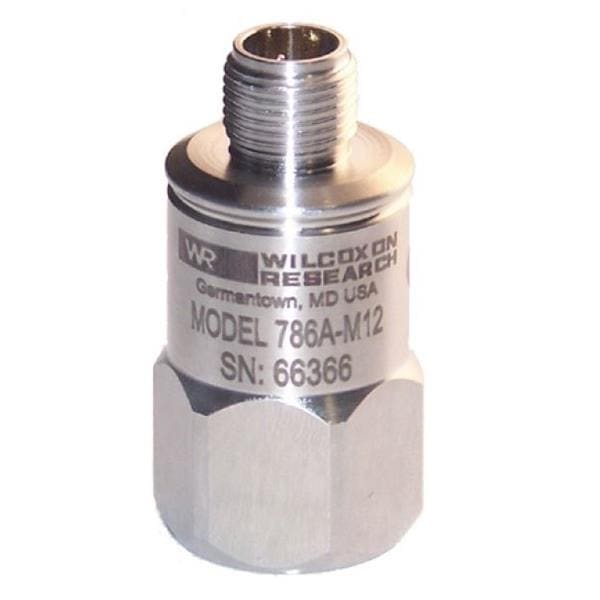
In an embedded environment, sensor modules are used to capture physical signals and convert them into outputs that controllers, processors, or communication devices can use. Depending on the application, that may involve measuring distance, detecting object presence, sensing movement, or identifying changes in light, position, or temperature.
Because these products sit inside a wider embedded ecosystem, selection is rarely based on the sensor alone. Engineers also consider interface compatibility, controller resources, and how data will be processed or transmitted alongside related platforms such as Ethernet and communication modules when building networked or remote monitoring systems.
Common sensing functions covered by this category
This category supports a broad range of use cases rather than a single sensing principle. Distance-oriented products are especially visible in many embedded projects, but the category context also includes modules for temperature, acceleration, capacitive touch, magnetic sensing, optical detection, position feedback, and multi-function sensing.
That variety matters because real-world systems rarely rely on one input alone. A machine or smart device may combine presence detection with position tracking, or pair environmental sensing with local logic and analytics. In more advanced designs, sensor data may also be conditioned and handled with supporting electronics such as data conversion modules to improve signal usability inside the control architecture.
Representative products in this range
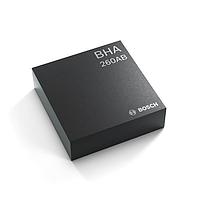
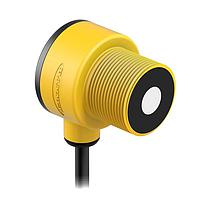
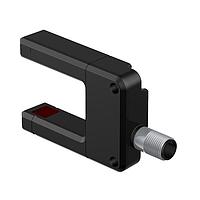
Several featured products illustrate the practical scope of this category. From Banner Engineering, models such as the Q240RA-EU-AF2Q, LE550UC1Q, LE550KQP, LT3NU, and multiple T30R-series variants reflect the strong presence of specialized sensing solutions for industrial-style detection and ranging tasks.
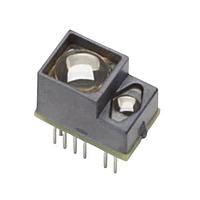
For compact optical detection at the component level, the ams OSRAM SFH9202 reflective photointerrupter shows how embedded sensing can also target board-level integration. On the development and maker-to-industrial prototyping side, the Adafruit 1031 IR distance sensor with cable support demonstrates a practical option for projects that need straightforward distance measurement in a known range.
These examples should be seen as application references rather than a complete technical map of every product in the category. The best choice depends on sensing method, mounting style, signal requirements, environmental conditions, and how tightly the module must fit into the rest of the embedded platform.
How to choose the right sensor module
A useful starting point is the sensing target: what exactly needs to be detected or measured, and under what conditions? Distance, presence, position, light interruption, or motion all call for different technologies, and the sensing environment can affect performance just as much as nominal specifications.
Next, review integration factors such as supply voltage, output type, installation constraints, and controller compatibility. In embedded projects, a sensor module is rarely isolated; it becomes part of a larger signal chain that may include firmware, gateways, and processing platforms. For teams building configurable systems, software support can be just as important as hardware, especially where setup, calibration, or edge logic depends on accompanying software tools.
It is also worth separating development-stage convenience from final deployment needs. A module that works well for proof-of-concept testing may not be the same one selected for a compact production design, where enclosure limits, connector strategy, and long-term maintainability become more important.
Typical application scenarios
Embedded sensor modules are widely used in automation, robotics, smart equipment, access systems, portable devices, and OEM product development. Distance and optical modules can support object detection, alignment, counting, level indication, or simple obstacle awareness, while touch, magnetic, and position modules are more suitable for user input or motion-related feedback.
In connected systems, sensor modules often serve as the front end of a broader sensing-and-control loop. Data may be measured locally, pre-processed on an embedded platform, and then sent to supervisory software or communication infrastructure for monitoring, logging, or decision-making. This makes module selection an architectural decision, not just a component purchase.
Manufacturer landscape and selection context
The available range includes products from recognized suppliers with different strengths in sensing and embedded integration. Banner Engineering stands out here through multiple specialized sensor offerings, while ams OSRAM and Adafruit help illustrate two other common paths: compact optical components for integration and accessible modules for rapid implementation or evaluation.
Other manufacturers in the broader ecosystem, such as Advantech, Analog Devices, Alps Alpine, Amphenol, AMP Connectors - TE Connectivity, Bosch Connected Devices, and related suppliers, can be relevant depending on whether the project emphasis is sensing, connectivity, interface hardware, or embedded platform design. The right manufacturer choice usually follows the application, not the other way around.
Why this category matters for engineering teams
A well-structured sensor module category helps engineers compare options at the level that matters most during design: function, integration effort, and system fit. That is especially useful for teams working across prototype, pilot, and production phases, where requirements may evolve from quick validation to stable deployment.
By focusing on practical module-level solutions, this category supports faster sourcing and clearer design decisions across embedded applications. Whether you are evaluating an industrial detection device, a reflective optical sensor, or a compact distance sensing module, the goal is the same: obtain reliable input data with an implementation path that matches your hardware and software environment.
Final considerations
Sensor module selection is most effective when it is tied directly to the real operating scenario rather than broad product labels alone. Looking at sensing principle, output behavior, environmental fit, and system integration early will usually narrow the field faster than comparing part numbers in isolation.
For teams building embedded systems, this category provides a practical starting point for identifying modules that support accurate detection, scalable integration, and smoother development from concept through deployment.
Get exclusive volume discounts, bulk pricing updates, and new product alerts delivered directly to your inbox.
By subscribing, you agree to our Terms of Service and Privacy Policy.
Direct access to our certified experts