
GNSS/GPS Modules
Accurate positioning is a core requirement in many embedded and connected systems, from asset tracking and fleet devices to industrial telematics, navigation units, and timing-sensitive electronics. Choosing the right GNSS/GPS Modules helps engineers balance satellite coverage, interface compatibility, power design, and mechanical integration without overcomplicating the end product.
Within this category, you can compare receiver solutions designed for modern multi-constellation positioning, including options that support GPS alongside systems such as Galileo, GLONASS, BeiDou, QZSS, and SBAS. That broader satellite support can improve availability and consistency in real operating environments where signal quality may vary.
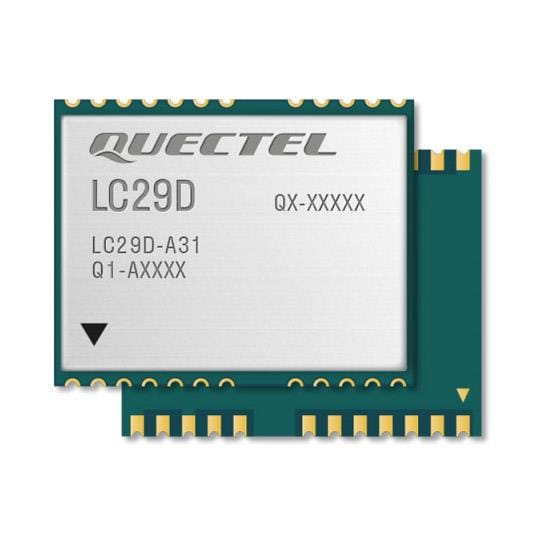
Where GNSS modules fit in embedded system design
A GNSS module is typically used when a product needs reliable location, speed, heading, or time reference data from satellite signals. In practice, these modules are integrated into telematics hardware, logistics devices, tracking terminals, portable instruments, smart mobility systems, and industrial controllers that need geolocation as part of a broader communications architecture.
They are also often selected alongside related wireless building blocks. For example, many designs combine a positioning receiver with an external antenna solution or pair location functionality with cellular modules for remote reporting. This makes the category especially relevant for engineers building connected edge devices rather than standalone navigation products only.
Why multi-constellation support matters
Modern GNSS receivers are no longer limited to GPS alone. Many products in this range support multiple constellations, which can help improve satellite visibility, startup behavior, and positioning robustness in difficult environments such as urban canyons, partially obstructed outdoor areas, or mobile platforms with variable orientation.
Examples in this category illustrate that trend clearly. Devices such as the u-blox ZED-F9R-03B, u-blox NEO-M8M-0, u-blox NEO-M8J-0-11, and STMicroelectronics TESEO-VIC3DATR are intended for designs that benefit from broad constellation compatibility rather than single-system reception. When comparing modules, this matters not just for location performance, but also for long-term design flexibility across regions and applications.
Common selection criteria for GNSS/GPS modules
The best starting point is the system requirement, not just the module footprint. Engineers typically compare interface options, supported satellite systems, supply voltage range, sensitivity, expected startup behavior, and whether an external antenna is required. Interface support can be especially important when the module must connect cleanly to an MCU, MPU, or communication processor already fixed in the design.
Several listed modules show how these criteria vary. The u-blox NEO-M8M-0 and ZED-F9R-03B, for instance, include interface flexibility through I2C, SPI, UART, and USB, which can simplify integration across different hardware platforms. Other parts, such as the Broadcom ALM-GP001-BLKG or Broadcom BCM4773IUB2GT, may be considered when a designer is evaluating package, architecture, or manufacturer preference within a GNSS receiver design path.
Mechanical constraints also matter. In compact products, module dimensions and board layout clearance can strongly influence the shortlist, especially when RF routing, shielding, and antenna placement must be managed carefully in the same enclosure.
Representative manufacturers and product families
This category includes solutions from established suppliers such as u-blox, STMicroelectronics, and Broadcom. Each brings a different ecosystem perspective, whether the priority is broad embedded adoption, integration into advanced positioning platforms, or compatibility with specific design flows and sourcing strategies.
From the product examples available here, u-blox is represented by modules such as MAX-7W-0-000, MAX-M8Q-0, NEO-M8M-0, NEO-M8J-0-11, and ZED-F9R-03B. STMicroelectronics appears with parts including STA8090RXGTR, STA8089GBDTR, STA8089FSTR, TESEO-VIC3DA, and TESEO-VIC3DATR. Broadcom options such as ALM-GP001-BLKG and BCM4773IUB2GT help round out the range for buyers comparing different receiver platforms in the same sourcing workflow.
Integration considerations beyond the module itself
Successful positioning performance depends on more than the receiver IC or module specification. RF layout, antenna matching, ground design, enclosure material, and placement relative to noise sources all influence real-world results. A capable module can still underperform if the surrounding hardware is not designed to protect weak satellite signals from interference.
Designers should also think about the broader communications stack. A location-enabled device may use GNSS for position, then pass the resulting data through other wireless links depending on the application. In some embedded systems, GNSS is complemented by Bluetooth modules for local provisioning or service access, while remote systems may combine it with wide-area communications for cloud connectivity.
Typical applications for GNSS/GPS modules
Positioning and timing modules are used across a wide span of industries. Common applications include vehicle tracking, route monitoring, field equipment location, wearable or portable devices, asset recovery systems, smart agriculture electronics, and embedded navigation subsystems. In industrial and commercial projects, the module is often one component within a larger telemetry or automation platform.
The choice between compact mainstream modules and more feature-rich multi-band or multi-interface options usually depends on the application profile. A basic tracker may prioritize low integration complexity and stable location output, while a more advanced mobility or guidance platform may need broader constellation support, stronger sensitivity, or richer host connectivity.
How to evaluate this category efficiently
When narrowing down options, it helps to compare modules according to the actual deployment scenario: stationary or mobile use, open-sky or obstructed conditions, required interfaces, available supply rails, and the intended antenna approach. This usually leads to a more practical shortlist than starting from part number popularity alone.
For example, if your design needs multi-constellation support and common digital interfaces, products such as the u-blox NEO-M8M-0 or ZED-F9R-03B may be relevant reference points. If you are comparing alternative embedded receiver platforms, the STMicroelectronics TESEO series or Broadcom GNSS modules may provide useful alternatives depending on integration goals, sourcing policy, and product architecture.
Final considerations
Choosing the right GNSS/GPS module is ultimately about matching signal performance, electrical integration, mechanical constraints, and system-level connectivity to the real demands of the application. A well-selected module can reduce development risk and help deliver more dependable positioning performance in the field.
Use this category to compare module families from leading manufacturers, review practical integration factors, and identify products that align with your design priorities. If your project also depends on antennas or complementary wireless links, evaluating those elements together will usually lead to a more robust embedded solution.
Get exclusive volume discounts, bulk pricing updates, and new product alerts delivered directly to your inbox.
By subscribing, you agree to our Terms of Service and Privacy Policy.
Direct access to our certified experts
