
Resistor Kits
Choosing the right resistor assortment can save time during prototyping, maintenance, and small-batch production. Instead of sourcing individual values one by one, engineers and buyers often rely on Resistor Kits to keep common parts organized and ready for design validation, repair work, and circuit tuning.
On a practical level, these kits are useful anywhere fast component access matters: lab benches, field service operations, training environments, and electronics development teams. They also help standardize inventory for teams that need a broad range of parts available without overcomplicating procurement.
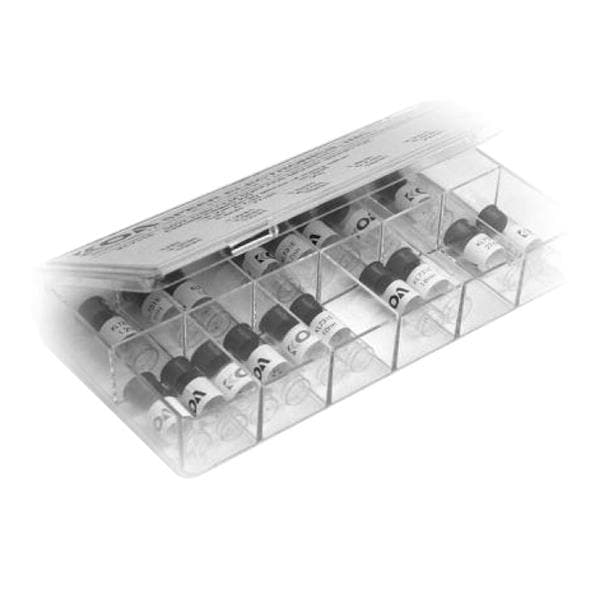
Where resistor kits fit in electronics development
Resistors are among the most frequently used components in electronic design. They support voltage division, current limiting, pull-up and pull-down functions, biasing, filtering networks, sensing circuits, and many other common tasks. Having multiple values on hand makes iterative design much easier, especially in early-stage testing when exact requirements may still be changing.
For purchasing teams, resistor assortments can also simplify low-volume replenishment. Rather than creating repeated orders for small quantities of many values, a kit-based approach is often more efficient for workshops, educational labs, and engineering departments that need broad coverage rather than single-SKU volume buying.
Common use cases for resistor kits
A well-selected resistor kit is most helpful when projects involve frequent adjustment or uncertain operating conditions. Developers may swap values during breadboarding, tune analog front ends, refine timing circuits, or validate protection and interface stages before finalizing a bill of materials.
These kits are also relevant in service and maintenance settings. Technicians troubleshooting boards often need immediate access to replacement values for quick diagnosis. In that context, assortments reduce downtime and make bench work more efficient.
- Prototype development where resistor values are tested and refined
- Repair and rework tasks requiring fast access to common components
- Educational and training environments for hands-on circuit building
- Lab stock management for general-purpose electronics work
How to choose the right kit for your workflow
The best selection depends on how the parts will be used. Some buyers need a general assortment covering broad day-to-day requirements, while others need a more application-oriented kit for power, protection, telecom, or specialized evaluation work. It is useful to think first about the engineering task, then about packaging, quantity mix, and whether the assortment is intended for experimentation or ongoing maintenance.
When reviewing options, consider whether your team mainly needs convenience, application coverage, or compatibility with a wider development platform. If your requirement extends beyond resistive components, it may also make sense to compare broader component kits that support mixed design and assembly workflows.
Examples of kits in this category ecosystem
Although this page focuses on resistor-related assortments, the surrounding assortment ecosystem shows how kits are often organized around practical engineering tasks. For example, the Bourns PN-DESIGNKIT-26 is intended for surge protection device development, while the Bourns DK-ISOMOV-03 IsoMOV™ Varistors Kit supports protection-oriented evaluation and comparison work.
Other products illustrate how assortment strategies extend into neighboring areas. The Amphenol A-2130 Inrush Current Limiter Kit is relevant where startup current management is part of the design challenge, and the Bourns SRP03-LAB and SRP05-LAB kits provide a structured way to evaluate power inductors during converter or power stage development. These examples are useful because many engineering teams source resistor kits alongside related selection tools for protection, filtering, and power design.
Relationship to other assortment categories
Resistor assortments are often purchased together with complementary kits depending on the application. Teams working on noise suppression or compliance-oriented designs may also look at EMI kits, while developers building lighting circuits may need supporting component ranges that align with LED lighting kits.
This broader view matters because resistor selection rarely happens in isolation. In real projects, resistor values interact with inductors, surge protection devices, connectors, power modules, and control hardware. Looking across adjacent categories can help buyers build a more complete bench stock and reduce delays during development.
Manufacturer context and sourcing considerations
Brand selection can matter when teams want consistency in labeling, documentation, packaging style, or broader compatibility with existing development hardware. In this assortment space, suppliers such as Advanced Energy, Amphenol, Bourns, Delta Group, and Microchip represent different types of kit ecosystems, from hardware support and component evaluation to application-specific development tools.
For example, Advanced Energy offers component and hardware kits associated with power supply environments, while Microchip’s AT88CKECC-AWS-XSTK shows how starter kits can serve a more platform-driven or security-focused development process. These are not direct substitutes for resistor assortments, but they help define the wider procurement context in which resistor kits are commonly evaluated.
What B2B buyers should look for before ordering
Before purchasing, it is worth checking whether the kit matches your actual use model. A design lab may prioritize variety across values, while a maintenance team may care more about repeated access to a narrower group of common parts. For contract manufacturing support, clear organization and repeatable replenishment may be more important than maximum assortment breadth.
It is also useful to confirm whether the kit is intended for evaluation, training, repair, or production support. That distinction affects how much value comes from assortment depth, labeling, application focus, and compatibility with adjacent components already used by your team. A thoughtful choice reduces waste and makes the kit genuinely useful rather than simply adding more stock to the shelf.
Final thoughts
Resistor Kits remain a practical purchasing choice for organizations that need flexibility, speed, and better bench readiness. Whether the goal is circuit prototyping, troubleshooting, education, or broader engineering support, the right assortment can streamline both design work and inventory handling.
If your projects span multiple electrical functions, it may be helpful to evaluate resistor assortments alongside related component and application kits. A more complete kit strategy supports faster development cycles, smoother maintenance work, and better day-to-day efficiency across technical teams.
Get exclusive volume discounts, bulk pricing updates, and new product alerts delivered directly to your inbox.
By subscribing, you agree to our Terms of Service and Privacy Policy.
Direct access to our certified experts
