Display Development Tools
When a prototype needs a user-facing interface, the display side of the design often becomes more complex than expected. Engineers may need to validate panel compatibility, controller behavior, interface selection, touch or remote interaction, and software integration long before a final product is ready for production. Display Development Tools help shorten that path by providing practical hardware for evaluation, proof-of-concept work, and embedded UI development.
In this category, you can find boards, kits, shields, and display-oriented evaluation platforms that support a wide range of development workflows. These tools are useful for embedded design teams working on HMIs, portable devices, industrial controllers, consumer interfaces, and application-specific display subsystems where early testing can reduce integration risk later in the project.
Where display development tools fit in the design process
Display-related development hardware is typically used when a team needs to confirm how a panel, driver, or interface behaves in a real embedded environment. That may include verifying readability, refresh performance, power behavior, bus communication, or how a display subsystem works alongside an MCU, MPU, or application processor.
Compared with a bare display panel alone, a development tool usually makes evaluation easier by exposing the relevant connections, controller resources, or software support needed to begin testing quickly. In broader embedded projects, these tools often work alongside communication development tools when display functions must be integrated with wired or wireless data exchange.
Common product types in this category
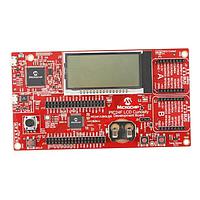
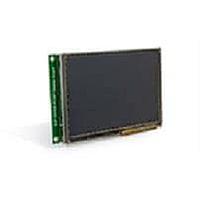
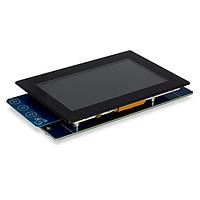
This category covers more than one kind of hardware. Some items are dedicated evaluation boards for display controllers, while others are interface boards, panel support modules, shield bundles, or development accessories intended to simplify connection between the processor platform and the visual output hardware.
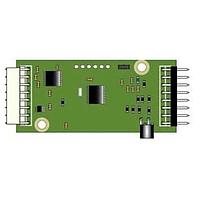
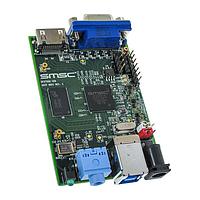
For example, the Epson S5U13522C300G00 evaluation board is aimed at assessing a specific display controller platform, while the Epson S5U13Z02P00C100 serves as an interface board for panel connection. On the rapid prototyping side, the Arduino AKX00075 Giga Display Shield Bundle can be relevant when teams want to move quickly from concept to interactive demo on an Arduino-based platform.
Examples of display technologies and formats
Display development work can involve very different technologies depending on the application. Monochrome memory displays, alphanumeric modules, LCD panels, OLED panels, and EL-based display elements each present different trade-offs in visibility, update style, power consumption, and system complexity.
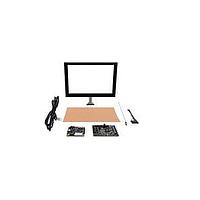
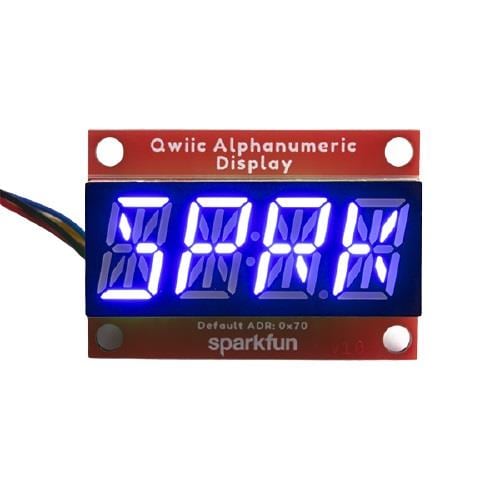
Representative products in this category illustrate that range well. The Adafruit 3502 breakout board supports a SHARP memory monochrome display format for compact, lightweight development. The Adafruit 3128 Quad Alphanumeric FeatherWing is better suited to segmented or character-style visual output, while the NXP MX8-DSI-OLED1 evaluation kit is designed for OLED display assessment in an i.MX 8M environment. For LCD-oriented work, products such as the NXP LCD8000-43T and MPC830X-TLCD provide options for evaluating panel support in embedded processor systems.
How to choose the right tool for your platform
A practical starting point is the processor or controller compatibility of the tool. Some products are closely tied to a target device or host platform, such as i.MX 8M, i.MX 6UltraLite, MPC8309, or Arduino GIGA hardware. Choosing a board that matches the computing platform already used in your design can save time during bring-up and reduce software adaptation effort.
Interface requirements are also important. Depending on the design, you may need support for serial links, SPI, RGB, parallel bus connections, or MIPI DSI. If your display subsystem will be part of a larger multimedia or imaging design, it can also be useful to review related categories such as cameras and camera modules to plan system-level compatibility early.
Mechanical format and viewing size matter as well, especially for enclosure studies and operator-facing prototypes. A compact 1.3 inch breakout board supports very different design goals than a 4.3 inch or 5.49 inch panel intended for richer interfaces. Early validation with development hardware can help teams assess readability, layout constraints, and the overall user experience before custom carrier design begins.
Manufacturers commonly used for display prototyping
Several established suppliers appear frequently in display development workflows. Adafruit is often chosen for maker-to-professional prototyping, especially where accessibility, quick integration, and compact development accessories are useful. Its breakout and FeatherWing options can be practical for early-stage interface concepts and educational or low-volume embedded development.
NXP and Epson are relevant when the project centers on processor-aligned evaluation, controller validation, or panel integration with more application-specific embedded hardware. Arduino also remains a useful option for teams that want to build interactive demos quickly, while Infineon appears in adjacent interface and control scenarios where display interaction may be part of a broader HMI concept.
Typical use cases in embedded and industrial development
These tools are commonly used in embedded UI development, equipment status displays, handheld prototypes, smart control panels, and proof-of-concept systems for operator interaction. They can also support firmware testing, graphical interface experimentation, controller benchmarking, and basic validation of how the visual layer behaves under real supply and communication conditions.
In industrial and engineering environments, display hardware is rarely isolated. It often connects with memory resources, sensors, communications, or vision components. For teams building richer embedded platforms, related categories such as memory IC development tools may also be relevant when frame buffering, controller memory behavior, or supporting logic needs to be evaluated as part of the same development cycle.
What to review before ordering
Before selecting a tool, it is worth checking whether the item is intended for panel evaluation, controller evaluation, host-board expansion, or accessory-level integration. The product role affects what is included and how quickly you can begin testing. A complete shield bundle, for example, serves a different purpose than a controller eval board or a simple panel interface card.
It also helps to review supported supply voltage, interface type, intended host platform, and whether the hardware is meant to evaluate a display itself or a related controller IC. This is especially useful when comparing products such as the Adafruit 628 EL Panel Starter Pack, the Epson S5U13774P00C100 display development tool, or the NXP OLED and LCD-focused evaluation options. Looking at the intended evaluation target first usually leads to a more accurate shortlist.
Supporting faster UI and panel validation
Choosing the right display development hardware can make a noticeable difference in prototype speed and integration confidence. Instead of building every interface element from scratch, engineers can start with proven evaluation platforms, verify display behavior earlier, and focus effort on software, mechanics, and application logic.
Whether you are exploring a simple monochrome status display, a character-based interface, or a processor-connected LCD or OLED panel, this category provides a structured starting point for embedded display design. Reviewing the intended platform, interface method, and evaluation scope will help you narrow the options to the tools that best match your project requirements.
Get exclusive volume discounts, bulk pricing updates, and new product alerts delivered directly to your inbox.
By subscribing, you agree to our Terms of Service and Privacy Policy.
Direct access to our certified experts