Memory IC Development Tools
Choosing the right tools early in a memory design project can save significant time during evaluation, programming, validation, and debug. Whether the goal is to test nonvolatile memory behavior, prepare devices for production, or build a practical development workflow around embedded storage, Memory IC Development Tools help bridge the gap between component selection and real-world implementation.
In this category, engineers and technical buyers will typically look for programmers, emulators, debug interfaces, and evaluation hardware that support memory-related development tasks. These tools are especially relevant in embedded systems, industrial electronics, communication devices, and prototype environments where reliable access to memory devices and firmware workflows is essential.

Where memory development tools fit in the engineering workflow
Memory devices are rarely evaluated in isolation. In most projects, they are part of a broader embedded platform that includes a microcontroller, processor, communication interface, and application firmware. Development tools in this category support tasks such as device programming, in-system updates, demonstration setup, and validation of memory behavior during design bring-up.
Some tools are used at the bench during prototyping, while others are more suitable for repetitive programming or field-oriented workflows. If your application also involves interface validation or connected embedded nodes, it can be useful to review related communication development tools alongside memory-focused hardware.
Common tool types found in this category
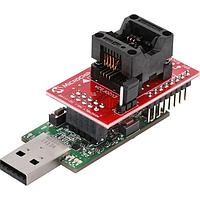
A practical memory development environment often combines several tool classes rather than relying on a single device. Programmers are used to write firmware, bootloaders, configuration data, or memory contents into supported devices. Emulators and debuggers extend that workflow by helping engineers observe behavior during code execution, verify memory mapping, or isolate faults linked to startup and storage access.
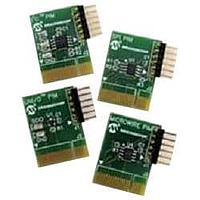
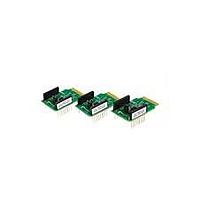
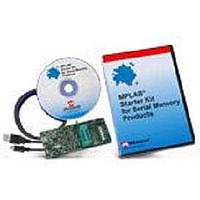
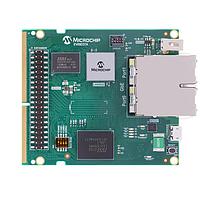
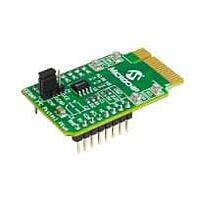
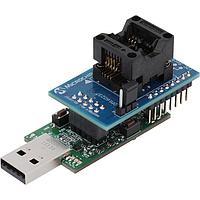
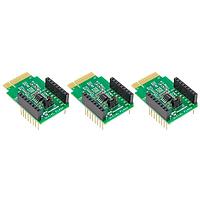
Evaluation and demonstration kits also play an important role. For example, the Microchip Technology AC500100 Demonstration Kits EERAM I2C PICtail Kit illustrates how a dedicated platform can help engineers explore device behavior in a more application-oriented way, rather than treating memory as only a part number on a schematic. In comparison, tools such as FLASHPRO5, FLASH PRO 4, or CYCLONE MAX are closer to device programming and implementation workflow support.
Representative manufacturers and product examples
Several well-known suppliers are relevant in this space, including Microchip Technology, Renesas Electronics, NXP, and Infineon. Their tool ecosystems often extend beyond a single memory family, which is helpful when development teams work across multiple embedded platforms or need continuity from evaluation into production programming.
Examples in this category include the Microchip Technology FLASHPRO5 and FLASH PRO 4 programmers, the NXP CYCLONEMAX CYCLONE MAX FLASH PROGRAMMER, and Renesas tools such as QB-RL78G14-ZZZ or QB-RL78G1C-ZZZ. The Infineon CY3684 development kit is another example of how board-level hardware can support hands-on investigation of device behavior in a Windows-based development environment. These references are useful not because every project needs the same tool, but because they show the range from programming hardware to debug and evaluation platforms.
How to choose the right memory IC development tool
The first selection criterion is usually compatibility. Engineers should confirm whether the tool is intended for direct memory programming, MCU-associated flash workflow, or broader embedded debugging that includes memory access as part of system development. A product labeled as a programmer may be ideal for controlled write operations, while a probe or debugger may be better suited to firmware development and fault analysis.
It is also worth considering the intended stage of the project. Early prototype work often benefits from flexible evaluation hardware, while validation and pilot builds may call for repeatable programming tools with stable host connectivity. If your project includes firmware interaction with storage or retention technologies, related platforms from this memory development tools range can be assessed together with application-specific hardware requirements.
Use cases in embedded and industrial design
In embedded systems, memory-related tools are frequently used to prepare code images, evaluate device behavior over standard interfaces, and support firmware updates during iterative design cycles. This can include working with serial memories, embedded flash environments, or specialty memory technologies evaluated through demonstration kits and interface boards.
Industrial and B2B design teams may also use these tools during pre-compliance development, manufacturing preparation, or service support. For example, a programmer can help standardize image loading across multiple boards, while an emulation probe can simplify investigation when boot problems appear to be tied to memory initialization or data retention behavior.
Relationship to the broader development ecosystem
Memory work often intersects with processor development, debugging, and peripheral validation. A project that starts with storage evaluation may eventually require accessory tools for communication links, board-level debug, or device-specific ecosystem support. That is why buyers frequently review compatible vendor platforms, host software expectations, and expansion options before committing to a toolchain.
For teams working with sensor nodes, controllers, or connected modules, it may also be useful to compare memory-oriented tools with adjacent categories such as cameras and camera modules only when the end application includes edge capture, buffering, or embedded image storage requirements. In most cases, the best selection process starts from the actual design task: evaluation, programming, debug, or demonstration.
What to check before ordering
Before purchasing, review the supported device family, the role of the tool in the workflow, and whether it is intended for bench evaluation or repeated programming tasks. Host interface, software environment, and accessory requirements should also be verified, especially in organizations that need consistent deployment across engineering and production teams.
It is equally important to distinguish between a complete development platform and a supporting accessory. Some items in this area may be probes, boards, or interface tools rather than standalone universal programmers. Matching the tool to the actual use case will usually deliver better results than choosing the most feature-heavy option without clear application fit.
Final considerations
A well-chosen memory development tool can shorten bring-up time, reduce programming errors, and make validation work more predictable. From evaluation kits such as the AC500100 EERAM I2C PICtail Kit to dedicated programmers and debug hardware from suppliers like Microchip Technology, Renesas Electronics, NXP, and Infineon, this category supports a wide range of embedded development needs.
If you are comparing options, focus on device compatibility, workflow stage, and how the tool fits into your broader engineering environment. That approach makes it easier to select hardware that is practical for both current development work and future design iterations.
Get exclusive volume discounts, bulk pricing updates, and new product alerts delivered directly to your inbox.
By subscribing, you agree to our Terms of Service and Privacy Policy.
Direct access to our certified experts