GNSS/ GPS Development Tools
Accurate positioning starts long before a design reaches field testing. In early development, engineers need hardware that makes it easier to validate receiver performance, compare interfaces, assess signal behavior, and shorten integration time. That is where GNSS/ GPS Development Tools become especially useful for prototyping, evaluation, and application-specific design work.
This category brings together boards, kits, and evaluation platforms used to explore satellite positioning technologies across GPS and broader GNSS constellations such as BeiDou, Galileo, GLONASS, IRNSS, and QZSS where supported. Whether the goal is embedded navigation, timing, asset tracking, or testing a receiver front end, these tools help engineering teams move from datasheet review to hands-on verification.
What this category is used for
Development tools in this range are typically selected when a project needs more than a finished receiver module alone. They provide a practical environment for checking communication paths, confirming satellite support, reviewing positioning behavior, and accelerating firmware or host-side development. In many workflows, they are used before a custom PCB is finalized, helping reduce design risk.
Compared with general-purpose wireless prototyping, GNSS work often depends on a tighter interaction between the receiver, antenna, host interface, and the intended operating environment. Teams comparing wireless options may also review related platforms such as cellular development tools when building connected trackers, telematics devices, or location-enabled gateways.
Common types of GNSS and GPS development hardware
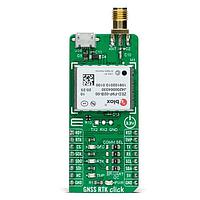
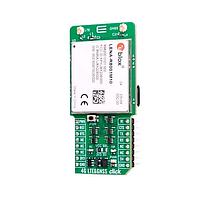
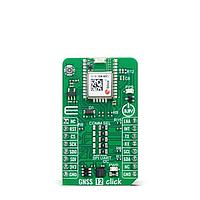
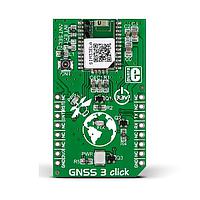
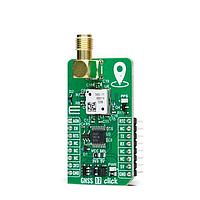
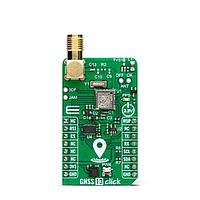
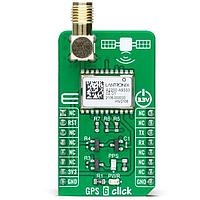
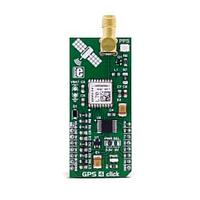
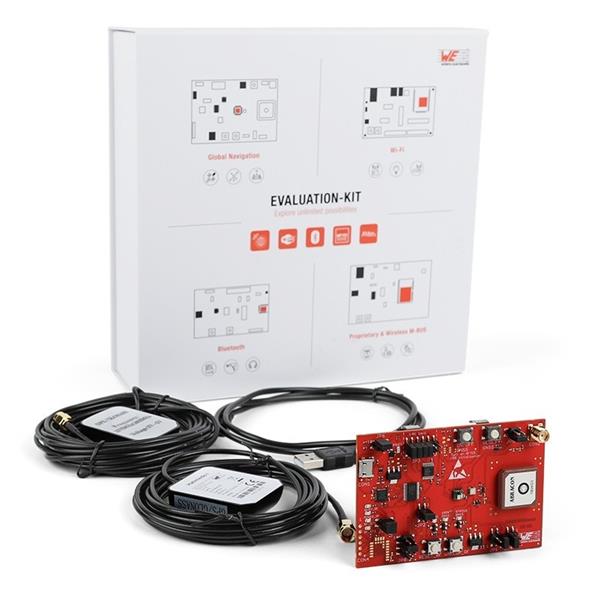
This category includes several hardware roles rather than one single board type. Evaluation kits are often the most complete option, giving engineers a ready-to-use platform for testing a specific receiver or chipset. These usually expose common interfaces such as USB, UART, SPI, I2C, or RS-232, making them suitable for lab evaluation and software bring-up.
Application boards and breakout boards serve a different purpose. They are often chosen when the user needs a smaller integration format, quick connection to a host controller, or easier access to signals during prototyping. For example, the Adafruit 4415 Mini GPS PA1010D breakout is well suited to compact proof-of-concept work, while application-oriented kits can be more appropriate when the project needs broader system-level testing.
Representative platforms in this range
Several established manufacturers are represented here, each with a slightly different focus. u-blox appears prominently with multiple evaluation options for concurrent GNSS, timing, and dual-band development. Kits such as the EVK-M8BZOE-0, EVK-M8C, EVK-M8T-0, EVK-F9T-20, and EVK-F101-00 help engineers assess different receiver families depending on whether the priority is general positioning, timing performance, or improved operation in more demanding urban conditions.
Furuno evaluation platforms such as the VN-882 and VF-84 are relevant for teams validating multi-constellation capability in a dedicated test environment. Other examples in this category include the Analog Devices MAX2769EVKIT+ for universal GPS receiver evaluation, the Skyworks Solutions SKY65725-11EK1 board for GNSS-related RF assessment, and the STMicroelectronics EVB-VIC3DA for TESEO VIC3DA module evaluation.
How to choose the right development tool
A good starting point is the actual engineering task. If the project is focused on embedded host integration, interface support matters first: USB can simplify desktop evaluation, while UART, SPI, or I2C may be more relevant for MCU-based designs. If the project is testing module behavior in a wider system, it is worth checking whether the kit supports the target receiver family directly and whether the board format makes repeated lab work practical.
The next step is to match the tool to the required satellite support and application goal. Some platforms are centered on GPS-only evaluation, while others support broader GNSS combinations. For timing-oriented work, a kit designed specifically for timing receivers may be a better fit than a general navigation board. If the design also depends heavily on the RF path and antenna behavior, it can be useful to explore antenna development tools alongside the receiver platform.
Typical engineering applications
GNSS and GPS development tools are used across a wide range of B2B and industrial design tasks. Common use cases include asset tracking prototypes, embedded navigation devices, fleet and telematics systems, timing synchronization experiments, and receiver verification in development labs. They are also useful for educational engineering teams and R&D groups that need to compare constellations, interfaces, and integration approaches before selecting production hardware.
In practice, the same tool may support several stages of a project. A breakout board can help software teams start quickly, while a fuller evaluation kit may later be used for deeper performance checks, field trials, or validation with a specific GNSS antenna. For products that combine location with short-range or mixed wireless connectivity, engineers may also compare options under multiprotocol development tools to plan the broader communication architecture.
Interfaces, integration, and test workflow
Most development boards in this category are designed to reduce setup friction. Common interfaces such as USB support straightforward connection to a PC for configuration and monitoring, while UART, I2C, and SPI are more suitable for embedded processor communication. RS-232 still appears on some evaluation hardware where legacy test environments or dedicated lab setups are involved.
In a typical workflow, engineers begin with bench evaluation, confirm communication and basic satellite acquisition behavior, then move on to application-level testing. From there, they can evaluate antenna placement, power conditions, host-side parsing, and timing or positioning behavior in realistic environments. This staged approach is one reason development kits remain valuable even when a final design will use a smaller production module.
Why these tools matter in early-stage design
The main advantage of this category is not just convenience, but better decision-making. A suitable development platform helps teams understand whether a receiver family aligns with project requirements before committing to custom hardware. It can also make software development more efficient by giving firmware and application teams stable hardware for repeated testing.
For buyers and engineers sourcing components for commercial projects, that means less uncertainty during evaluation and a clearer path from proof of concept to integration. From compact breakout options to dedicated multi-constellation and timing evaluation kits, this category supports practical GNSS development across a broad range of technical requirements.
Final considerations
Choosing among GNSS and GPS development platforms is usually less about finding a single universal board and more about selecting the right tool for the validation task at hand. Interface needs, constellation support, timing requirements, RF considerations, and host integration all play a role in that decision.
If you are comparing solutions for receiver bring-up, module evaluation, or positioning-focused prototyping, this category offers a solid starting point for structured development. Reviewing the available kits by interface, supported receiver, and application focus will make it easier to narrow down the hardware that best fits your next design cycle.
Get exclusive volume discounts, bulk pricing updates, and new product alerts delivered directly to your inbox.
By subscribing, you agree to our Terms of Service and Privacy Policy.
Direct access to our certified experts