NFC/ RFID Development Tools
When a project depends on fast, reliable identification, having the right development platform matters as much as the final reader or tag. NFC/ RFID Development Tools help engineers evaluate communication range, security methods, tag interaction, host interfaces, and integration workflows before moving into production. This makes them useful for product design, embedded prototyping, industrial terminals, access systems, smart packaging, and asset tracking concepts.
Within RF and wireless development work, this category supports both short-range NFC use cases and broader RFID evaluation needs. You can use these tools to test reader behavior, validate tag compatibility, compare interface options, and shorten the path from proof of concept to system-level implementation.
Where these tools fit in an engineering workflow
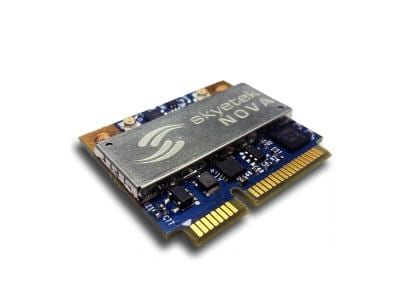
Development tools in this category are typically selected early in the design cycle, when teams need to understand how a reader IC, module, or evaluation board behaves in a real application. Instead of relying only on datasheets, engineers can test discovery, authentication, data exchange, power conditions, and host communication in a controlled setup.
Compared with broader multiprotocol development tools, NFC and RFID platforms are focused on identification, pairing, token-based interaction, and tag-reader communication. That focus is especially helpful when the project requires predictable behavior around badges, labels, handheld readers, embedded terminals, or secure touchpoints.
Typical product types in this category
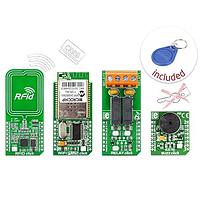
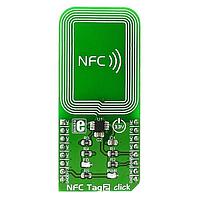
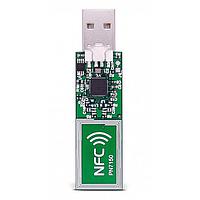
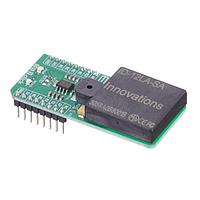
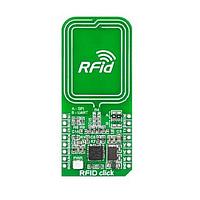
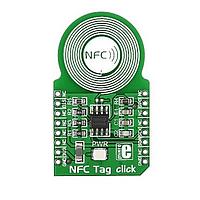
This selection usually includes evaluation kits, development boards, reader modules, and tags used for prototyping. Some products are intended to evaluate a specific IC or controller, while others provide a more complete reader setup for application testing. There are also supporting items such as sample tags that help verify encoding, reading distance, or interoperability during development.
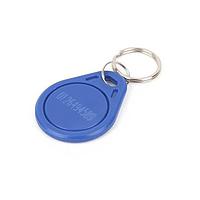
For example, the NXP PNEV5190BP and PNEV5190MB boards are representative of board-level evaluation platforms for reader development, while the Murata Electronics LXRFZZHAAA-028-KIT is positioned more as an HF RFID reader/writer evaluation environment. On the accessory side, products such as the Adafruit 360 and Adafruit 4033 tags are useful for validating tag handling and application behavior during bench testing.
Key selection points for NFC and RFID development
The first step is matching the tool to the target application. Some projects center on 13.56 MHz HF and NFC interaction, which is common for short-range identification, pairing, and user-facing touch applications. Others may require a different RFID implementation, including handheld or longer-range concepts where the reader form factor and protocol support become more important.
Interface requirements are also important. A kit such as the Infineon DEVKITNGC1081TOBO1 lists I2C, SPI, and UART support, which is useful when you need to connect the evaluation platform to different embedded hosts. Power conditions, operating environment, and intended use with tags or terminal hardware should also be reviewed early so the development setup reflects the constraints of the final design.
If the project includes secure reader authentication or protected interaction, tools like the Analog Devices MAX66301ETN+T reader platform may be relevant because they help teams assess both communication and security-oriented implementation paths. For teams building around controller evaluation, Infineon kits such as DEVKITNAC1080TOBO1 or EVALNLM0011DCTOBO1 can support targeted device evaluation in an earlier design stage.
Common application areas
These development tools are relevant across many B2B and industrial scenarios. In access control and operator authentication, they help validate credential reading and host integration. In smart devices and kiosks, they support user identification, service activation, and touch-based interactions. In logistics or asset visibility, they are used to prototype tag reading behavior and workflow logic before full deployment.
Industrial and commercial terminals are another practical area. Products like the Advantech AIM-EXT0-0050 flat type RFID reader and the Advantech UTC-300P-R20E show how RFID can be integrated into operator interfaces and terminal ecosystems. For handheld validation or field-style workflows, the Molex 13425-0001 Alien handheld RFID reader kit provides a different evaluation angle focused on portable operation.
Reader, tag, and platform compatibility
A successful prototype depends on more than selecting a reader board alone. Teams should consider the full reader-tag-host chain: which tags will be used, what data needs to be read or written, how the host processor communicates with the reader, and what level of security or identification logic is required. Development tools are most valuable when they help verify this chain early, before hardware integration becomes expensive to change.
Using sample tags during development is often a simple but important step. Adafruit tag products in this category can help with quick functional checks, application demos, and software-side validation. Meanwhile, dedicated reader boards from manufacturers such as NXP or complete evaluation kits from Murata Electronics can support deeper testing around firmware behavior, RF interaction, and application-specific tuning.
How to choose the right tool for your stage of development
For early concept work, a general evaluation board or reader/writer kit is often the most efficient starting point. It allows engineering teams to confirm communication basics, test with sample tags, and build initial software logic without committing to a production architecture too soon. This stage is about reducing uncertainty and understanding the practical behavior of the technology.
As the design becomes more defined, device-specific kits become more useful. If your design already centers on a particular controller or secure reader path, then a targeted evaluation kit can provide a clearer route to firmware development and hardware integration. Projects that also involve adjacent wireless functions may benefit from exploring related categories such as antenna development tools or Bluetooth development tools where coexistence or product-level connectivity is part of the broader system.
Practical buying considerations for engineering teams
Before selecting a kit, check whether the tool is intended for IC evaluation, complete reader testing, tag validation, or terminal integration. That distinction affects how quickly your team can begin testing and whether extra hardware will be needed. It also helps to review the supported host interface, supply requirements, and the type of RFID or NFC workflow you need to validate.
For procurement and engineering teams working together, it is also useful to think in terms of project phase. A low-complexity tag or board may be enough for software proof of concept, while a more application-oriented reader can be better for user trials, field validation, or system demos. Choosing the right level of development hardware can improve both technical efficiency and purchasing accuracy.
Conclusion
This category brings together the tools needed to evaluate NFC and RFID concepts with more confidence, whether the goal is secure authentication, tag interaction, embedded integration, or reader performance testing. By selecting a platform that matches your protocol, interface, and application needs, it becomes much easier to move from experiment to implementation with fewer surprises later in the design process.
Get exclusive volume discounts, bulk pricing updates, and new product alerts delivered directly to your inbox.
By subscribing, you agree to our Terms of Service and Privacy Policy.
Direct access to our certified experts