WiFi Development Tools - 802.11
Moving a wireless concept into a working prototype usually starts with the right evaluation hardware. For engineers building connected devices, WiFi Development Tools - 802.11 provide a practical way to test radio performance, validate interfaces, explore firmware options, and shorten the path from development to integration. This category is especially useful for teams working on embedded networking, IoT nodes, gateway devices, and industrial connectivity projects.
Rather than treating Wi-Fi as a standalone feature, most developers evaluate it as part of a wider system that includes sensors, host MCUs, serial interfaces, cloud connectivity, and power constraints. That is why this category includes a mix of development boards, starter kits, shields, and add-on platforms designed to help engineers assess both the wireless link and the full application workflow.
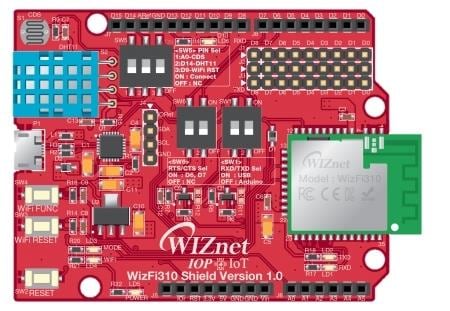
What these Wi-Fi development tools are used for
In day-to-day engineering work, these platforms support much more than basic network access. They help teams evaluate 802.11 connectivity alongside processor compatibility, peripheral access, antenna behavior, software stack readiness, and proof-of-concept performance. This makes them relevant in early R&D, design validation, and application prototyping.
Typical use cases include smart sensors, remote monitoring, machine status dashboards, connected HMIs, industrial IoT gateways, and educational or rapid prototyping environments. If your project also requires short-range coexistence or a broader wireless feature set, it can be useful to compare options with multiprotocol development tools during the selection stage.
Common form factors in this category
This category spans several hardware approaches, each suited to a different stage of development. Development boards are often the best starting point when you need a ready-to-use platform with accessible I/O and fast firmware bring-up. They are helpful for testing communications, peripherals, and cloud or application-level behavior without designing custom hardware too early.
Evaluation kits and shields are often chosen when the goal is to assess a specific wireless chipset or module in a controlled setup. For example, the Microchip Technology ATWILC3000-SHLD Evaluation Boards WILC3000 Shield focuses on evaluation around the ATWILC3000, while the Microchip Technology RN-1723-EK Evaluation Kits RN1723 Eval Kit supports work around the RN1723. Add-on boards and co-processor style products are also important when a team wants to extend an existing platform with Wi-Fi capability rather than replacing the main board architecture.
Representative platforms for prototyping and evaluation
Several products in this category illustrate how Wi-Fi development can be approached from different angles. The Arduino AKX00004 Development Kits Engineering Kit and Arduino ABX00021 Development Boards UNO WIFI Rev2 are well suited to accessible prototyping and embedded experimentation, especially where familiarity with Arduino workflows helps teams move quickly. The Arduino ABX00063 Add-On Boards Arduino Giga R1 WiFi also shows how Wi-Fi capability can be introduced within a broader development ecosystem.
Adafruit offers options that are particularly useful for connected maker-to-product transitions and IoT experimentation, including the Adafruit 2680 Starter Kits Huzzah! Adafruit.io Internet of Things Feather ESP8266 - WiFi Starter Kit and the Adafruit 4264 Development Boards Adafruit AirLift FeatherWing – ESP32 WiFi Co-Processor. For teams evaluating application-specific board concepts, the Advantech WISE-DB1500-0IA1E Development Boards WISE-DB1500 Development Board with TI Temp/Humidity sensor highlights how Wi-Fi development boards can be paired with sensing functions for more complete embedded trials.
How to choose the right Wi-Fi development platform
The best choice usually depends on how close your evaluation is to the final product architecture. If you need to assess a particular radio or module, a dedicated evaluation board or shield is often the most direct path. If your priority is application software, user interface behavior, or sensor integration, a more general-purpose development board may save time.
Interface requirements matter just as much as wireless support. In this category, you can find boards and kits with combinations of GPIO, I2C, I2S, SPI, SDIO, UART, USB, and serial connectivity. These interfaces determine how easily the platform can communicate with sensors, displays, storage, or a host processor. Teams working on low-power connected products may also want to examine options such as the Dialog Semiconductor DA16600MOD-DEVKT Development Kits DA16600 Development kit, which is described as an ultra low power Wi-Fi + BLE combo module evaluation platform.
Wi-Fi evaluation in embedded and industrial IoT workflows
For embedded and industrial projects, Wi-Fi testing is rarely limited to joining a network. Engineers often need to confirm stable communications under real application conditions, including sensor polling, local control logic, data bursts, and interoperability with upstream systems. Boards such as the Microchip Technology EV36W50A Development Boards WFI32-IoT Board are relevant in this context because they support evaluation for industrial IoT applications rather than only simple consumer-style demos.
At the same time, practical development usually involves adjacent wireless technologies. A project may start with Wi-Fi for infrastructure connectivity, then expand into device commissioning, location, or hybrid field communications. In those cases, it may be worth reviewing Bluetooth development tools or cellular development tools to plan for broader system requirements.
Key evaluation points before moving to custom hardware
A strong development platform helps reduce uncertainty before schematic capture and RF layout begin. When comparing products in this category, engineers typically look at supported interfaces, protocol support, intended target device, ease of software bring-up, and how closely the kit reflects the final deployment concept. For some projects, a co-processor approach such as the Adafruit AirLift FeatherWing may be attractive; for others, a more integrated development board or vendor-specific evaluation kit will make more sense.
It is also useful to think ahead about RF design dependencies. If your work will later involve antenna matching, tuning, or performance optimization, related antenna development tools can become important as the project matures. Early awareness of these needs can help teams choose a development path that supports smoother transition into verification and productization.
Finding a suitable starting point
This category brings together Wi-Fi boards, shields, kits, and add-on platforms for engineers who need a practical environment for wireless prototyping. Whether the goal is evaluating a specific device such as ATWILC3000, RN1723, ESP8266, ESP32, DA16600, or building a broader connected proof of concept with Arduino, Adafruit, Advantech, Dialog Semiconductor, or Microchip Technology, the right tool depends on your host interfaces, software workflow, and target application.
For B2B buyers and design teams, a good selection process starts with the intended evaluation scope: radio-only testing, full embedded application prototyping, or industrial IoT validation. Reviewing the available Wi-Fi development tools with those priorities in mind makes it easier to choose hardware that supports both fast experimentation and a more reliable transition into product development.
Get exclusive volume discounts, bulk pricing updates, and new product alerts delivered directly to your inbox.
By subscribing, you agree to our Terms of Service and Privacy Policy.
Direct access to our certified experts